Cultic Studies Journal, Vol. 12, No. 2, 1995, page 36
journal (“Cults, Evangelicals, and the Ethics of Social Influence” --special issue of the Cultic
Studies Journal, [2]2, 1985).
Nevertheless, there are sources of conflict between secularists and Christians. Secularists
such as members of the Council on Democratic and Secular Humanism, CODESH (a sister
organization to CSICOP), for example, flatly reject orthodox Christianity and all belief
systems that posit a supernatural realm. Some individuals within the AFF/CAN orbit are also
hostile to Christianity, or religion in general. But the majority are a cross-section of the
American population and quite possibly are just as likely to attend church in any given
week, perhaps more so. (Gallup surveys—“Do that many people really attend worship
services?” May 1994 --indicate that about 40% of Americans attend church weekly.)
Indeed, in order to test Introvigne‟s claim that “most anti-cultists are precisely secular
humanists” (p. 17), I tallied the religious affiliations, when I knew them, of AFF advisory
board members. I categorized people according to their behavior or avowed religious
preference. If I believed a person was a secularized Jew, Catholic, or Protestant, I classified
the person a secularist. I found the following informal and unofficial breakdown, which for
the reasons stated probably understates the religious affiliation likely to be found if these
people were surveyed by Gallup: Catholic, 12 Protestant Evangelical, 11 other Protestant,
19 Jewish, 24 secular humanists, 14 unknown, 58. Moreover, in a survey on the New Age
(Dole, Langone, &Dubrow-Eichel, 1993), AFF respondents to a religious affiliation question
reported the following religious breakdowns: mainline (N=34 59%) no preference (N=17
29%) not indicated (N=4 7%) and off-beat (N=3 5%). Thus, as a group, the people
Introvigne labels anti-cultists are relatively representative of the religious breakdown of the
American population (given AFF‟s northeastern/New York and mental health emphasis,
which areas contain higher proportions of Jews).
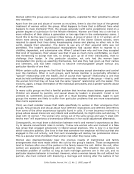
The real threat to Christianity is not in the so-called anti-cult movement. It is in the
mainstream, secular culture. A recent Cultic Studies Journal (vol. 10, no. 2, 1993) contains
a fascinating, edited transcript of a discussion between Dr. Johannes Aagaard of the Dialog
Center and AFF associates. Aagaard, who eloquently advocates the necessity to deal with
the “truth question” in this field, helped me see more clearly how American, and probably
all of Western, secular culture is based on inconsistent premises. One of the central and
most destructive premises is that we must not carefully examine our fundamental premises,
that theological and philosophical questions are unimportant. What results is a
“lobotomized” culture that defaults to relativism. Christianity, especially orthodox
Christianity, threatens this culture because it forcefully rejects relativism. The secular
culture responds by trying to persuade Christians to keep their religion private, to keep it
out of the “public square.” This runs directly contrary to the evangelical imperative of
Christianity.
The striking irony here is that the secular critiques of cults implicitly lead not to a rejection
of mainstream religion, but to an affirmation of the value of mainstream religions and a
recognition that not all theologies are equal, as the relativist would have it. The secular
framework in which my colleagues and I operate is more of an expedient, a common
denominator in which a cross-section of Americans can work together, than it is an ideology
opposed to Christianity. The great weakness of our perspective is that it rests on an
unsound “theology,” the implicit and inconsistent relativism of contemporary secular culture.
Most of us realize this to some extent, but we also realize our limitations as human beings.
Our job, as most of us see it, is not to fight the battle of competing cultural paradigms,
which Aagaard has described. Our job is to try to better understand how cults manipulate,
exploit, and hurt people to help victims and to forewarn potential victims. We focus on the
deed because that is the common currency of the mainstream secular culture, in which we
elect to function. But at least some of us realize that somebody must focus on the creedal
issues and that eventually the culture as a whole will have to wrestle with the creedal issue.
journal (“Cults, Evangelicals, and the Ethics of Social Influence” --special issue of the Cultic
Studies Journal, [2]2, 1985).
Nevertheless, there are sources of conflict between secularists and Christians. Secularists
such as members of the Council on Democratic and Secular Humanism, CODESH (a sister
organization to CSICOP), for example, flatly reject orthodox Christianity and all belief
systems that posit a supernatural realm. Some individuals within the AFF/CAN orbit are also
hostile to Christianity, or religion in general. But the majority are a cross-section of the
American population and quite possibly are just as likely to attend church in any given
week, perhaps more so. (Gallup surveys—“Do that many people really attend worship
services?” May 1994 --indicate that about 40% of Americans attend church weekly.)
Indeed, in order to test Introvigne‟s claim that “most anti-cultists are precisely secular
humanists” (p. 17), I tallied the religious affiliations, when I knew them, of AFF advisory
board members. I categorized people according to their behavior or avowed religious
preference. If I believed a person was a secularized Jew, Catholic, or Protestant, I classified
the person a secularist. I found the following informal and unofficial breakdown, which for
the reasons stated probably understates the religious affiliation likely to be found if these
people were surveyed by Gallup: Catholic, 12 Protestant Evangelical, 11 other Protestant,
19 Jewish, 24 secular humanists, 14 unknown, 58. Moreover, in a survey on the New Age
(Dole, Langone, &Dubrow-Eichel, 1993), AFF respondents to a religious affiliation question
reported the following religious breakdowns: mainline (N=34 59%) no preference (N=17
29%) not indicated (N=4 7%) and off-beat (N=3 5%). Thus, as a group, the people
Introvigne labels anti-cultists are relatively representative of the religious breakdown of the
American population (given AFF‟s northeastern/New York and mental health emphasis,
which areas contain higher proportions of Jews).
The real threat to Christianity is not in the so-called anti-cult movement. It is in the
mainstream, secular culture. A recent Cultic Studies Journal (vol. 10, no. 2, 1993) contains
a fascinating, edited transcript of a discussion between Dr. Johannes Aagaard of the Dialog
Center and AFF associates. Aagaard, who eloquently advocates the necessity to deal with
the “truth question” in this field, helped me see more clearly how American, and probably
all of Western, secular culture is based on inconsistent premises. One of the central and
most destructive premises is that we must not carefully examine our fundamental premises,
that theological and philosophical questions are unimportant. What results is a
“lobotomized” culture that defaults to relativism. Christianity, especially orthodox
Christianity, threatens this culture because it forcefully rejects relativism. The secular
culture responds by trying to persuade Christians to keep their religion private, to keep it
out of the “public square.” This runs directly contrary to the evangelical imperative of
Christianity.
The striking irony here is that the secular critiques of cults implicitly lead not to a rejection
of mainstream religion, but to an affirmation of the value of mainstream religions and a
recognition that not all theologies are equal, as the relativist would have it. The secular
framework in which my colleagues and I operate is more of an expedient, a common
denominator in which a cross-section of Americans can work together, than it is an ideology
opposed to Christianity. The great weakness of our perspective is that it rests on an
unsound “theology,” the implicit and inconsistent relativism of contemporary secular culture.
Most of us realize this to some extent, but we also realize our limitations as human beings.
Our job, as most of us see it, is not to fight the battle of competing cultural paradigms,
which Aagaard has described. Our job is to try to better understand how cults manipulate,
exploit, and hurt people to help victims and to forewarn potential victims. We focus on the
deed because that is the common currency of the mainstream secular culture, in which we
elect to function. But at least some of us realize that somebody must focus on the creedal
issues and that eventually the culture as a whole will have to wrestle with the creedal issue.