Cultic Studies Journal, Vol. 12, No. 2, 1995, page 52
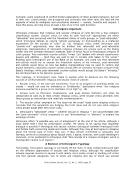
account of the Waco Branch Davidians is good as he partially described it through the eyes
of a surviving member. Shaw smartly sketches how an extremist cult can attract extremist
reactions which can lead to senseless tragedy. Unlike the first few groups he mentions,
most of the other groups have been written about extensively yet, those familiar with the
latter groups will still want to read what Shaw has written.
In his final chapter, called “Stockholm Syndrome and the Seven Seals,” Shaw criticizes
anticult attitudes and mind control theories. One of his whipping boys is Ian Haworth, head
of the British Cult Information Centre, who tells Shaw that there are “26 different methods
of mind control.” Also Shaw takes issue with Steve Hassan, author of Combatting Cult Mind
Control, who wrote that you would not know if you were under mind control. Shaw notes
that often it is ex-members of cults, like Haworth and Hassan, who provide bewildered
cultists with answers they most want to hear --namely that it was not their fault, that they
were victimized by mind control techniques and deceit. Shaw observed that members
stayed because they wanted to, not because believers worked on them with “love bombing”
and phobia indoctrination.
Shaw suggests that the anticult movement may be overreacting, creating its own phobias
and stereotypes about cults, which it then combats. Clearly, he favors the approach of the
people he thanks at the end of his book. These include Dr. James R. Lewis of AWARE, Eileen
Barker and others of INFORM, and Larry Shinn, who has written sympathetically about the
Hare Krishnas. He recommends that people turn to INFORM for independent advice on cults.
By stereotyping so-called anticultists and deprogrammers (e.g., Ted Patrick and Rick Ross),
Shaw almost falls into the trap of cult apologists who sustain a reactionary attitude toward
anyone who criticizes cult activity or theorizes about mind control or “brainwashing.” I say
“almost” because Shaw is aware that the INFORM people and their ilk, as he states, “may
well not agree with some of the content of this book.” Whereas Barker and Lewis prefer
innocuous terms like “New Religious Movement” to describe cultic groups, Shaw uses the
word cult liberally and appropriately.
In summary, I think that William Shaw has done a credible job with a difficult subject. His
description of group members and interviews with them adds a personal note often lacking
in cult literature. True to his healthy skepticism, Shaw brings out the bizarre, convoluted
nature of each cult. What is lacking in Shaw‟s accounts are interviews with former members
who have not only rejected these cults for good reasons --for the same reasons that he
resisted belief --but also intelligently recovered their lives in the process.
Joseph P. Szimhart
Cult Information Specialist/Exit Counselor
Pottstown, Pennsylvania
Lambs to Slaughter: My Fourteen Years with Elizabeth Clare Prophet and
Church Universal Triumphant. John Joseph Pietrangelo, Jr. Self-published
(available from John Pietrangelo, 1039 E. Gifford Dr., Tucson, AZ 85719), 1994,
143 pages.
Lambs to Slaughter is a self-published book about the author‟s 14-year hiatus as a devotee
of Elizabeth Clare Prophet and her Church Universal and Triumphant (CUT). This is a story
about manipulated devotion and mind control from the perspective of a former true
believer. It is also an intimate look at a prophet-guru during her formative years as the
leader of her own marginal religious movement. As with nearly every notorious cult leader
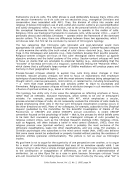
account of the Waco Branch Davidians is good as he partially described it through the eyes
of a surviving member. Shaw smartly sketches how an extremist cult can attract extremist
reactions which can lead to senseless tragedy. Unlike the first few groups he mentions,
most of the other groups have been written about extensively yet, those familiar with the
latter groups will still want to read what Shaw has written.
In his final chapter, called “Stockholm Syndrome and the Seven Seals,” Shaw criticizes
anticult attitudes and mind control theories. One of his whipping boys is Ian Haworth, head
of the British Cult Information Centre, who tells Shaw that there are “26 different methods
of mind control.” Also Shaw takes issue with Steve Hassan, author of Combatting Cult Mind
Control, who wrote that you would not know if you were under mind control. Shaw notes
that often it is ex-members of cults, like Haworth and Hassan, who provide bewildered
cultists with answers they most want to hear --namely that it was not their fault, that they
were victimized by mind control techniques and deceit. Shaw observed that members
stayed because they wanted to, not because believers worked on them with “love bombing”
and phobia indoctrination.
Shaw suggests that the anticult movement may be overreacting, creating its own phobias
and stereotypes about cults, which it then combats. Clearly, he favors the approach of the
people he thanks at the end of his book. These include Dr. James R. Lewis of AWARE, Eileen
Barker and others of INFORM, and Larry Shinn, who has written sympathetically about the
Hare Krishnas. He recommends that people turn to INFORM for independent advice on cults.
By stereotyping so-called anticultists and deprogrammers (e.g., Ted Patrick and Rick Ross),
Shaw almost falls into the trap of cult apologists who sustain a reactionary attitude toward
anyone who criticizes cult activity or theorizes about mind control or “brainwashing.” I say
“almost” because Shaw is aware that the INFORM people and their ilk, as he states, “may
well not agree with some of the content of this book.” Whereas Barker and Lewis prefer
innocuous terms like “New Religious Movement” to describe cultic groups, Shaw uses the
word cult liberally and appropriately.
In summary, I think that William Shaw has done a credible job with a difficult subject. His
description of group members and interviews with them adds a personal note often lacking
in cult literature. True to his healthy skepticism, Shaw brings out the bizarre, convoluted
nature of each cult. What is lacking in Shaw‟s accounts are interviews with former members
who have not only rejected these cults for good reasons --for the same reasons that he
resisted belief --but also intelligently recovered their lives in the process.
Joseph P. Szimhart
Cult Information Specialist/Exit Counselor
Pottstown, Pennsylvania
Lambs to Slaughter: My Fourteen Years with Elizabeth Clare Prophet and
Church Universal Triumphant. John Joseph Pietrangelo, Jr. Self-published
(available from John Pietrangelo, 1039 E. Gifford Dr., Tucson, AZ 85719), 1994,
143 pages.
Lambs to Slaughter is a self-published book about the author‟s 14-year hiatus as a devotee
of Elizabeth Clare Prophet and her Church Universal and Triumphant (CUT). This is a story
about manipulated devotion and mind control from the perspective of a former true
believer. It is also an intimate look at a prophet-guru during her formative years as the
leader of her own marginal religious movement. As with nearly every notorious cult leader