Cultic Studies Journal, Vol. 12, No. 2, 1995, page 5
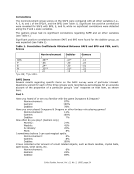
Table 1. Relevant Situations for Different Research Strategies
Strategy Form of Re-
search Ques-
tion
Requires
Control over
Events?
Focuses on
Contemporary
Events
Experiment how, why yes yes
Survey who, what*,
where, how
much, how
many
no yes
Archival
analysis
(e.g., eco-
nomic
study)
who, what*,
where, how
many, how
much
no yes/no
History how, why no no
Case study how, why no yes
*“What” questions, when asked as part of an exploratory study, pertain to all five
strategies.
Note: From Case Study Research: Design and Methods (p. 17), by R. K. Yin, copyright 8
1989 by Sage Publications, Inc. Adapted by permission of Sage Publications.
~~~~~~~~~~~~
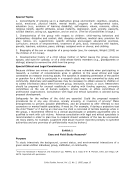
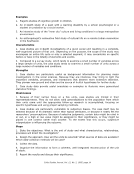
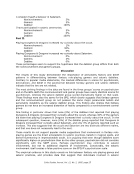
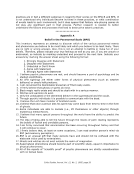
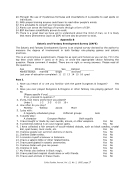
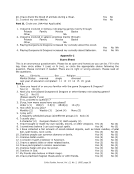
According to Isaac and Michael (1981, see Exhibit 1 at end of article), the case history is
valuable in exploring a new area of knowledge and in supplementing quantitative studies. It
can provide depth, or thick knowledge --that is, a great deal of detailed and complex
information about a few participants. In contrast, experimental studies are limited to a few
selected variables. Quantitative studies, applying modern technology, can manipulate
dozens of variables and measure thousands of subjects speedily and efficiently but often
the information yielded can be superficial, or thin knowledge, about a large population.
Good case studies are expensive. They may require the substantial time of specialists and
hours of transcription. Pattern analysis and interpretation of a one-hour interview may take
a full work week. The intensive study of a single person can consume a year or more. Bias,
subjectivity, and special pleading are hard to control. Some researchers, journalists, for
example (Malcolm, 1994), may exploit or harm informants. Making the facts public can be
painful for informants and an invasion of their privacy. These are important considerations
where cult victims are involved.
Although expensive, it is possible to establish external validities by aggregating a
representative sample of single cases otherwise, critics may justifiably point out that any
one participant is not typical or was selected for biased reasons. Hence, with only a single
case, it is inappropriate to generalize to others.
Although it is tempting to assign causation or to connect one variable with another on the
basis of the single case, such reasoning is logically suspect. Note in historical studies the
endless arguments among specialists about what “caused” what. For example, was Hitler‟s
behavior toward the Jews the result of childhood trauma, cultural norms, his paranoid
personality, or a Machiavellian, calculated strategy for political ends? Correlations, in the
sense based on statistics, are equally hard to defend when they are inferred from one or
two events or the reported experiences of one person. Unless there are a large number of
con-current instances involving a population or a representative sample, the possibility of
coincidence, accident, bias, or error cannot be ruled out in interpreting an association. For
Table 1. Relevant Situations for Different Research Strategies
Strategy Form of Re-
search Ques-
tion
Requires
Control over
Events?
Focuses on
Contemporary
Events
Experiment how, why yes yes
Survey who, what*,
where, how
much, how
many
no yes
Archival
analysis
(e.g., eco-
nomic
study)
who, what*,
where, how
many, how
much
no yes/no
History how, why no no
Case study how, why no yes
*“What” questions, when asked as part of an exploratory study, pertain to all five
strategies.
Note: From Case Study Research: Design and Methods (p. 17), by R. K. Yin, copyright 8
1989 by Sage Publications, Inc. Adapted by permission of Sage Publications.
~~~~~~~~~~~~
According to Isaac and Michael (1981, see Exhibit 1 at end of article), the case history is
valuable in exploring a new area of knowledge and in supplementing quantitative studies. It
can provide depth, or thick knowledge --that is, a great deal of detailed and complex
information about a few participants. In contrast, experimental studies are limited to a few
selected variables. Quantitative studies, applying modern technology, can manipulate
dozens of variables and measure thousands of subjects speedily and efficiently but often
the information yielded can be superficial, or thin knowledge, about a large population.
Good case studies are expensive. They may require the substantial time of specialists and
hours of transcription. Pattern analysis and interpretation of a one-hour interview may take
a full work week. The intensive study of a single person can consume a year or more. Bias,
subjectivity, and special pleading are hard to control. Some researchers, journalists, for
example (Malcolm, 1994), may exploit or harm informants. Making the facts public can be
painful for informants and an invasion of their privacy. These are important considerations
where cult victims are involved.
Although expensive, it is possible to establish external validities by aggregating a
representative sample of single cases otherwise, critics may justifiably point out that any
one participant is not typical or was selected for biased reasons. Hence, with only a single
case, it is inappropriate to generalize to others.
Although it is tempting to assign causation or to connect one variable with another on the
basis of the single case, such reasoning is logically suspect. Note in historical studies the
endless arguments among specialists about what “caused” what. For example, was Hitler‟s
behavior toward the Jews the result of childhood trauma, cultural norms, his paranoid
personality, or a Machiavellian, calculated strategy for political ends? Correlations, in the
sense based on statistics, are equally hard to defend when they are inferred from one or
two events or the reported experiences of one person. Unless there are a large number of
con-current instances involving a population or a representative sample, the possibility of
coincidence, accident, bias, or error cannot be ruled out in interpreting an association. For