Cultic Studies Journal, Vol. 12, No. 2, 1995, page 7
3. Define key terms and major variables.
4. Note your reasons for selecting a participant (e.g., random, convenient, typical, or
unusual).
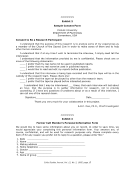
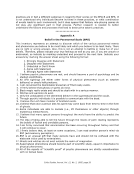
5. Prepare a consent form for the participant to sign (see Exhibit 2 for a sample you might
want to adapt). Also prepare to explain the project‟s purpose, its projected uses, assurances
of privacy and confidentiality, and other pertinent matters.
6. Arrange the interview setting in advance. Inspect it for privacy, comfort, and protection
from interruptions. (A living room filled with family members, for example, would be
inappropriate.)
7. Write a brief, concise proposal.
Doing the Case Study
1. If possible, make the participant more of a partner in the research than a subject. Give
him some control and power. (e.g., “Later I hope you‟ll read and comment on my report,”
or “I welcome your ideas about this project”).
2. Cover topics in a flexible, relaxed fashion, rather than posing a rigid sequence of
packaged questions. Use clinical skills to develop rapport. Encourage open-ended rather
than yes/no responses through gentle probes and nondirective leads in your own words
(e.g., “Uh huh,” “Can you tell me more?,” “What happened then?,” “How about ...”). For
intensive, in-depth studies, schedule two or three interviews several weeks apart,
encouraging the participant to think through responses in advance. The time span will also
aid documentation collection (e.g., “Would you be willing to let me photocopy the letters
you wrote home while you were in the group?”). Merton‟s (Merton, Fiske, &Kendall, 1956)
focused interview is a fine research tool.
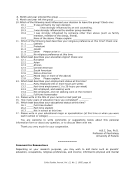
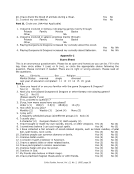
3. Before or after the interview, ask the participant to complete a standardized personal
characteristics form (gender, age, education, vocation, etc.) and to write down material if
that‟s comfortable. For instance, to save interview time, a participant might be willing to put
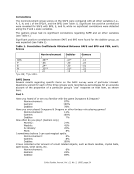
in writing her recollection of a typical day in the group. Exhibit 3 (at the end of this article)
provides an example that interviewers may adapt to fit their own research needs. Other
demographic questionnaires available from AFF may be requested and adapted.
4. In establishing rapport with the participant, be ethical and professional (see the ethical
code of the American Psychological Association [APA], 1993), and be sensitive to affect as
well as to fact. Empathize but avoid sympathizing or therapizing. If need be, refer the
participant to others for exit counseling, rehabilitation, or counseling. Share with the
participant circumstances that might influence the interview (e.g., “I work for the AFF which
does ...”), and maintain a fair-minded and nonjudgmental attitude. (If you have difficulty
being objective because you believe that cults are uniformly evil, seek consultation.) Avoid
leading or biased questions. Most mental health professionals have excellent skills in
relationship building, diagnosis, and observation and have developed their own personal
styles which they should use comfortably however, to reduce risk of dual relationships (i.e.,
therapist and researcher), consider having another experienced researcher periodically
review audiotapes of the interviews. If the interviewer-researcher is also an exit counselor,
cult-awareness activist, paid employee of a cult-awareness group, or expert witness, it may
be advisable to include such information in any publication (e.g., “Dr. A.B.C. is the director
of the XYZ Cult Research Institute.”). It goes without saying that academic cult apologists
have an equal ethical obligation to specify relevant memberships or sponsorships in their
publications.
5. With the participant‟s permission, record the interview. For speed and accuracy, have it
transcribed by a professional typist then, encourage the participant to review and edit it
3. Define key terms and major variables.
4. Note your reasons for selecting a participant (e.g., random, convenient, typical, or
unusual).
5. Prepare a consent form for the participant to sign (see Exhibit 2 for a sample you might
want to adapt). Also prepare to explain the project‟s purpose, its projected uses, assurances
of privacy and confidentiality, and other pertinent matters.
6. Arrange the interview setting in advance. Inspect it for privacy, comfort, and protection
from interruptions. (A living room filled with family members, for example, would be
inappropriate.)
7. Write a brief, concise proposal.
Doing the Case Study
1. If possible, make the participant more of a partner in the research than a subject. Give
him some control and power. (e.g., “Later I hope you‟ll read and comment on my report,”
or “I welcome your ideas about this project”).
2. Cover topics in a flexible, relaxed fashion, rather than posing a rigid sequence of
packaged questions. Use clinical skills to develop rapport. Encourage open-ended rather
than yes/no responses through gentle probes and nondirective leads in your own words
(e.g., “Uh huh,” “Can you tell me more?,” “What happened then?,” “How about ...”). For
intensive, in-depth studies, schedule two or three interviews several weeks apart,
encouraging the participant to think through responses in advance. The time span will also
aid documentation collection (e.g., “Would you be willing to let me photocopy the letters
you wrote home while you were in the group?”). Merton‟s (Merton, Fiske, &Kendall, 1956)
focused interview is a fine research tool.
3. Before or after the interview, ask the participant to complete a standardized personal
characteristics form (gender, age, education, vocation, etc.) and to write down material if
that‟s comfortable. For instance, to save interview time, a participant might be willing to put
in writing her recollection of a typical day in the group. Exhibit 3 (at the end of this article)
provides an example that interviewers may adapt to fit their own research needs. Other
demographic questionnaires available from AFF may be requested and adapted.
4. In establishing rapport with the participant, be ethical and professional (see the ethical
code of the American Psychological Association [APA], 1993), and be sensitive to affect as
well as to fact. Empathize but avoid sympathizing or therapizing. If need be, refer the
participant to others for exit counseling, rehabilitation, or counseling. Share with the
participant circumstances that might influence the interview (e.g., “I work for the AFF which
does ...”), and maintain a fair-minded and nonjudgmental attitude. (If you have difficulty
being objective because you believe that cults are uniformly evil, seek consultation.) Avoid
leading or biased questions. Most mental health professionals have excellent skills in
relationship building, diagnosis, and observation and have developed their own personal
styles which they should use comfortably however, to reduce risk of dual relationships (i.e.,
therapist and researcher), consider having another experienced researcher periodically
review audiotapes of the interviews. If the interviewer-researcher is also an exit counselor,
cult-awareness activist, paid employee of a cult-awareness group, or expert witness, it may
be advisable to include such information in any publication (e.g., “Dr. A.B.C. is the director
of the XYZ Cult Research Institute.”). It goes without saying that academic cult apologists
have an equal ethical obligation to specify relevant memberships or sponsorships in their
publications.
5. With the participant‟s permission, record the interview. For speed and accuracy, have it
transcribed by a professional typist then, encourage the participant to review and edit it