Cultic Studies Journal, Vol. 12, No. 2, 1995, page 21
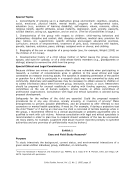
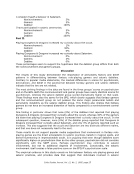
used to assess belief in magic. This brief instrument was shown to have higher reliability
and content validity than other scales that did not use a factor analytic approach (Tobacyk &
Milford, 1983). The higher the raw score, the higher the belief in paranormal phenomena
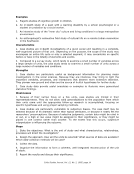
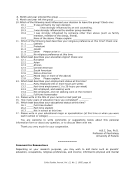
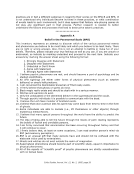
(see Appendix A). Involvement of subjects in fantasy role-playing games and Satanism was
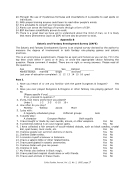
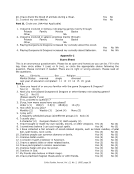
measured by the Satanic and Fantasy Envelopment Survey (SAFE), an instrument designed
for this study (see Appendix B). Questions rated on face validity were devised to classify
subjects into the three groups. The depth of involvement, length of involvement, and cross-
over between the three groups were factored out.
Procedure
Ss were handed EPQ-R, BPS, and SAFE questionnaire packets separately for each subject
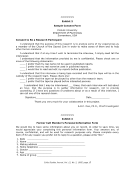
pool, with a consent form when necessary. Group administration was achieved when
applicable. No time limit was given for completion, but it was emphasized that Ss should not
deliberate over any one question.
Questions directed to us were answered in a vague and ambiguous fashion in order to
maintain the integrity of the study. Ss were asked to follow instructions inside the packet
and to answer as truthfully as possible they were told that there were no right or wrong
responses. Ss were reassured that their anonymity would be protected.
Statistics
One-way Analysis of Variance (ANOVA) tests among the three groups were calculated for
each scale on the EPQ-R (psychoticism, extraversion, neuroticism, and lie), as well as one-
way ANOVAs for the BPS and SAFE surveys. An F test was computed for each ANOVA, and
the Scheffe Test was used for the Critical Values of F and to calculate the amount of
significant differences for each. Correlations between groups were computed to assess the
strength of these relationships and the direction using the Pearson product-moment
coefficient (r).
Results
First, a series of one-way ANOVAs were computed examining the differences in scores
between the three groups on the specific dimensions of personality on the EPQ-R, and for
variations of scores on the BPS.
Psychoticism
On the EPQ-R, the psychoticism score revealed significant differences between subject
groups F(2,214)=59.427, p .001. Multiple comparisons using the Scheffe correction
revealed that the dabbler group had significantly higher scores on the psychoticism scale
than both the gamers and noninvolvement group (p.05)(see Figure 1).
Extraversion
A one-way analysis of variance (ANOVA) completed for the extraversion scale between
groups revealed significant differences F(2, 214)=12.253, p.001. Multiple comparisons
using the Scheffe correction revealed the dabbler group scored significantly lower than both
the gamers and noninvolvement group (p.05), and no significant differences between
gamers and noninvolvement groups were found (see Figure 1).
Neuroticism
No significant differences between groups were found for the Neuroticism scale F(2,
214)=.062, p.05 (see Figure 1).
used to assess belief in magic. This brief instrument was shown to have higher reliability
and content validity than other scales that did not use a factor analytic approach (Tobacyk &
Milford, 1983). The higher the raw score, the higher the belief in paranormal phenomena
(see Appendix A). Involvement of subjects in fantasy role-playing games and Satanism was
measured by the Satanic and Fantasy Envelopment Survey (SAFE), an instrument designed
for this study (see Appendix B). Questions rated on face validity were devised to classify
subjects into the three groups. The depth of involvement, length of involvement, and cross-
over between the three groups were factored out.
Procedure
Ss were handed EPQ-R, BPS, and SAFE questionnaire packets separately for each subject
pool, with a consent form when necessary. Group administration was achieved when
applicable. No time limit was given for completion, but it was emphasized that Ss should not
deliberate over any one question.
Questions directed to us were answered in a vague and ambiguous fashion in order to
maintain the integrity of the study. Ss were asked to follow instructions inside the packet
and to answer as truthfully as possible they were told that there were no right or wrong
responses. Ss were reassured that their anonymity would be protected.
Statistics
One-way Analysis of Variance (ANOVA) tests among the three groups were calculated for
each scale on the EPQ-R (psychoticism, extraversion, neuroticism, and lie), as well as one-
way ANOVAs for the BPS and SAFE surveys. An F test was computed for each ANOVA, and
the Scheffe Test was used for the Critical Values of F and to calculate the amount of
significant differences for each. Correlations between groups were computed to assess the
strength of these relationships and the direction using the Pearson product-moment
coefficient (r).
Results
First, a series of one-way ANOVAs were computed examining the differences in scores
between the three groups on the specific dimensions of personality on the EPQ-R, and for
variations of scores on the BPS.
Psychoticism
On the EPQ-R, the psychoticism score revealed significant differences between subject
groups F(2,214)=59.427, p .001. Multiple comparisons using the Scheffe correction
revealed that the dabbler group had significantly higher scores on the psychoticism scale
than both the gamers and noninvolvement group (p.05)(see Figure 1).
Extraversion
A one-way analysis of variance (ANOVA) completed for the extraversion scale between
groups revealed significant differences F(2, 214)=12.253, p.001. Multiple comparisons
using the Scheffe correction revealed the dabbler group scored significantly lower than both
the gamers and noninvolvement group (p.05), and no significant differences between
gamers and noninvolvement groups were found (see Figure 1).
Neuroticism
No significant differences between groups were found for the Neuroticism scale F(2,
214)=.062, p.05 (see Figure 1).