Cultic Studies Journal, Vol. 8, No. 2, 1991, Page 83
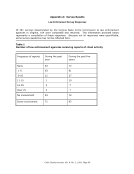
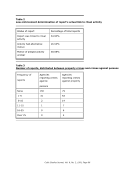
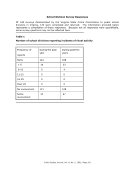
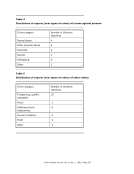
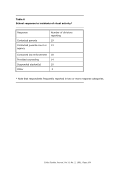
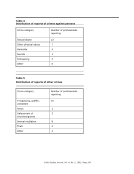
Results of the follow-up interviews indicated that ritual crime in Virginia, to the degree that it
is found to exist, is limited primarily to individuals or very small groups (who might be
characterized as dabblers) and consists of trespassing, graffiti, and other vandalism.
Follow-up interviews exposed no evidence of any broad conspiracy of ritual crime. Local law
enforcement agencies throughout the Commonwealth and experts within the Virginia State
Police insisted that their investigations failed to uncover any organized network of crime that
could be attributed to the influences of a spiritual belief system.
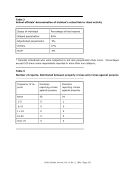
Greater in-depth review of survey responses by members of the mental health field revealed
ritual crime claims falling into the second group. Follow-up interviews of these respondents
evidenced a substantively different body of information. Generally these claims involved
information derived from clients, were anecdotal in nature, and lacked detail concerning dates
and locations of alleged offenses. Additionally, they involved incidents that were years or
decades old. The nature of such claims makes verification exceedingly difficult, if not
impossible. It also suggests an aspect of this phenomenon that is fundamentally different
from the more specific allegations provided by law enforcement and social service agencies
and schools.
Testimony
On a number of occasions the task force received testimony involving allegations of ritual
crime. Academics, law enforcement officers, and alleged victims came before the task force in
public and private hearings (authorized by Section 9-134 of the Code of Virginia), the latter
being necessitated both by concern associated with the safety of certain witnesses and the
potentially sensitive nature of material relating to on-going criminal enterprises and
investigations.
Evidence received in such meetings mirrored the conflicting opinions and accounts
encountered throughout the study. Disclosures by therapists and self-described victims of
ritual crime included allegations of nationwide conspiracies (as described previously in this
report). Alleged offenses included kidnapping, murder, and physical and emotional abuse,
though witnesses were typically unable to provide specific details as to locations of events,
dates on which they occurred, or names of victims other than themselves.
Law enforcement officers (from the national, state, and local level) appearing before the task
force challenged these claims. While some of these witnesses suggested the possibility of
criminal activity between state lines, all rejected as untenable the existence of an organized
crime network as pervasive as that being asserted. Citing the lack of physical evidence,
missing persons, or other indications of the alleged crimes, these officers disputed the claims
of criminal activity and therefore failed to reach the more specific issue of whether such
alleged crime had occult influence as its origin.
Therapists who claimed experience in treating victims of ritual crime offered contrasting
positions on the veracity of a victim‟s testimony. While some expressed the conviction that
much of this testimony was accurate, others noted that victims of abuse, as well as those
suffering various emotional and psychological conditions, may assert such claims for
numerous reasons.
In its totality the testimony reaffirmed the need for separate discussion of concerns
experienced by law enforcement personnel and those encountered by professionals in the
field of mental health.
The Mental Health Perspective
Based upon the number of claims of ritual abuse emanating from therapists and their clients it
is evident that significant concerns exist in this arena. The cumulative research (including
interviews with and testimony of numerous licensed mental health practitioners) indicates