5 VOLUME 7 |ISSUE 1 |2016
About the Author
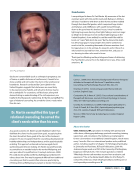
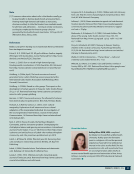
Steve K. D. Eichel, PhD, ABPP, is President of ICSA. For more
information, see page 27.
and all the other social/psychological processes that are often
clumped together as thought reform or brainwashing… these
processes have been around since the beginning of recorded
history and will no doubt be with us in some form or another
until the end of time. Yes, these cultic processes give us the small,
family-based cults but they also give us the purveyors of mass
destruction, such as ISIS or ISIL, or—and I strongly believe this—
movements such as Nazism, which began as a political cult, or
Stalinism, which became a destructive cult of personality.
The history of cultic processes is the history of religious and
political extremism and is therefore the history of mankind’s
misery and suffering at the hands of our fellow men and women.
So when I am asked, “How is the study of cults relevant?,” I am
always tempted to respond, “How is it not relevant?”
ICSA is a unique organization because, as I have often argued, at
our core we are cult-critical rather than anticult. That is a subtle
but important distinction. Although some of our members fight
cults, ICSA as an organization does not. Our goal is to bring to
bear the best we know from the fields of science (including but
not limited to sociology and psychology) and the healing arts
as they are applied to the cult phenomenon. To the chagrin of
some in the anticult field, we invite dialogue and discussion and
do not endorse any list of individual cultic groups. Although we
do screen those who wish to attend preconference workshops
for current or former cult members, in order to ensure freedom
from harassment or other forms of unwanted attention, our
main conference is open to anyone. The only requirements are
that you pay your registration fee and treat other attendees with
dignity and respect.
Thirty years ago, this approach seemed dubious and suspect to
me like many others, I was concerned that ICSA (which was then
AFF, the American Family Foundation) would become unsafe for
those former members who might feel especially vulnerable, or
who needed to maintain anonymity lest a cultic group interfere
with the former member’s family or loved ones who were still
involved in their group. I had other fears, including the fear that
cultic groups might take advantage of an open-door policy and
subvert our work or even take over our organization. But I was
convinced, by both the arguments of our then President, Herb
Rosedale, and my own faith that ultimately truth will triumph
in an open and free society, that AFF and then ICSA should
not close our doors on any point of view, as long as the people
presenting their views do so in a civil and respectful manner.
I remember feeling inspired by former German Chancellor Willy
Brandt’s Ostpolitik, which engaged the Stalinist regime of East
Germany with dignity and respect, and—I believe—ultimately
hastened the downfall of the totalistic, cultic East German
government. So as we go about our work—and our fun—this
weekend, remember to treat your fellow attendee with respect
and consideration, for none of us is the sole possessor of an
absolute truth rather, the degree to which we can come close
to any truth is intimately dependent on the degree to which we
can engage each other openly and honestly, and appreciate a
diversity of experiences and worldviews.
Attendees at ICSA conferences come from a range of national,
religious, political, cultural, and ethnic backgrounds. To
paraphrase a quote wrongly attributed to Mahatma Gandhi, we
can be the pluralist society we want to see in the world. So go ye
forth and multiply… your thoughts.
Our goal is to bring to bear the best
we know from the fields of science …
and the healing arts as they are
applied to the cult phenomenon.
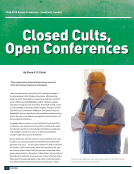
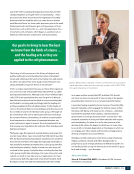
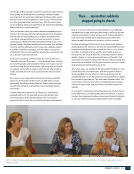
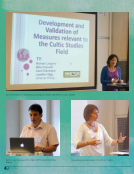
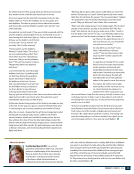
Barbro Westerholm, Swedish member of Parliament and human-
rights advocate, addresses the opening session of the 2015 ICSA
Annual Conference in Stockholm.
About the Author
Steve K. D. Eichel, PhD, ABPP, is President of ICSA. For more
information, see page 27.
and all the other social/psychological processes that are often
clumped together as thought reform or brainwashing… these
processes have been around since the beginning of recorded
history and will no doubt be with us in some form or another
until the end of time. Yes, these cultic processes give us the small,
family-based cults but they also give us the purveyors of mass
destruction, such as ISIS or ISIL, or—and I strongly believe this—
movements such as Nazism, which began as a political cult, or
Stalinism, which became a destructive cult of personality.
The history of cultic processes is the history of religious and
political extremism and is therefore the history of mankind’s
misery and suffering at the hands of our fellow men and women.
So when I am asked, “How is the study of cults relevant?,” I am
always tempted to respond, “How is it not relevant?”
ICSA is a unique organization because, as I have often argued, at
our core we are cult-critical rather than anticult. That is a subtle
but important distinction. Although some of our members fight
cults, ICSA as an organization does not. Our goal is to bring to
bear the best we know from the fields of science (including but
not limited to sociology and psychology) and the healing arts
as they are applied to the cult phenomenon. To the chagrin of
some in the anticult field, we invite dialogue and discussion and
do not endorse any list of individual cultic groups. Although we
do screen those who wish to attend preconference workshops
for current or former cult members, in order to ensure freedom
from harassment or other forms of unwanted attention, our
main conference is open to anyone. The only requirements are
that you pay your registration fee and treat other attendees with
dignity and respect.
Thirty years ago, this approach seemed dubious and suspect to
me like many others, I was concerned that ICSA (which was then
AFF, the American Family Foundation) would become unsafe for
those former members who might feel especially vulnerable, or
who needed to maintain anonymity lest a cultic group interfere
with the former member’s family or loved ones who were still
involved in their group. I had other fears, including the fear that
cultic groups might take advantage of an open-door policy and
subvert our work or even take over our organization. But I was
convinced, by both the arguments of our then President, Herb
Rosedale, and my own faith that ultimately truth will triumph
in an open and free society, that AFF and then ICSA should
not close our doors on any point of view, as long as the people
presenting their views do so in a civil and respectful manner.
I remember feeling inspired by former German Chancellor Willy
Brandt’s Ostpolitik, which engaged the Stalinist regime of East
Germany with dignity and respect, and—I believe—ultimately
hastened the downfall of the totalistic, cultic East German
government. So as we go about our work—and our fun—this
weekend, remember to treat your fellow attendee with respect
and consideration, for none of us is the sole possessor of an
absolute truth rather, the degree to which we can come close
to any truth is intimately dependent on the degree to which we
can engage each other openly and honestly, and appreciate a
diversity of experiences and worldviews.
Attendees at ICSA conferences come from a range of national,
religious, political, cultural, and ethnic backgrounds. To
paraphrase a quote wrongly attributed to Mahatma Gandhi, we
can be the pluralist society we want to see in the world. So go ye
forth and multiply… your thoughts.
Our goal is to bring to bear the best
we know from the fields of science …
and the healing arts as they are
applied to the cult phenomenon.
Barbro Westerholm, Swedish member of Parliament and human-
rights advocate, addresses the opening session of the 2015 ICSA
Annual Conference in Stockholm.