19 VOLUME 7 |ISSUE 1 |2016
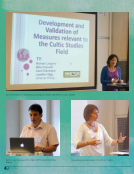
ICSA 2015 Annual Conference -Stockholm, Sweden
Family Structure
The traditional family system is composed of father, mother, and
children. Grandparents, aunts, uncles, and close friends of the
parents may also be involved to varying degrees and there is
some form of structure or hierarchy, with parents deciding and
implementing how children are raised. In contrast, cults and cultic
groups tend to diminish the role of parents and increase the
role of leaders in raising children, often controlling members by
breaking down this bond between biological family members.1
Some cults functionally replace the traditional family, placing a
cult leader in the role of parent, and relegating parents to the role
of powerless peers to the child.
Parenting in cults is dictated by leadership to fulfill the goals of
the group without consideration of what might benefit or hurt
the child. For example, Perry and Szalavitz (2007) describe the
effect of David Koresh and the Branch Davidians on one child’s
sense of family and self:
His drawing reflected what he had learned in the
group: the elaboration of things that Koresh valued,
the dominance of its supreme leader, a confused,
impoverished sense of family and an immature,
dependent picture of himself. (para. 31)
Ultimately, the leader usurps the power from the biological
parents and becomes the central, all-powerful figure in the lives
of both parents and child (Goldberg, 2006b Whitsett &Kent,
2003).
In some cults, parents and children are physically removed from
each other (Whitsett &Kent, 2003). Some cults require children
to enter cult-run boarding schools. Other cults coerce parents to
give away their children to other adults within the group. More
subtle ways of breaking down the familial bond include shaming
parents in front of their children and taking away parents’ control
over how their children are raised (Goldberg, 2006b Markowitz &
Halperin, 1984 Whitsett &Kent, 2003). The role of the biological
parent becomes greatly diminished as children witness the
degradation of their parents by the leader. Members and their
children view the leader as omniscient, and therefore the leader
as the idealized other becomes a substitute for the parent
(Whitsett &Kent, 2003).
Cult As Socializing System
We may view the cult environment as a socializing system, which
is much more influential on children than adults. In a traditional
family situation, the parents, children, siblings, extended family,
and friends exist within and accept the broader society, which
The following article draws on two papers the author wrote for ICSA’s New York City Educational Outreach Committee, as part
of the committee’s series of model presentations on cultic issues. The committee’s work was presented at ICSA’s 2015 Annual
Conference in Stockholm. Illustrative examples used in this paper include some from the author’s own experience and some
from experiences recounted to the author by others (details have been changed to protect their identities).
Impact on Children of Being Born
Into/Raised in a Cultic Group
By Ashley Allen
Ultimately, the leader usurps the
power from the biological parents…
ICSA 2015 Annual Conference -Stockholm, Sweden
Family Structure
The traditional family system is composed of father, mother, and
children. Grandparents, aunts, uncles, and close friends of the
parents may also be involved to varying degrees and there is
some form of structure or hierarchy, with parents deciding and
implementing how children are raised. In contrast, cults and cultic
groups tend to diminish the role of parents and increase the
role of leaders in raising children, often controlling members by
breaking down this bond between biological family members.1
Some cults functionally replace the traditional family, placing a
cult leader in the role of parent, and relegating parents to the role
of powerless peers to the child.
Parenting in cults is dictated by leadership to fulfill the goals of
the group without consideration of what might benefit or hurt
the child. For example, Perry and Szalavitz (2007) describe the
effect of David Koresh and the Branch Davidians on one child’s
sense of family and self:
His drawing reflected what he had learned in the
group: the elaboration of things that Koresh valued,
the dominance of its supreme leader, a confused,
impoverished sense of family and an immature,
dependent picture of himself. (para. 31)
Ultimately, the leader usurps the power from the biological
parents and becomes the central, all-powerful figure in the lives
of both parents and child (Goldberg, 2006b Whitsett &Kent,
2003).
In some cults, parents and children are physically removed from
each other (Whitsett &Kent, 2003). Some cults require children
to enter cult-run boarding schools. Other cults coerce parents to
give away their children to other adults within the group. More
subtle ways of breaking down the familial bond include shaming
parents in front of their children and taking away parents’ control
over how their children are raised (Goldberg, 2006b Markowitz &
Halperin, 1984 Whitsett &Kent, 2003). The role of the biological
parent becomes greatly diminished as children witness the
degradation of their parents by the leader. Members and their
children view the leader as omniscient, and therefore the leader
as the idealized other becomes a substitute for the parent
(Whitsett &Kent, 2003).
Cult As Socializing System
We may view the cult environment as a socializing system, which
is much more influential on children than adults. In a traditional
family situation, the parents, children, siblings, extended family,
and friends exist within and accept the broader society, which
The following article draws on two papers the author wrote for ICSA’s New York City Educational Outreach Committee, as part
of the committee’s series of model presentations on cultic issues. The committee’s work was presented at ICSA’s 2015 Annual
Conference in Stockholm. Illustrative examples used in this paper include some from the author’s own experience and some
from experiences recounted to the author by others (details have been changed to protect their identities).
Impact on Children of Being Born
Into/Raised in a Cultic Group
By Ashley Allen
Ultimately, the leader usurps the
power from the biological parents…