20 ICSA TODAY
consists of individuals in schools, the legal and political system,
the economic sphere, and so on. Cults often tend to isolate
themselves psychologically or physically or both, and strive for
such total control over members’ lives that the cult becomes
the society for its members. This tendency toward totalism
is especially significant for children raised in the cult. Unlike
adults who become involved in a coercive group, a child has no
precult identity or experience. The cultic world pervades a child’s
experience and perception during critical times in brain growth
and development, when neural pathways are being formed,
identity developed, and a view of the world established as a safe
or hostile environment. The high-control cultic environment
creates the conditions for abuse and sometimes even trauma.
Herman (1997) explains, “Repeated trauma in adult life erodes
the structure of the personality already formed, but repeated
trauma in childhood forms and deforms the personality” (p. 96).
High-demand groups vary in degree of isolation from
mainstream society. Some groups limit all interaction with
outside society: They live in isolated communities homeschool
their children refuse outside medical care and eliminate
access to mainstream news, television, books, music, and so on.
Other groups allow members to live, work, and go to school in
mainstream society however, these groups also tend to exhibit
such high levels of control that children are pressured to project
an approved persona, so that even when they do come into
contact with outsiders, their behavior is often scripted and
dishonest.
Children are taught that the world inside the cult is “good” while
the world outside is “evil” and to be feared. Perry and Szalavitz
(2007) use the example of the Branch Davidians, relating that
“…perhaps the most pervasive fear Koresh instilled was the fear
of the ‘Babylonians’: outsiders, government agents, nonbelievers”
(para. 5). While adult cult members are also indoctrinated to fear
and distrust the outside world, in children this is exponentially
magnified.
Lalich and Tobias (2004) explain that children raised outside
of cults come into contact with many different individuals,
personalities, and belief structures. In contrast, children
raised in cults do not have this multidimensional influence on
their development. They are raised in an environment where
there is only one way of being and believing (2004). Cults are
characterized by black-and-white, us-versus-them thinking.
As with adults, independent, autonomous thinking and feeling
on the part of children in cultic environments is severely
suppressed, which hampers normal cognitive and emotional
development. Furnari (2005) observes that “Children, who
are naturally striving to accomplish normal developmental
tasks such as identity, safety, and independence, are labeled
‘possessed,’ crazy, or bad” (para. 10). Harsh punishments for
questioning or rebellious behavior diminish independent
thinking and interfere with healthy cognitive development
(Whitsett &Kent, 2003). Goldberg (2006b) suggests that many
children cope with these extreme punishments and the anxiety
that is evoked by becoming passive.
In addition to cognitive suppression, cults suppress emotions.
Cults typically do not tolerate the expression of anger or grief
therefore, children have little experience with self-regulation of
emotions and affect (Goldberg, 2006b). Cults also dictate what
emotions are acceptable and can be expressed by members
(Wehle, 2010). Suppression of emotions is as important and
potentially harmful as cognitive suppression because the two are
intimately connected. May (1994) explains, “data in Rorschach
responses ...indicate that people can more accurately observe
precisely when they are emotionally involved—that is, reason
works better when emotions are present...” (as cited in Wehle,
2010, p. 47). Therefore, if emotions are suppressed in the cult
environment, then the ability to think critically will also be
severely hampered (Wehle, 2010).
Another dimension of emotion and cognition is creativity.
Wehle (2010) conducted a survey of former cult members and
mental-health professionals who were working with former
members and found that the majority of respondents felt that
their creativity had been suppressed in the cult environment. As
the expression of emotions is coercively denied within the cult
environment, creativity is interrupted. For example, a child in a
cultic group experiences the loss of her mother. In an attempt
to grieve and cope with the loss, she uses drawing as a creative
medium through which to explore her emotions. A person in
leadership finds the drawings, shreds them in front of her, and
punishes her for (a) feeling sadness for something that was
obviously God’s plan and (b) indulging in selfish pursuits that
do not further the needs of the group. Her creativity, and her
ability to process difficult emotions and make meaning of the
experience have been denied.
One powerful way in which children use creativity and symbols
is through play. Many cultic groups discourage play in children,
labeling it “foolishness” or “distraction.” For example, one second-
generation former member related that between the ages of 3
and 4 she was paddled daily for “playing baby” with rolled-up
blankets.
Creative suppression impacts the development of children in
significant ways. Those who study child development agree
that creativity, especially play, is essential for healthy cognitive
and emotional growth in children. Play increases attention
span, problem-solving skills, cognitive flexibility, recognition
of emotions in others, and bonding between parent and child.
Play can be defined as “any activity freely chosen, intrinsically
motivated, and personally directed. It stands outside ‘ordinary’
life, and is non-serious...” (Goldstein, 2012, p. 5). These are all
things that are not allowed within cultic environments. Looking
at it through the lens of neuroscience, play increases neural
connections and brain growth. Therefore, children who do not
have the opportunity to play show impaired brain development.
Therefore, children who do not
have the opportunity to play show
impaired brain development.
consists of individuals in schools, the legal and political system,
the economic sphere, and so on. Cults often tend to isolate
themselves psychologically or physically or both, and strive for
such total control over members’ lives that the cult becomes
the society for its members. This tendency toward totalism
is especially significant for children raised in the cult. Unlike
adults who become involved in a coercive group, a child has no
precult identity or experience. The cultic world pervades a child’s
experience and perception during critical times in brain growth
and development, when neural pathways are being formed,
identity developed, and a view of the world established as a safe
or hostile environment. The high-control cultic environment
creates the conditions for abuse and sometimes even trauma.
Herman (1997) explains, “Repeated trauma in adult life erodes
the structure of the personality already formed, but repeated
trauma in childhood forms and deforms the personality” (p. 96).
High-demand groups vary in degree of isolation from
mainstream society. Some groups limit all interaction with
outside society: They live in isolated communities homeschool
their children refuse outside medical care and eliminate
access to mainstream news, television, books, music, and so on.
Other groups allow members to live, work, and go to school in
mainstream society however, these groups also tend to exhibit
such high levels of control that children are pressured to project
an approved persona, so that even when they do come into
contact with outsiders, their behavior is often scripted and
dishonest.
Children are taught that the world inside the cult is “good” while
the world outside is “evil” and to be feared. Perry and Szalavitz
(2007) use the example of the Branch Davidians, relating that
“…perhaps the most pervasive fear Koresh instilled was the fear
of the ‘Babylonians’: outsiders, government agents, nonbelievers”
(para. 5). While adult cult members are also indoctrinated to fear
and distrust the outside world, in children this is exponentially
magnified.
Lalich and Tobias (2004) explain that children raised outside
of cults come into contact with many different individuals,
personalities, and belief structures. In contrast, children
raised in cults do not have this multidimensional influence on
their development. They are raised in an environment where
there is only one way of being and believing (2004). Cults are
characterized by black-and-white, us-versus-them thinking.
As with adults, independent, autonomous thinking and feeling
on the part of children in cultic environments is severely
suppressed, which hampers normal cognitive and emotional
development. Furnari (2005) observes that “Children, who
are naturally striving to accomplish normal developmental
tasks such as identity, safety, and independence, are labeled
‘possessed,’ crazy, or bad” (para. 10). Harsh punishments for
questioning or rebellious behavior diminish independent
thinking and interfere with healthy cognitive development
(Whitsett &Kent, 2003). Goldberg (2006b) suggests that many
children cope with these extreme punishments and the anxiety
that is evoked by becoming passive.
In addition to cognitive suppression, cults suppress emotions.
Cults typically do not tolerate the expression of anger or grief
therefore, children have little experience with self-regulation of
emotions and affect (Goldberg, 2006b). Cults also dictate what
emotions are acceptable and can be expressed by members
(Wehle, 2010). Suppression of emotions is as important and
potentially harmful as cognitive suppression because the two are
intimately connected. May (1994) explains, “data in Rorschach
responses ...indicate that people can more accurately observe
precisely when they are emotionally involved—that is, reason
works better when emotions are present...” (as cited in Wehle,
2010, p. 47). Therefore, if emotions are suppressed in the cult
environment, then the ability to think critically will also be
severely hampered (Wehle, 2010).
Another dimension of emotion and cognition is creativity.
Wehle (2010) conducted a survey of former cult members and
mental-health professionals who were working with former
members and found that the majority of respondents felt that
their creativity had been suppressed in the cult environment. As
the expression of emotions is coercively denied within the cult
environment, creativity is interrupted. For example, a child in a
cultic group experiences the loss of her mother. In an attempt
to grieve and cope with the loss, she uses drawing as a creative
medium through which to explore her emotions. A person in
leadership finds the drawings, shreds them in front of her, and
punishes her for (a) feeling sadness for something that was
obviously God’s plan and (b) indulging in selfish pursuits that
do not further the needs of the group. Her creativity, and her
ability to process difficult emotions and make meaning of the
experience have been denied.
One powerful way in which children use creativity and symbols
is through play. Many cultic groups discourage play in children,
labeling it “foolishness” or “distraction.” For example, one second-
generation former member related that between the ages of 3
and 4 she was paddled daily for “playing baby” with rolled-up
blankets.
Creative suppression impacts the development of children in
significant ways. Those who study child development agree
that creativity, especially play, is essential for healthy cognitive
and emotional growth in children. Play increases attention
span, problem-solving skills, cognitive flexibility, recognition
of emotions in others, and bonding between parent and child.
Play can be defined as “any activity freely chosen, intrinsically
motivated, and personally directed. It stands outside ‘ordinary’
life, and is non-serious...” (Goldstein, 2012, p. 5). These are all
things that are not allowed within cultic environments. Looking
at it through the lens of neuroscience, play increases neural
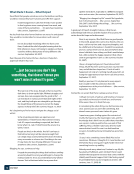
connections and brain growth. Therefore, children who do not
have the opportunity to play show impaired brain development.
Therefore, children who do not
have the opportunity to play show
impaired brain development.