Cultic Studies Journal, Vol. 14, No. 2, 1997, page 82
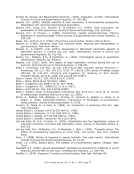
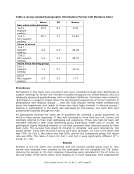
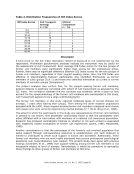
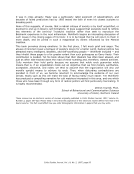
Table 4. Distribution Frequencies of ICE Index Scores
ICE Index Scores Cult 1 (support-
seeking)
(n =76)
Clinical
Comparison
(n =14)
0-4 1 4
5-9 3 5
10-14 8 2
15-19 15 1
20-24 18 1
25-29 17 0
30-34 8 0
35-39 5 0
40-44 1 0
Discussion
A total score on the ICE Index represents “extent of exposure to cult experiences” by the
respondent. Preliminary psychometric analyses indicate the instrument may be useful for
the assessment of cult involvement. First, average ICE Index scores for the two groups of
former cult members were significantly higher than scores for the Comparison group.
Further, there was no significant difference between ICE Index scores for the two groups of
former cult members, regardless of their support-seeking status. Also, the ICE Index was
effective in discriminating between participants who identified themselves as former
members of cultic groups (Cult 1) and those who identified themselves as current or former
members of noncultic groups (Comparison).
The present analyses also confirm that, for the support-seeking former cult members,
postcult distress is positively correlated with extent of cult involvement as assessed by the
ICE Index. The correlation between the two variables was moderate. While it does not fully
account for the symptomatology of the former cult members who participated in this study,
cult involvement appears to be a large contributing factor.
The former cult members in this study reported moderate levels of current distress (on
average, 7 years after leaving their group). From among the other research populations
assessed with the LASC, these support-seeking former cult members compared most closely
with people who were currently experiencing marital distress (X =36.4) (King et al., 1995).
The extent to which the participants in this study are representative of former cult members
in general is not known. One potentially confounding factor is that the participants were
either affiliated with or had contact with members of a national cult-awareness association.
Research has produced contradictory findings on whether or not such contact is associated
with negatively biased evaluations of former cult experiences (Lewis, 1986 MacDonald,
1988).
Another consideration is that the percentage of the formerly cult-involved population that
seeks support through cult-awareness resources is undetermined yet, such behavior is
limited to individuals to whom such support is known and accessible. Additionally, those
former cult members who are most highly distressed may pursue professional psychological
assistance over nonprofessional, peer support. The present study does agree with previous
findings (Chambers et al., 1994) that support-seeking among former cult members is not
necessarily related to level of distress. Nevertheless, it would be premature to generalize
these findings to other groups of former cult members at this time.