Cultic Studies Journal, Vol. 14, No. 2, 1997, page 18
In conclusion, there are costs to every solution to the question of admitting hypnotically
influenced testimony. Certainly, we consider a case-by-case review of the
“totality-of-the-circumstances” --the approach that the Borawick court approved --the
second best choice: far better than admission of such testimony automatically or admission
determined solely by adherence to inherently inadequate safeguards. But under this
“totality-of-the-circumstances” rule, experts would have debated whether Ms. Borawick‟s
testimony about blood-drinking, black-robed Masons engaged in ritual child abuse should be
admitted at trial. Under the “totality-of-the-circumstances” standard, all such arguments
would have to be considered on a case-by-case basis. If a myriad of such cases are to be
tried, both the costs, in time, effort, and expense, and the risks of major miscarriages of
justice, will be considerable.
When the Shirley (1982) court reflected on the case-by-case consideration of the effects of
hypnosis, they concluded that “the game isn‟t worth the candle” and held for a per se
exclusion. We concur case-by-case evaluation of hypnotically influenced testimony is not
worth the extensive judicial and psychological resources it requires nor the risks it incurs.
Notes
1. These safeguards were originally proposed by the second author in an amicus brief in
California v. Quaglino (1978). After over a decade of experience, he and his
colleagues arrived at a consensus that such safeguards are inadequate to protect the
fact-finding process (cf. Orne et al., 1984). This consensus was reflected by the
American Medical Association‟s statements on this issue (AMA, 1985, 1994).
2. Of course there are times when an exception must be made. The criminal defendant
who has been hypnotized has a constitutional right to tell his story (Rock v.
Arkansas, 1987). Moreover, we agree that anyone who claims to have been abused
during hypnosis is entitled to case by case consideration under a totality of the
circumstances standard. But such exceptions are relatively rare.
3. A full discussion of the scientific literature on memory and hypnosis over the past
two decades is beyond the scope of this paper. We note here that an appropriate
review must examine the literature in light of the specific research paradigms
employed the presence or absence of a clear, coherent memory prior to hypnosis
the circumstances of original encoding controls for productivity how hypnotizability
was measured the demand effects in specific studies and so on. If such distinctions
are not made, reviews can be quite misleading.
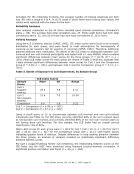
For example, Spanos, Gwynn, Comer, Baltruweit, and de Groh (1989) conducted two
experiments examining the impact of varied cross-examination conditions on
mistakes and misidentifications after misleading interrogation. In Experiment 1, high
and low hypnotizables in hypnosis, imagery, or control conditions were shown a film
depicting the robbery of a candy store by a Caucasian male in his late teens. The
offender was seen for 30 seconds of a 3-minute, color video in which subjects saw
both full body shots and close-ups of the offender‟s face and upper body. After
viewing the film, subjects were asked to relate everything they would have felt and
done had they been in the store. They were then asked to describe what happened
in the film, what the offender looked like, was wearing, and what he said and did.
Several days later, subjects witnessed a second videotape in which they saw a
suspect arrested and fingerprinted. The suspect, however, was not the perpetrator in
film one, differing from him in a number of ways, including eight distinctions about
which misleading questions were asked.
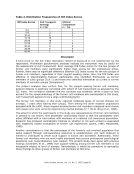
Subjects who made at least one misattribution in line with leading questions, or who
misidentified the perpetrator in a photo lineup from a display that contained a foil but