Cultic Studies Journal, Vol. 14, No. 2, 1997, page 78
on their beliefs, rather than the underlying philosophy of the group. Section 2 inquired
about the behaviors and actions of either group leaders or other members, undertaken at
the direction of the leaders. Section 3 inquired about actions and experiences of the
respondent, undertaken at the group‟s direction. Section 4 asked about respondents‟
knowledge of severe abuse experienced by other cult members. Items were scored
dichotomously (yes/no) for the purpose of preliminary psychometric analysis.
Method
Participants
One hundred and four subjects participated in this study. The primary sample group (Cult 1)
consisted of 77 self-identified former cult members, who were currently active in support
groups for former cult members sponsored by a national cult awareness organization.
One comparison group (Cult 2) consisted of 14 self-identified former cult members who had
never sought support for their cultic group experience. They were contacted for participation
in this project by members of the primary sample group.
A second comparison group (Comparison) consisted of 13 former or present members of
noncultic groups, who were current clients of a religiously sponsored psychotherapy clinic,
and who had no detected previous affiliation with a cult.
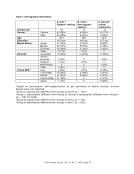
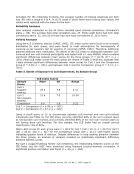
As shown in Table 1, participants in this study were primarily Caucasian females with some
college education. There were significantly more females and fewer males in the
Comparison group than in either the Cult 1 or Cult 2 groups. Marital status differed
significantly between groups the Comparison group had the highest number of single
participants, and Cult 2 had the highest number of married participants. There were also
more participants in the Cult 1 and Comparison groups who judged themselves to be upper-
class or upper-middle-class than in Cult 2.
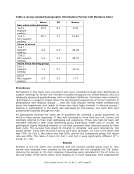
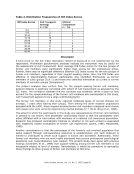
Table 2 shows group-related demographics for the two groups of former cult members.
Demographic differences between sample groups were not statistically significant. Former
cult members tended to have joined their groups as young adults, and stayed in their
groups for an average of 6 years. Subjects in this study were away from their groups an
average of approximately 7 years.
Measures
Demographic and history information used in this study was gathered with the Vietnam
Veterans History Questionnaire (VVHQ) (Foy et al., 1984), with minor adaptations for use
with former cult members.
Current distress was measured with the Los Angeles Symptom Checklist (LASC), a
standardized instrument for the assessment of distress, especially posttraumatic stress
disorder (PTSD), in victimization populations (King et al., 1995). The LASC is a list of 43
symptoms of general psychological distress, each of which are rated on a scale of 0 (not a
problem) to 4 (an extreme problem).
Using a multisample data set, the LASC responses has been shown to possess high internal
consistency and test-retest reliability. Acceptable levels of concurrent and convergent
validity have been demonstrated with comparisons to the Structured Clinical Interview for
DSM-III-R (SCID) PTSD Module, and with consistently significant correlations between LASC
scores and measures of trauma exposure severity (King et al., 1995).