Cultic Studies Journal, Vol. 14, No. 2, 1997, page 6
information) is a very rare phenomenon. Combined, the two authors of this paper have
more than 50 years of clinical experience in this area we have seen a total of three such
cases.4
Moreover, while psychogenic amnesia is very rare, psychogenic fugues are rarer still.
Multiple personality disorder (MPD), now called dissociative identity disorder (DID), is a
combination of quickly shifting fugues and highly specific amnesias. At present, the disorder
is rarely diagnosed outside of North America and Holland the limited geographic nature of
this disorder is an indication that it occurs only when viewed as a legitimate social role (cf.
Orne &Bauer-Manley, 1991 Spanos, 1996). In this way it is unlike other forms of severe
psychopathology, such as major depression, schizophrenia, and bipolar disorder, whose
incidence is relatively the same cross-culturally (Davison &Neale, 1996). Further, the
mental mechanisms DID requires contradict a good deal of what is scientifically known
about memory. Moreover, DID has a very high rate of comorbidity with borderline
personality disorder (BPD) BPD patients tend to welcome melodramatic roles irrespective of
their content. Additional factors are described by Karlin &Orne (1996) and by Spanos
(1996) all lead to the view that the present form of DID is largely, if not entirely,
iatrogenic.
Turning to horrific memories for the remote past, supposedly lost for decades and recovered
in relatively pristine, highly accurate form, we seem to be encountering another largely
iatrogenic phenomenon. Interestingly, such recovered memories have frequently included
stories of satanic ritual abuse, as for example, Ms. Borawick‟s story did. In fact, the Witches‟
Sabots routinely described in such stories are quite similar to descriptions of Sabots current
during the Middle Ages. However, careful scholarship has established that such tales were
fantasies in the Middle Ages as well as now (Mulhern, 1994). Moreover, law enforcement
efforts to track down any satanic cults in question have led to the conclusion that they do
not exist (Lanning, 1991). This, among other reasons, would lead us to believe that fantasy
often plays a major part in the creation of recovered memory narratives.
Based on these and other factors, both the United States District Court, District of
Connecticut and the U.S. Court of Appeals for the Second Circuit refused to admit Ms.
Borawick‟s recovered memories of incest and satanic ritual abuse (Borawick v. Shay, 1995).
In this regard, the Borawick courts acted similarly to the vast majority of courts asked to
admit accounts of memories recovered after long periods of amnesia. With rare exceptions,
our courts have deemed such testimony more likely to lead us away from the truth than
towards it, and therefore inadmissible.
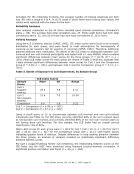
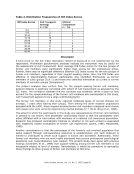
Note that the present authors do not believe that all recovered memories, even all those
elicited with hypnosis, are false. But examining the data with a Bayesian analysis, whose
assumptions lowered the proportion of false positives below realistic expectations, we
computed that of 40 cases of carefully diagnosed recovered memories of sexual child abuse,
between 29 and 35 out of 40 diagnoses would be false positives. This proportion was
consistent with those found in the similarly conservative analyses of Lindsay and Read
(1994) and of Kihlstrom (in press).
We also pointed out that therapy is usually a powerful, but benign process, with effect sizes
ranging from about .8 to 1.1 or 1.2. [In comparison, a 9-month reading program causes a
change of about 0.6 standard deviations in children‟s reading skills (Lindsay &Read, 1994).]
However, diagnoses of DID and of recovered memories of sexual abuse often lead to
lengthy treatments that for the most part seem to often do more harm than good. For
example, in the State of Washington a fund designated for the victims of crime was used to
pay for recovered memory therapy. However, payment was discontinued recently when a
follow-up showed patients getting worse, not better, with intensive, lengthy recovered
memory therapy.