Cultic Studies Journal, Vol. 14, No. 2, 1997, page 2
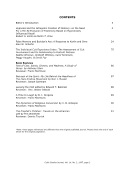
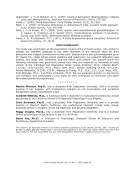
CONTENTS
Editor‟s Introduction 3
Hypnosis and the Iatrogenic Creation of Memory: on the Need 4
For a Per Se Exclusion of Testimony Based on Hypnotically
Influenced Recall
Robert A. Karlin &Martin T. Orne
False Memory and Buridan‟s Ass: A Response to Karlin and Orne 24
Alan W. Scheflin
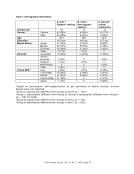
The Individual Cult Experience Index: The Assessment of Cult 75
Involvement and Its Relationship to Postcult Distress
Nadine Winocur, Jonibeth Whitney, Carol Sorenson,
Peggy Vaughn, &David Foy
Book Reviews
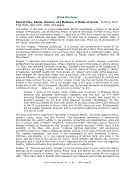
Feet of Clay: Saints, Sinners, and Madmen, A Study of 86
Gurus by Anthony Storr
Reviewer: Frank MacHovec
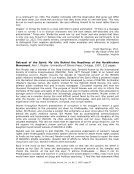
Betrayal of the Spirit: My Life Behind the Headlines of 87
The Hare Krishna Movement by Nori J. Muster
Reviewer: Joseph Szimhart
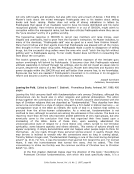
Leaving the Fold edited by Edward T. Babinski 88
Reviewer: Rev. Walter Debold
A Time to Laugh by B. J. Oropeza 89
Reviewer: Frank MacHovec
The Dynamics of Religious Conversion by V. B. Gillespie 90
Reviewer: Frank MacHovec
The Prophet’s Children: Travels on the American 91
Left by Tim Wohlforth
Reviewer: Dennis Tourish
*Note: these pages referenced are different than the original published journal. Please check the end of each
article for the original pagination.