Cultic Studies Review, Vol. 4, No. 1, 2005, Page 7
The Interview Schedule
Interviews followed a semi-structured protocol which ensured that the same information
was obtained from all participants while allowing each person to ―tell their story‖ in full. The
interview schedule was developed in order to capture the 12 aspects of the qualitative
research interview as outlined in Kvale (1996, p. 27). That is, the interview aimed to
understand in a focused way the subject’s every day life world as it related to parental
alienation and the meaning of the alienation for them, in a qualitative rather than
quantitative form, with an emphasis on description of specific experiences. This information
was obtained through a sensitively conducted interpersonal exchange that because of the
deliberate naiveté of the interviewer allowed the subject to express ambiguous statements
and come to new and/or changed understandings. The interview was conducted in such as
manner as to produce a positive experience for the participant.
The interview had five major sections. The first section of the interview obtained basic
demographic information including age, gender, place of birth, and so forth. Section two
focused on memories of the marriage, the participant‘s relationship to each parent up until
the time of the separation/divorce, how the participant was told about the separation, who
moved out of the house and a description of the custody/visitation schedule through the age
of 18.2 The third section of the interview focused on the alienation, beginning with which
parent was the alienating parent and which was the targeted parent. Participants were
asked to list all of the different strategies used by the alienating parent and to provide
examples of each. The participant was asked to describe his/her relationship to the targeted
parent and how that changed over time, as well as the participant‘s relationship to the
alienating parent during this period. This section ended with a discussion of how the
targeted parent tried to counter the alienation, whether the participant knew about these
attempts at the time, and the perceived motivation of the alienating parent. In the fourth
section of the interview, the participants were asked about when his or her thinking
eventually changed about the targeted parent. They were queried about when they began
to realize that their feelings and thoughts about the targeted parent were induced by the
alienating parent rather than based wholly in reality. Whether or not the alienating parent
was ever confronted, whether the targeted parent was told about the realization, and what,
if anything, could the targeted parent have done to mitigate the alienation were discussed.
Any reunification with the targeted parent was described in full including who initiated it and
what happened. The final section of the interview entailed a conversation about the person‘s
life at the present, including what kind of relationship he or she had with each parent and
what the impact of the alienation has been. At the end of the interview a checklist was
reviewed in order to ensure consistency of data across participants.
Analysis
Audiotapes were transcribed verbatim. Transcripts were then submitted to a content
analysis in which each unique unit of thought was separated from the transcript and taped
onto an index card. Content analysis was guided by an inductive grounded theory approach
(Berg, 1998 Straus, 1987) in which the texts were read in order to identify the major
themes. Cards were then coded according to its essential idea (i.e., relationship with
targeted parent prior to the alienation, strategies utilized by the alienating parent, impact of
the alienation). In all there were 11 major categories including a category on the strategies
utilized by the alienating parent. These ―strategy‖ cards were further coded into sub-
categories that produced the major findings presented in the current paper. This paper also
draws on the data collected pertaining to their relationship with the alienating parent. All
quotes are attributed to the participant number so that the reader can determine the age
and gender of the speaker as well as whether his or her parents separated/divorced, age of
that event, and who the custodial parent was.
The Interview Schedule
Interviews followed a semi-structured protocol which ensured that the same information
was obtained from all participants while allowing each person to ―tell their story‖ in full. The
interview schedule was developed in order to capture the 12 aspects of the qualitative
research interview as outlined in Kvale (1996, p. 27). That is, the interview aimed to
understand in a focused way the subject’s every day life world as it related to parental
alienation and the meaning of the alienation for them, in a qualitative rather than
quantitative form, with an emphasis on description of specific experiences. This information
was obtained through a sensitively conducted interpersonal exchange that because of the
deliberate naiveté of the interviewer allowed the subject to express ambiguous statements
and come to new and/or changed understandings. The interview was conducted in such as
manner as to produce a positive experience for the participant.
The interview had five major sections. The first section of the interview obtained basic
demographic information including age, gender, place of birth, and so forth. Section two
focused on memories of the marriage, the participant‘s relationship to each parent up until
the time of the separation/divorce, how the participant was told about the separation, who
moved out of the house and a description of the custody/visitation schedule through the age
of 18.2 The third section of the interview focused on the alienation, beginning with which
parent was the alienating parent and which was the targeted parent. Participants were
asked to list all of the different strategies used by the alienating parent and to provide
examples of each. The participant was asked to describe his/her relationship to the targeted
parent and how that changed over time, as well as the participant‘s relationship to the
alienating parent during this period. This section ended with a discussion of how the
targeted parent tried to counter the alienation, whether the participant knew about these
attempts at the time, and the perceived motivation of the alienating parent. In the fourth
section of the interview, the participants were asked about when his or her thinking
eventually changed about the targeted parent. They were queried about when they began
to realize that their feelings and thoughts about the targeted parent were induced by the
alienating parent rather than based wholly in reality. Whether or not the alienating parent
was ever confronted, whether the targeted parent was told about the realization, and what,
if anything, could the targeted parent have done to mitigate the alienation were discussed.
Any reunification with the targeted parent was described in full including who initiated it and
what happened. The final section of the interview entailed a conversation about the person‘s
life at the present, including what kind of relationship he or she had with each parent and
what the impact of the alienation has been. At the end of the interview a checklist was
reviewed in order to ensure consistency of data across participants.
Analysis
Audiotapes were transcribed verbatim. Transcripts were then submitted to a content
analysis in which each unique unit of thought was separated from the transcript and taped
onto an index card. Content analysis was guided by an inductive grounded theory approach
(Berg, 1998 Straus, 1987) in which the texts were read in order to identify the major
themes. Cards were then coded according to its essential idea (i.e., relationship with
targeted parent prior to the alienation, strategies utilized by the alienating parent, impact of
the alienation). In all there were 11 major categories including a category on the strategies
utilized by the alienating parent. These ―strategy‖ cards were further coded into sub-
categories that produced the major findings presented in the current paper. This paper also
draws on the data collected pertaining to their relationship with the alienating parent. All
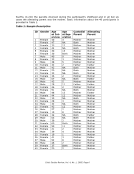
quotes are attributed to the participant number so that the reader can determine the age
and gender of the speaker as well as whether his or her parents separated/divorced, age of
that event, and who the custodial parent was.