Cultic Studies Review, Vol. 4, No. 1, 2005, Page 13
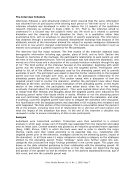
emotional price to pay if they had contact with the targeted parent. ―She would make life
rotten for us.‖ (2) ―She couldn‘t stand to see me actually get on with my father. She‘d make
her disapproval evident if I so much as spoke to him in a civilized way. This disapproval was
in the form of throwing sour looks my way, and then turning her back and ignoring me.‖
(12) Another participant said, ―She‘d treat me like the enemy.‖ (37) Some mothers accused
their children of not loving them if they went to visit the other parent, some threatened to
abandon their children, and one woman recalled her mother pointedly serving her an
inferior portion of food upon returning from a visit. When asked what it was like to come
home from a visit to his father, one participant responded, ―Oh it was very cold. She would
give me the cold shoulder.‖ (10) Several said their alienating parent would not speak to
them for several hours or the rest of the evening following returning from a visit. Because of
the child‘s profound dependency on the alienating parent, participants found it very hard to
tolerate their disapproval and subsequent withdrawal of love. ―I was scared to disagree with
my mother. Any disagreement on my part would cause her to either turn her venom against
me or threaten that ‗things would never be the same again after an argument like that‘,
which left me heartbroken and devastated.‖ (12) When imagining what it would feel like to
experience the disapproval of the alienating parents, others spoke of feeling ―lost,‖
―terrified,‖ and ―all alone.‖ Many said that when the alienating parent withdrew their love,
they became preoccupied with winning that parent back. ―It was scary. It made me want to
try harder.‖ (40) Thus, fear of withdrawal of love was a powerful threat that was used by
the alienating parents to control their children and reduce their affection towards and
relationship with the targeted parent.
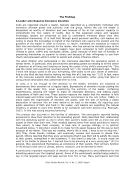
Erasing the Other Parent
Cults tend to be exclusive social environments in which members are surrounded by like-
minded people. Lifton (1989) described the totalistic nature of cults as milieu control. The
likelihood of contact with alternate viewpoints and perspectives is almost nonexistent. The
leader controls the reality of the members by controlling the flow of information in and out
of the cult. There is little opportunity for countervailing opinions and points of view to be
expressed to members. There is only one shared reality, which must be accepted in order to
be a member of the cult. All other ideas are excluded. Newspapers are not read, television
is not viewed, contact with outsiders who might question or introduce members to other
ways of thinking and believing is strictly forbidden (e.g., Muster, 2004).
The alienating parents of the study participants were described as operating the family in
much the same way, particularly as it related to the targeted parent. Participants were
forbidden to have contact with anyone who might speak well of the targeted parent,
especially extended family members. Most importantly, contact with the targeted parent
was minimized or eliminated all together. In this way, the child did not have any
independent experiences of the targeted parent and the parent him/herself had no
opportunity to explain his/her side or counter the campaign of lies. Few of the participants
had pictures of the targeted parent, and none were allowed to talk about him or her. Any
mention of the targeted parent was felt to be taboo, something to be avoided at all costs in
order to keep the peace in the family. ―My mother would get so mad she‘d almost start
shaking if the subject of my father came up.‖ (18) One woman was shoved down the stairs
when she mentioned her father and a young man recalled, ―Every time I mention my dad
all hell breaks loose. It was almost as if I knew if I mentioned that I wanted to go see my
dad I would be brow beaten into submission.‖ (9) Another study participant recalled that
when she said she wanted to see her father her mother jumped up from the dinner table
and went into her room crying. A few moments later her stepfather informed her that she
would be thrown out of the house if she mentioned her father again. One woman recalled
not being allowed to bring home gifts received during visits with her mother because, ―It
wasn‘t fair to the other kids. I wasn‘t allowed to talk about it.‖ (10) In all these ways, the
emotional price to pay if they had contact with the targeted parent. ―She would make life
rotten for us.‖ (2) ―She couldn‘t stand to see me actually get on with my father. She‘d make
her disapproval evident if I so much as spoke to him in a civilized way. This disapproval was
in the form of throwing sour looks my way, and then turning her back and ignoring me.‖
(12) Another participant said, ―She‘d treat me like the enemy.‖ (37) Some mothers accused
their children of not loving them if they went to visit the other parent, some threatened to
abandon their children, and one woman recalled her mother pointedly serving her an
inferior portion of food upon returning from a visit. When asked what it was like to come
home from a visit to his father, one participant responded, ―Oh it was very cold. She would
give me the cold shoulder.‖ (10) Several said their alienating parent would not speak to
them for several hours or the rest of the evening following returning from a visit. Because of
the child‘s profound dependency on the alienating parent, participants found it very hard to
tolerate their disapproval and subsequent withdrawal of love. ―I was scared to disagree with
my mother. Any disagreement on my part would cause her to either turn her venom against
me or threaten that ‗things would never be the same again after an argument like that‘,
which left me heartbroken and devastated.‖ (12) When imagining what it would feel like to
experience the disapproval of the alienating parents, others spoke of feeling ―lost,‖
―terrified,‖ and ―all alone.‖ Many said that when the alienating parent withdrew their love,
they became preoccupied with winning that parent back. ―It was scary. It made me want to
try harder.‖ (40) Thus, fear of withdrawal of love was a powerful threat that was used by
the alienating parents to control their children and reduce their affection towards and
relationship with the targeted parent.
Erasing the Other Parent
Cults tend to be exclusive social environments in which members are surrounded by like-
minded people. Lifton (1989) described the totalistic nature of cults as milieu control. The
likelihood of contact with alternate viewpoints and perspectives is almost nonexistent. The
leader controls the reality of the members by controlling the flow of information in and out
of the cult. There is little opportunity for countervailing opinions and points of view to be
expressed to members. There is only one shared reality, which must be accepted in order to
be a member of the cult. All other ideas are excluded. Newspapers are not read, television
is not viewed, contact with outsiders who might question or introduce members to other
ways of thinking and believing is strictly forbidden (e.g., Muster, 2004).
The alienating parents of the study participants were described as operating the family in
much the same way, particularly as it related to the targeted parent. Participants were
forbidden to have contact with anyone who might speak well of the targeted parent,
especially extended family members. Most importantly, contact with the targeted parent
was minimized or eliminated all together. In this way, the child did not have any
independent experiences of the targeted parent and the parent him/herself had no
opportunity to explain his/her side or counter the campaign of lies. Few of the participants
had pictures of the targeted parent, and none were allowed to talk about him or her. Any
mention of the targeted parent was felt to be taboo, something to be avoided at all costs in
order to keep the peace in the family. ―My mother would get so mad she‘d almost start
shaking if the subject of my father came up.‖ (18) One woman was shoved down the stairs
when she mentioned her father and a young man recalled, ―Every time I mention my dad
all hell breaks loose. It was almost as if I knew if I mentioned that I wanted to go see my
dad I would be brow beaten into submission.‖ (9) Another study participant recalled that
when she said she wanted to see her father her mother jumped up from the dinner table
and went into her room crying. A few moments later her stepfather informed her that she
would be thrown out of the house if she mentioned her father again. One woman recalled
not being allowed to bring home gifts received during visits with her mother because, ―It
wasn‘t fair to the other kids. I wasn‘t allowed to talk about it.‖ (10) In all these ways, the