Cultic Studies Review, Vol. 4, No. 1, 2005, Page 21
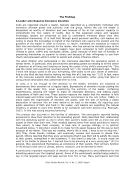
This partial background profile is certainly not universal. For example, many of the 9/11
hijackers were college-educated individuals who came from professional two-parent middle-
class homes. Nonetheless, it appears that terrorist group joiners from dysfunctional family
backgrounds are particularly susceptible to the seductive messages of charismatic leaders,
who offer them their first positively meaningful group experience. The leader becomes the
welcoming father figure, and the leader‘s group provides a close-knit family atmosphere.
Many joiners are individuals desperate to belong to a ―family‖ group, presumably because
their actual family groups did not fulfill their emotional affiliation needs.9
These unfulfilled needs make some individuals especially vulnerable to cult conditioning.
Terrorism researchers have compared terrorist groups to cults, and they have concluded
that the cult model is applicable to terrorist groups.10 Most cults center on a charismatic
leader. Charismatic leaders have many of the following characteristics: physical presence,
intelligence, experience, education and expertise, the ability to verbally and clearly
articulate the vision and the mission, and, most important, a strong emotional appeal. Most
joiners of cults respond to the leader‘s message first at an emotional level, then later at the
physical and intellectual levels. Joiners report that they have finally found someone who has
the answers to life‘s perplexing questions and who is therefore worthy of their total
commitment.11
In exchange for providing joiners with meaningful existences and for fulfilling their affiliative
emotional needs, the leader requests and receives unquestioning obedience from the
joiners. Long-term members of the group support the leader‘s obedience pressure by
applying conformity pressure on new joiners in order to forestall any deviation from the
group‘s mission or values. The joiners‘ initial susceptibility to this intense obedience and
conformity pressure makes them extremely vulnerable to the five-phase social psychological
conditioning process used in violent cults, which is summarized in Figure 1.
Figure 1: The Five Phases of Social Psychological Conditioning
Phase 1—Depluralization: stripping away all other group member identities
Phase 2—Self-deindividuation: stripping away each member‘s personal identity
Phase 3—Other-deindividuation: stripping away the personal identities of enemies
Phase 4—Dehumanization: identifying enemies as subhuman or nonhuman
Phase 5—Demonization: identifying enemies as evil
In essence, this process first eliminates a joiner‘s old social and personal identities
(depluralization and self-deindividuation) and then, in the case of extremist hate groups and
terrorist groups, reconditions joiners to hate and sometimes kill noncombatants upon
demand (other deindividuation, dehumanization, and demonization).
Numerous studies have demonstrated that, for most people, meaningful group affiliations
are important for psychological health.12 In stable, normal (non-crisis) societies, most
individuals are pluralized—that is, they fulfill their affiliative needs by belonging to a variety
of groups. None of these affiliations, with the possible exception of the family group, is
absolutely essential to an individual‘s self-concept.13
All cults, including terrorist groups, wish to change this normal pluralized state by
depluralizing potential joiners. Cults are frequently located in isolated environments. If
joiners agree to live in these isolated environments, it becomes easier for them to give up
This partial background profile is certainly not universal. For example, many of the 9/11
hijackers were college-educated individuals who came from professional two-parent middle-
class homes. Nonetheless, it appears that terrorist group joiners from dysfunctional family
backgrounds are particularly susceptible to the seductive messages of charismatic leaders,
who offer them their first positively meaningful group experience. The leader becomes the
welcoming father figure, and the leader‘s group provides a close-knit family atmosphere.
Many joiners are individuals desperate to belong to a ―family‖ group, presumably because
their actual family groups did not fulfill their emotional affiliation needs.9
These unfulfilled needs make some individuals especially vulnerable to cult conditioning.
Terrorism researchers have compared terrorist groups to cults, and they have concluded
that the cult model is applicable to terrorist groups.10 Most cults center on a charismatic
leader. Charismatic leaders have many of the following characteristics: physical presence,
intelligence, experience, education and expertise, the ability to verbally and clearly
articulate the vision and the mission, and, most important, a strong emotional appeal. Most
joiners of cults respond to the leader‘s message first at an emotional level, then later at the
physical and intellectual levels. Joiners report that they have finally found someone who has
the answers to life‘s perplexing questions and who is therefore worthy of their total
commitment.11
In exchange for providing joiners with meaningful existences and for fulfilling their affiliative
emotional needs, the leader requests and receives unquestioning obedience from the
joiners. Long-term members of the group support the leader‘s obedience pressure by
applying conformity pressure on new joiners in order to forestall any deviation from the
group‘s mission or values. The joiners‘ initial susceptibility to this intense obedience and
conformity pressure makes them extremely vulnerable to the five-phase social psychological
conditioning process used in violent cults, which is summarized in Figure 1.
Figure 1: The Five Phases of Social Psychological Conditioning
Phase 1—Depluralization: stripping away all other group member identities
Phase 2—Self-deindividuation: stripping away each member‘s personal identity
Phase 3—Other-deindividuation: stripping away the personal identities of enemies
Phase 4—Dehumanization: identifying enemies as subhuman or nonhuman
Phase 5—Demonization: identifying enemies as evil
In essence, this process first eliminates a joiner‘s old social and personal identities
(depluralization and self-deindividuation) and then, in the case of extremist hate groups and
terrorist groups, reconditions joiners to hate and sometimes kill noncombatants upon
demand (other deindividuation, dehumanization, and demonization).
Numerous studies have demonstrated that, for most people, meaningful group affiliations
are important for psychological health.12 In stable, normal (non-crisis) societies, most
individuals are pluralized—that is, they fulfill their affiliative needs by belonging to a variety
of groups. None of these affiliations, with the possible exception of the family group, is
absolutely essential to an individual‘s self-concept.13
All cults, including terrorist groups, wish to change this normal pluralized state by
depluralizing potential joiners. Cults are frequently located in isolated environments. If
joiners agree to live in these isolated environments, it becomes easier for them to give up