Cultic Studies Review, Vol. 4, No. 1, 2005, Page 5
with this scale). Mild cases are characterized by some parental programming against the
targeted parent but visitation is not seriously affected and the child manages to have a
reasonably healthy relationship with both parents. In cases of moderate parental alienation
there is significant parental programming against the targeted parent and considerable
struggle around visitation. The child often has difficulty during the transition but eventually
adjusts. The child who is severely alienated is adamant about his or her hatred of the
targeted parent. The child usually refuses any contact and may threaten to run away if
forced to visit. The alienating parent and the child have an unhealthy alliance based on
shared distorted ideas about the targeted parent. When this happens and the child wholly
adopts the views of the alienating parent and severs all ties with the targeted parent, the
child is living in something akin to a cult, the cult of the alienating parent.
According to West and Langone (1986) a cult1 is a hierarchical social group in which there is
a leader who requires excessive devotion, (2) has a leader who uses emotional manipulation
and persuasion techniques to heighten dependency on him or her, and (3) furthers the aims
of the leader at the expense of its members as well as others.1 Utilizing this definition
provides a useful basis for comparing cults to the characteristics of families in which
parental alienation occurs.
Of course, most families in western cultures are hierarchical social groups. Power is not
evenly distributed among the members of the family. Parents have legal, physical, moral,
and psychological control over their children. Even parents who respect their children‘s
individuality and aim to promote competence and autonomy retain some authority over
their children. In some families, however, parents exploit their inherent authority in order to
alienate the child from the other parent. The focus of the current study was to determine
whether these alienating parents resemble cult leaders that is, do they (1) require
excessive devotion, (2) use emotional manipulation techniques to heighten dependency,
and (3) garner psychological benefits at the expense of the well being of the child. This
analysis was accomplished through the current study of interviews with adult who – when
they were children – were turned against one parent by the other.
The Study
A qualitative retrospective study was conducted in the Fall of 2004. Guidelines for
conducting qualitative research developed by Berg (1998) were utilized throughout the
study. Subjects were recruited from word of mouth and from postings on the internet.
People who responded were asked to briefly describe their situation in order to ensure that
the alienation was at least in part due to the behaviors and attitudes of the other parent.
Appointments were made with people who met this criterion. At the beginning of each
appointment it was explained that the interview was voluntary, for research purposes, and
could be stopped at any time. It was also explained that although I am a psychologist I am
not a clinician and would not be able to provide counseling. Informed consent was obtained
and the audiotape was turned on. Only one person declined to participate after the study
was explained. The recruitment flyer called for people who had been turned against one
parent as a child due to the attitudes and behaviors of the other parent. In this way, only
people who were aware that the alienation was engineered by the other parent were
included in the study. This allowed for an examination of the process by which the individual
became aware that he or she had been manipulated to become alienated, which was one
important focus of the study.
The Sample
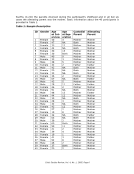
Forty-two adults participated in the interview process (2 were subsequently removed from
data analysis because of faulty tapes). An additional two people agreed to participate but
did not follow-up. Thus, data for 40 participants are presented. Participants were between
19 and 67 years of age (M=40.4, SD=11.4) 15 were male and 25 were female. For three
with this scale). Mild cases are characterized by some parental programming against the
targeted parent but visitation is not seriously affected and the child manages to have a
reasonably healthy relationship with both parents. In cases of moderate parental alienation
there is significant parental programming against the targeted parent and considerable
struggle around visitation. The child often has difficulty during the transition but eventually
adjusts. The child who is severely alienated is adamant about his or her hatred of the
targeted parent. The child usually refuses any contact and may threaten to run away if
forced to visit. The alienating parent and the child have an unhealthy alliance based on
shared distorted ideas about the targeted parent. When this happens and the child wholly
adopts the views of the alienating parent and severs all ties with the targeted parent, the
child is living in something akin to a cult, the cult of the alienating parent.
According to West and Langone (1986) a cult1 is a hierarchical social group in which there is
a leader who requires excessive devotion, (2) has a leader who uses emotional manipulation
and persuasion techniques to heighten dependency on him or her, and (3) furthers the aims
of the leader at the expense of its members as well as others.1 Utilizing this definition
provides a useful basis for comparing cults to the characteristics of families in which
parental alienation occurs.
Of course, most families in western cultures are hierarchical social groups. Power is not
evenly distributed among the members of the family. Parents have legal, physical, moral,
and psychological control over their children. Even parents who respect their children‘s
individuality and aim to promote competence and autonomy retain some authority over
their children. In some families, however, parents exploit their inherent authority in order to
alienate the child from the other parent. The focus of the current study was to determine
whether these alienating parents resemble cult leaders that is, do they (1) require
excessive devotion, (2) use emotional manipulation techniques to heighten dependency,
and (3) garner psychological benefits at the expense of the well being of the child. This
analysis was accomplished through the current study of interviews with adult who – when
they were children – were turned against one parent by the other.
The Study
A qualitative retrospective study was conducted in the Fall of 2004. Guidelines for
conducting qualitative research developed by Berg (1998) were utilized throughout the
study. Subjects were recruited from word of mouth and from postings on the internet.
People who responded were asked to briefly describe their situation in order to ensure that
the alienation was at least in part due to the behaviors and attitudes of the other parent.
Appointments were made with people who met this criterion. At the beginning of each
appointment it was explained that the interview was voluntary, for research purposes, and
could be stopped at any time. It was also explained that although I am a psychologist I am
not a clinician and would not be able to provide counseling. Informed consent was obtained
and the audiotape was turned on. Only one person declined to participate after the study
was explained. The recruitment flyer called for people who had been turned against one
parent as a child due to the attitudes and behaviors of the other parent. In this way, only
people who were aware that the alienation was engineered by the other parent were
included in the study. This allowed for an examination of the process by which the individual
became aware that he or she had been manipulated to become alienated, which was one
important focus of the study.
The Sample
Forty-two adults participated in the interview process (2 were subsequently removed from
data analysis because of faulty tapes). An additional two people agreed to participate but
did not follow-up. Thus, data for 40 participants are presented. Participants were between
19 and 67 years of age (M=40.4, SD=11.4) 15 were male and 25 were female. For three