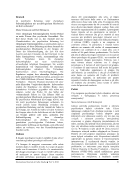
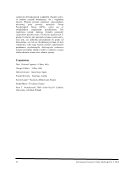
International Journal of Cultic Studies ■ Vol. 9, 2018 79
Cult Recovery: A Clinician’s Guide to Working With Former Members and
Family
By Lorna Goldberg, William Goldberg, Rosanne Henry, and Michael Langone
Reviewed by Cyndi Matthews
Bonita Springs, FL: International Cultic Studies
Association. 2017. ISBN-10: 0931337097
ISBN-13: 978-0931337093 (paperback). 500
pages. 79.00 (Amazon.com).
Cult Recovery: A Clinician’s Guide to Working
With Former Members and Family is a
comprehensive, landmark book that brings
together 26 leading experts, clinicians, and
researchers from the field of cult recovery.
These cult-recovery experts consider counseling
and research issues and offer various therapeutic
approaches for working with former cult
members and their families. Dr. Stephen Kent,
from the University of Alberta, Canada, has
described the book as containing “Decades of
valuable and useful research and treatment
experience…” (front matter). Dr. Carmen
Almendros, from Universidad Autónoma de
Madrid, Spain, asserts that the book is “A must
read for students and mental health
professionals” (front cover).” In the words of Dr.
Michael Langone, Executive Director of the
International Cultic Studies Association (ICSA)
and one of the book’s editors, the overall goal is
to bring together experts in the field of cult
recovery and explicitly point out how “different
experts approach the kinds of problems that
might confront therapists working with former
cult members or families of cultists” (p. xxiii).
I have counseled with both cult survivors and
current cult members I also have researched
former cult members and their experiences in
counseling situations. Thus, I personally have
been looking forward to this resource, the first
book of its kind, and I loved going through,
chapter by chapter, reading and learning from
the experts who deal with the specific and
traumatic issues former cult members and their
families face.
The Clinician’s Guide… was published by the
ICSA, which was founded in 1979 as the
American Family Foundation (AFF) by parents
who were concerned about their children
dropping out of college and joining cults. By the
1990s, AFF found that its membership and the
persons it was working with included both
current and former cult members along with
their families from outside the cult. Today,
ICSA notes that its membership reflects current
and former cult members and multigenerational
family members, along with the clinicians and
professionals who work with them (xvi–xviii).
The need for a clinician’s handbook focused on
cult recovery has been long recognized and
overdue. ICSA researchers have estimated that
more than 2,500,000 individuals in the United
States and Canada have joined cults over the
past 30 to 40 years (McCabe, Goldberg,
Langone, &DeVoe, 2007). Singer (2003)
estimated more than 5,000 cults were operating
in the United States and Canada. Because of the
prevalence of cults, Lottick (2005) discovered in
his cult-related study that 26% of clinicians,
therapists, psychologists, and counselors had
treated former cult members, and that 12% of
clinicians had treated current cult members. In
2008, in a subsequent study, Lottick’s findings
revealed an increase to 33% of psychologists
who had treated former members. Based on this
same study, Lottick also noted that 13% of these
same clinicians reported being personally
involved with cults, either through direct
experience or through the experiences of their
family members.
Cult Recovery: A Clinician’s Guide comprises
20 chapters divided into five different sections,
and an extensive bibliography of resources
written on the topic of cult recovery. In the
Introduction, Michael Langone succinctly and
clearly acquaints clinicians and other readers
with cults, types of cults, why people join and
stay in cults, and includes a list of symptoms
former cult members may exhibit once they have
Cult Recovery: A Clinician’s Guide to Working With Former Members and
Family
By Lorna Goldberg, William Goldberg, Rosanne Henry, and Michael Langone
Reviewed by Cyndi Matthews
Bonita Springs, FL: International Cultic Studies
Association. 2017. ISBN-10: 0931337097
ISBN-13: 978-0931337093 (paperback). 500
pages. 79.00 (Amazon.com).
Cult Recovery: A Clinician’s Guide to Working
With Former Members and Family is a
comprehensive, landmark book that brings
together 26 leading experts, clinicians, and
researchers from the field of cult recovery.
These cult-recovery experts consider counseling
and research issues and offer various therapeutic
approaches for working with former cult
members and their families. Dr. Stephen Kent,
from the University of Alberta, Canada, has
described the book as containing “Decades of
valuable and useful research and treatment
experience…” (front matter). Dr. Carmen
Almendros, from Universidad Autónoma de
Madrid, Spain, asserts that the book is “A must
read for students and mental health
professionals” (front cover).” In the words of Dr.
Michael Langone, Executive Director of the
International Cultic Studies Association (ICSA)
and one of the book’s editors, the overall goal is
to bring together experts in the field of cult
recovery and explicitly point out how “different
experts approach the kinds of problems that
might confront therapists working with former
cult members or families of cultists” (p. xxiii).
I have counseled with both cult survivors and
current cult members I also have researched
former cult members and their experiences in
counseling situations. Thus, I personally have
been looking forward to this resource, the first
book of its kind, and I loved going through,
chapter by chapter, reading and learning from
the experts who deal with the specific and
traumatic issues former cult members and their
families face.
The Clinician’s Guide… was published by the
ICSA, which was founded in 1979 as the
American Family Foundation (AFF) by parents
who were concerned about their children
dropping out of college and joining cults. By the
1990s, AFF found that its membership and the
persons it was working with included both
current and former cult members along with
their families from outside the cult. Today,
ICSA notes that its membership reflects current
and former cult members and multigenerational
family members, along with the clinicians and
professionals who work with them (xvi–xviii).
The need for a clinician’s handbook focused on
cult recovery has been long recognized and
overdue. ICSA researchers have estimated that
more than 2,500,000 individuals in the United
States and Canada have joined cults over the
past 30 to 40 years (McCabe, Goldberg,
Langone, &DeVoe, 2007). Singer (2003)
estimated more than 5,000 cults were operating
in the United States and Canada. Because of the
prevalence of cults, Lottick (2005) discovered in
his cult-related study that 26% of clinicians,
therapists, psychologists, and counselors had
treated former cult members, and that 12% of
clinicians had treated current cult members. In
2008, in a subsequent study, Lottick’s findings
revealed an increase to 33% of psychologists
who had treated former members. Based on this
same study, Lottick also noted that 13% of these
same clinicians reported being personally
involved with cults, either through direct
experience or through the experiences of their
family members.
Cult Recovery: A Clinician’s Guide comprises
20 chapters divided into five different sections,
and an extensive bibliography of resources
written on the topic of cult recovery. In the
Introduction, Michael Langone succinctly and
clearly acquaints clinicians and other readers
with cults, types of cults, why people join and
stay in cults, and includes a list of symptoms
former cult members may exhibit once they have