International Journal of Cultic Studies ■ Vol. 9, 2018 43
Is Psychological Distress Among Former Cult Members Related to
Psychological Abuse in the Cult?
By Maria Göransson and Rolf Holmqvist
Linköping University, Sweden
Abstract
There is a need for more knowledge about
mental health among former members of cults.
The aim of this study was to examine the level
and characteristics of psychological distress
among former cult members and to analyze
whether this distress was related to the extent of
psychological abuse in the group, duration of
cult participation, time since defection, and
whether or not the informant was born into the
cult. Participants were 66 former cult members
from nine different Swedish religious
movements. They were primarily recruited from
organizations for former cult members. The
participants answered an Internet questionnaire.
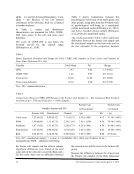
The results showed that former cult members
had more psychological problems, measured
with the Clinical Outcome in Routine
Evaluation—Outcome Measure (CORE–OM)
scale, than a nonclinical comparison sample. In
particular, the results indicated an increased
risk of destructive behavior toward self and
others, with Risk to Self being the predominant
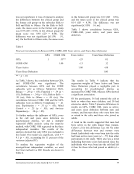
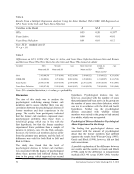
factor. A higher level of psychological abuse,
measured with the Group Psychological Abuse
(GPA) scale, was related to more psychological
distress. However, no relationship was found
between psychological distress and the number
of years in the group, the number of years since
leaving the group, or whether or not the
individual belonged to the group from
childhood. The conclusion is that former cult
members have an increased level of reported
psychological problems, particularly concerning
the risk of hurting themselves and others, an
outcome healthcare personnel should be aware
of.
Keywords: cult, former cult members,
psychological abuse, psychological well-being
It may be difficult to decide which group is a
cult and which is not, and there have been many
suggestions in the literature about how to define
a cult. To do this, Woody (2009) emphasized the
importance of focusing on the conditions in the
group and the consequences of being a member,
irrespective of the professed thought model.
Because of the difficulties in defining a cult,
Chambers, Langone, Dole, &Grice (1994)
developed the Group Psychological Abuse
(GPA) scale to measure the extent of abuse
within a group. The GPA was developed by
factor analysis of 308 former cult members’
answers about characteristics shown in their
groups. This scale is a self-report questionnaire
that can be helpful for healthcare personnel,
social workers, and others who interact with
former cult members.
An important question in cultic studies is
whether membership influences members’ and
past members’ psychological health. Aronoff,
Lynn, and Malinoski (2000) made a critical
review of research about whether cult
membership is psychologically harmful. Their
conclusions were that (a) persons entering cults
do not necessarily exhibit psychopathology (b)
current cult members appear psychologically
well-adjusted generally, but psychopathology
may be masked by pressure from the group and
demand characteristics (c) recent research
indicates that a substantial minority of former
cult members show adjustment difficulties.
Aronoff et al. (2000) pointed out weaknesses in
many studies in this research field, such as
demand characteristics, lack of standardized
measures, conformity pressures associated with
the cultic environment, bias from the
researchers, lack of comparison groups, and
small sample sizes. The researchers also
mentioned the importance of taking into account
that the doctrine in some groups makes it
difficult for the members to report psychological
Is Psychological Distress Among Former Cult Members Related to
Psychological Abuse in the Cult?
By Maria Göransson and Rolf Holmqvist
Linköping University, Sweden
Abstract
There is a need for more knowledge about
mental health among former members of cults.
The aim of this study was to examine the level
and characteristics of psychological distress
among former cult members and to analyze
whether this distress was related to the extent of
psychological abuse in the group, duration of
cult participation, time since defection, and
whether or not the informant was born into the
cult. Participants were 66 former cult members
from nine different Swedish religious
movements. They were primarily recruited from
organizations for former cult members. The
participants answered an Internet questionnaire.
The results showed that former cult members
had more psychological problems, measured
with the Clinical Outcome in Routine
Evaluation—Outcome Measure (CORE–OM)
scale, than a nonclinical comparison sample. In
particular, the results indicated an increased
risk of destructive behavior toward self and
others, with Risk to Self being the predominant
factor. A higher level of psychological abuse,
measured with the Group Psychological Abuse
(GPA) scale, was related to more psychological
distress. However, no relationship was found
between psychological distress and the number
of years in the group, the number of years since
leaving the group, or whether or not the
individual belonged to the group from
childhood. The conclusion is that former cult
members have an increased level of reported
psychological problems, particularly concerning
the risk of hurting themselves and others, an
outcome healthcare personnel should be aware
of.
Keywords: cult, former cult members,
psychological abuse, psychological well-being
It may be difficult to decide which group is a
cult and which is not, and there have been many
suggestions in the literature about how to define
a cult. To do this, Woody (2009) emphasized the
importance of focusing on the conditions in the
group and the consequences of being a member,
irrespective of the professed thought model.
Because of the difficulties in defining a cult,
Chambers, Langone, Dole, &Grice (1994)
developed the Group Psychological Abuse
(GPA) scale to measure the extent of abuse
within a group. The GPA was developed by
factor analysis of 308 former cult members’
answers about characteristics shown in their
groups. This scale is a self-report questionnaire
that can be helpful for healthcare personnel,
social workers, and others who interact with
former cult members.
An important question in cultic studies is
whether membership influences members’ and
past members’ psychological health. Aronoff,
Lynn, and Malinoski (2000) made a critical
review of research about whether cult
membership is psychologically harmful. Their
conclusions were that (a) persons entering cults
do not necessarily exhibit psychopathology (b)
current cult members appear psychologically
well-adjusted generally, but psychopathology
may be masked by pressure from the group and
demand characteristics (c) recent research
indicates that a substantial minority of former
cult members show adjustment difficulties.
Aronoff et al. (2000) pointed out weaknesses in
many studies in this research field, such as
demand characteristics, lack of standardized
measures, conformity pressures associated with
the cultic environment, bias from the
researchers, lack of comparison groups, and
small sample sizes. The researchers also
mentioned the importance of taking into account
that the doctrine in some groups makes it
difficult for the members to report psychological