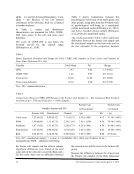
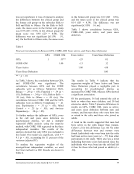
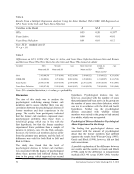
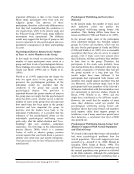
56 International Journal of Cultic Studies ■ Vol. 9, 2018
Mary “Moe” Miller
439F
440 and John “Tubby” Miller
met in the early 1970s while attending the
University of Connecticut in the Master of
Social Work program, and they went on to found
GWP together. John “Tubby” Miller, allegedly
the “representative of the spiritual engineers”
(GWP, n.d.-a, p. 8), had completed his evolution
“in another place and in another way” (GWP,
n.d.-a, p. 8). The group regarded him as “older
than time and ...young as a spring chicken”
(GWP, n.d.-a, p. 8). Although GWP literature
and members often identified John Miller as the
central figure in the organization, Mary Miller
was arguably the more prolific member of the
group.
440F
441 She organized and spoke at many of
the seminars, gave multiple interviews with the
media, wrote the group’s newsletters, articles,
and books, and (according to former members)
controlled “the flow of information” (Garvey &
Bergin, 2003, Description sect., para 6).
I have divided this article into sections that
explore the religious/nonreligious spectrum to
demonstrate how GWP fit the quasi-religion
label. First, I explore the theological side of
GWP. The intention of this exploration is to
offer a summary of some of the supernatural
ideas that GWP appealed to in order to
demonstrate its religious aspects. Second, I
explore the secular aspect of GWP, including
claims made regarding the alleged healing
instruments. The secular and sacred categories
are not mutually exclusive, but in a quasi-
religion they blend even more. The ambiguity
that quasi-religions exhibit is the feature that
makes the category so useful for examining
groups at the intersection of religious and
440 Mary Miller (not related or married to John) had several aliases:
Mary Carreiro, Mary Elizabeth, Claudia Panuthos, and Moe. Many
of the women involved in GWP changed their last names to Miller
to “[show] ...their devotion to John Miller” (Garvey &Bergin,
2003, Description sect., para. 33). GWP claimed that this name
change was an attempt to ease a permit application for renovations
of a property owned by the group (GWP, 2004a).
441 Former members Bergin and Garvey noted that Mary Miller
was the public face of the group, and the spokesperson in charge of
operations, finances, and recruitment but John Miller was the
spiritual authority and the driver of many purchasing choices, such
as a Florida property they owned (J. Garvey, March 27–28, 2015
inquiry/Email message to Kayla Swanson). Thus, one could view
John as the sacred half and Mary as the secular half of GWP’s
leadership.
secular. Unfortunately, this ambiguity can make
it difficult to parse through and neatly fit aspects
of a group into an either/or category.
This difficulty, I argue, is what makes quasi-
religion the ideal descriptor. GWP is an
exemplar of the quasi-religious category,
ambiguity and complications included. It
intertwines secular and religious aspects into a
cohesive, albeit complex, entity. As such,
although I attempt to draw lines between the
categories, the interpenetration of both religious
and secular naturally means that aspects of one
appear in the other. To phrase it another way, the
religious affects the secular, and the secular
influences the religious. This mixing is what
makes GWP a quasi-religion, and why I chose to
examine this small group through this particular
lens.
Because GWP is no longer in operation, I used
an archival methodology to analyze primary
material. Overall, the internal documents and
commentaries from supporters, critics, and
apostates provided a rich basis from which to
approach the study of GWP. Other source
material such as audio cassettes of radio
interviews, website printouts, and legal
documents also contributed to my understanding
of the group. The collection of GWP material is
part of the Stephen A. Kent Collection of
Alternative Religions at the University of
Alberta. Furthermore, this article is a derivative
of my master’s thesis, What the Puck? The
Gentle Wind Project, a Quasi-Religious New
Age Alternative Healing Organization
(Swanson, 2015). Thus, it is a condensed version
of a much larger work.
The Sacred and Gentle Wind
GWP attempted to set itself apart from religion
by characterizing religion as the lesser “other.”
GWP leaders viewed religions as “clubs”
(Carreiro, 1988a, p. 21) an individual joined in
order to “be associated with the ‘right’ people
...[or to be one of the] ‘chosen people’”
(Carreiro, 1988a, p. 21). GWP leaders directed
their antireligious rhetoric specifically at both
the major Western religions (Judaism, Islam,
Mary “Moe” Miller
439F
440 and John “Tubby” Miller
met in the early 1970s while attending the
University of Connecticut in the Master of
Social Work program, and they went on to found
GWP together. John “Tubby” Miller, allegedly
the “representative of the spiritual engineers”
(GWP, n.d.-a, p. 8), had completed his evolution
“in another place and in another way” (GWP,
n.d.-a, p. 8). The group regarded him as “older
than time and ...young as a spring chicken”
(GWP, n.d.-a, p. 8). Although GWP literature
and members often identified John Miller as the
central figure in the organization, Mary Miller
was arguably the more prolific member of the
group.
440F
441 She organized and spoke at many of
the seminars, gave multiple interviews with the
media, wrote the group’s newsletters, articles,
and books, and (according to former members)
controlled “the flow of information” (Garvey &
Bergin, 2003, Description sect., para 6).
I have divided this article into sections that
explore the religious/nonreligious spectrum to
demonstrate how GWP fit the quasi-religion
label. First, I explore the theological side of
GWP. The intention of this exploration is to
offer a summary of some of the supernatural
ideas that GWP appealed to in order to
demonstrate its religious aspects. Second, I
explore the secular aspect of GWP, including
claims made regarding the alleged healing
instruments. The secular and sacred categories
are not mutually exclusive, but in a quasi-
religion they blend even more. The ambiguity
that quasi-religions exhibit is the feature that
makes the category so useful for examining
groups at the intersection of religious and
440 Mary Miller (not related or married to John) had several aliases:
Mary Carreiro, Mary Elizabeth, Claudia Panuthos, and Moe. Many
of the women involved in GWP changed their last names to Miller
to “[show] ...their devotion to John Miller” (Garvey &Bergin,
2003, Description sect., para. 33). GWP claimed that this name
change was an attempt to ease a permit application for renovations
of a property owned by the group (GWP, 2004a).
441 Former members Bergin and Garvey noted that Mary Miller
was the public face of the group, and the spokesperson in charge of
operations, finances, and recruitment but John Miller was the
spiritual authority and the driver of many purchasing choices, such
as a Florida property they owned (J. Garvey, March 27–28, 2015
inquiry/Email message to Kayla Swanson). Thus, one could view
John as the sacred half and Mary as the secular half of GWP’s
leadership.
secular. Unfortunately, this ambiguity can make
it difficult to parse through and neatly fit aspects
of a group into an either/or category.
This difficulty, I argue, is what makes quasi-
religion the ideal descriptor. GWP is an
exemplar of the quasi-religious category,
ambiguity and complications included. It
intertwines secular and religious aspects into a
cohesive, albeit complex, entity. As such,
although I attempt to draw lines between the
categories, the interpenetration of both religious
and secular naturally means that aspects of one
appear in the other. To phrase it another way, the
religious affects the secular, and the secular
influences the religious. This mixing is what
makes GWP a quasi-religion, and why I chose to
examine this small group through this particular
lens.
Because GWP is no longer in operation, I used
an archival methodology to analyze primary
material. Overall, the internal documents and
commentaries from supporters, critics, and
apostates provided a rich basis from which to
approach the study of GWP. Other source
material such as audio cassettes of radio
interviews, website printouts, and legal
documents also contributed to my understanding
of the group. The collection of GWP material is
part of the Stephen A. Kent Collection of
Alternative Religions at the University of
Alberta. Furthermore, this article is a derivative
of my master’s thesis, What the Puck? The
Gentle Wind Project, a Quasi-Religious New
Age Alternative Healing Organization
(Swanson, 2015). Thus, it is a condensed version
of a much larger work.
The Sacred and Gentle Wind
GWP attempted to set itself apart from religion
by characterizing religion as the lesser “other.”
GWP leaders viewed religions as “clubs”
(Carreiro, 1988a, p. 21) an individual joined in
order to “be associated with the ‘right’ people
...[or to be one of the] ‘chosen people’”
(Carreiro, 1988a, p. 21). GWP leaders directed
their antireligious rhetoric specifically at both
the major Western religions (Judaism, Islam,