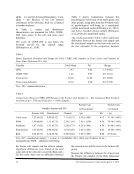
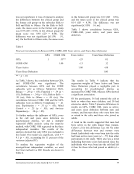
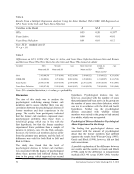
6 International Journal of Cultic Studies ■ Vol. 9, 2018
member. In addition to mind or thought control,
Hassan has identified three other processes to
explain cult indoctrination: behavior control,
emotional control, and information control.
57F
58
Ultimately, the individual loses his or her
freedom of choice.
1. Thought Control
Thought control or mind control is described as
follows:
[A] system which disrupts an
individual’s identity. An identity is
made up of elements such as beliefs,
behavior, thought processes, and
emotions that constitute a definite
pattern. Under the influence of mind
control, a person’s authentic original
identity given at birth, and as later
formed by family, education,
friendships, and most importantly that
person’s own free choices, becomes
replaced with another identity, often one
that they would not have chosen for
themself without tremendous social
pressure.
58F
59
Depending upon the group, to exert undue
influence or mind control, cult leaders may also
rely on other techniques, including deception in
recruitment fear physical, sexual, and verbal
abuse and isolation.
59F
60
Cultic members are often recruited to an
organization that they know little about. It is
common practice in cultic groups to use
deceptive pretenses to lure in followers.
60F
61
Typically, one would not join these groups if
one knew what was in store once inside. Once
inside, the individual undergoes a process that
results in a loss of freedom of choice.
61F
62
Unfortunately, it is this aspect of cults that
provide obstacles to our judicial system’s ability
to provide a remedy. Courts have not accepted
58 See id. at 85−87.
59 Id. at 109 (emphasis in original).
60 See HASSAN, supra note 55.
61 See id. at 87−89, 103−07. Hassan describes his recruitment into
the Moonies.
62 Id. Scheflin, supra note 53.
mind control as an element of traditional
crimes.
62F
63
To inculcate an adherent, cults prey on people’s
fears. Their followers are fearful that should
they leave, they will die by accident or fate
(health or otherwise).
63F
64 Religious cults often
preach that deserters are denied salvation.
64F
65
Elissa Wall described Warren Jeffs threatening
her with sacrificial death to rectify the cardinal
sin of adultery.
65F
66 In FLDS, the “sinner” is to be
laid out on altar for an ordained elder to commit
“blood atonement” by killing her.
66F
67
Cults use mental, physical and sexual abuse of
both adults and children to force compliance.
Jonestown is a case in point.
67F
68 In 1977,
delusional dictator of People’s Temple Jim
Jones moved approximately 1,000 followers
from the west coast of the United States to
Guyana, Africa, setting up what was, in effect, a
prison camp (“Jonestown”).
68F
69 There, children
were put into dark pits and told that the pits
contained snakes.
69F
70 Members dangled ropes
from above to scare them.
70F
71
In addition to such mental abuse, there are
documented accounts of beatings of children in
Jonestown.
71F
72 A former member witnessed her
daughter’s beating with a board, seventy-five
times, for hugging a friend whom Jones
considered a traitor.
72F
73 Children were routinely
beaten for showing disrespect.
73F
74 “Belts were
used at first, then were replaced by elm
63 See Scheflin, supra note 53, at 70−71. To be discussed infra.
64 JANJA LALICH, BOUNDED CHOICE: TRUE BELIEVERS AND
CHARISMATIC CULTS 229 (2004) (describing how in Heaven’s
Gate in the DWP, leaders demanded “total or near-total
submission” to the rules governing the group life, with sanctions
imposed for those who violated the rules).
65 Id.
66 WALL, supra note 20, at 317−18.
67 See id.
68 See HASSAN, supra note 55, at 19, 75.
69 See id.
70 Id.
71 Id. at 105.
72 Id.
73 Stephen A. Kent, Houseof Judah, the Northeast Kingdom
Community, and ‘the Jonestown problem’: Downplaying Child
Physical Abuses and Ignoring Serious Evidence, 1 INT’L J. CULTIC
STUD. 27, 30 (2010).
74 KENNETH WOODEN, CHILDREN OF JONESTOWN (1981).
member. In addition to mind or thought control,
Hassan has identified three other processes to
explain cult indoctrination: behavior control,
emotional control, and information control.
57F
58
Ultimately, the individual loses his or her
freedom of choice.
1. Thought Control
Thought control or mind control is described as
follows:
[A] system which disrupts an
individual’s identity. An identity is
made up of elements such as beliefs,
behavior, thought processes, and
emotions that constitute a definite
pattern. Under the influence of mind
control, a person’s authentic original
identity given at birth, and as later
formed by family, education,
friendships, and most importantly that
person’s own free choices, becomes
replaced with another identity, often one
that they would not have chosen for
themself without tremendous social
pressure.
58F
59
Depending upon the group, to exert undue
influence or mind control, cult leaders may also
rely on other techniques, including deception in
recruitment fear physical, sexual, and verbal
abuse and isolation.
59F
60
Cultic members are often recruited to an
organization that they know little about. It is
common practice in cultic groups to use
deceptive pretenses to lure in followers.
60F
61
Typically, one would not join these groups if
one knew what was in store once inside. Once
inside, the individual undergoes a process that
results in a loss of freedom of choice.
61F
62
Unfortunately, it is this aspect of cults that
provide obstacles to our judicial system’s ability
to provide a remedy. Courts have not accepted
58 See id. at 85−87.
59 Id. at 109 (emphasis in original).
60 See HASSAN, supra note 55.
61 See id. at 87−89, 103−07. Hassan describes his recruitment into
the Moonies.
62 Id. Scheflin, supra note 53.
mind control as an element of traditional
crimes.
62F
63
To inculcate an adherent, cults prey on people’s
fears. Their followers are fearful that should
they leave, they will die by accident or fate
(health or otherwise).
63F
64 Religious cults often
preach that deserters are denied salvation.
64F
65
Elissa Wall described Warren Jeffs threatening
her with sacrificial death to rectify the cardinal
sin of adultery.
65F
66 In FLDS, the “sinner” is to be
laid out on altar for an ordained elder to commit
“blood atonement” by killing her.
66F
67
Cults use mental, physical and sexual abuse of
both adults and children to force compliance.
Jonestown is a case in point.
67F
68 In 1977,
delusional dictator of People’s Temple Jim
Jones moved approximately 1,000 followers
from the west coast of the United States to
Guyana, Africa, setting up what was, in effect, a
prison camp (“Jonestown”).
68F
69 There, children
were put into dark pits and told that the pits
contained snakes.
69F
70 Members dangled ropes
from above to scare them.
70F
71
In addition to such mental abuse, there are
documented accounts of beatings of children in
Jonestown.
71F
72 A former member witnessed her
daughter’s beating with a board, seventy-five
times, for hugging a friend whom Jones
considered a traitor.
72F
73 Children were routinely
beaten for showing disrespect.
73F
74 “Belts were
used at first, then were replaced by elm
63 See Scheflin, supra note 53, at 70−71. To be discussed infra.
64 JANJA LALICH, BOUNDED CHOICE: TRUE BELIEVERS AND
CHARISMATIC CULTS 229 (2004) (describing how in Heaven’s
Gate in the DWP, leaders demanded “total or near-total
submission” to the rules governing the group life, with sanctions
imposed for those who violated the rules).
65 Id.
66 WALL, supra note 20, at 317−18.
67 See id.
68 See HASSAN, supra note 55, at 19, 75.
69 See id.
70 Id.
71 Id. at 105.
72 Id.
73 Stephen A. Kent, Houseof Judah, the Northeast Kingdom
Community, and ‘the Jonestown problem’: Downplaying Child
Physical Abuses and Ignoring Serious Evidence, 1 INT’L J. CULTIC
STUD. 27, 30 (2010).
74 KENNETH WOODEN, CHILDREN OF JONESTOWN (1981).