50 International Journal of Cultic Studies ■ Vol. 9, 2018
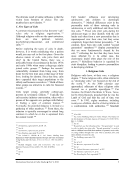
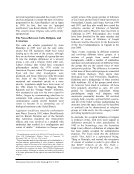
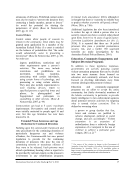
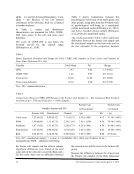
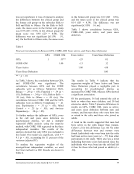
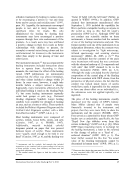
Table 4
Results From a Multiple Regression Analysis Using the Enter Method, With CORE–OM Regressed on
GPA, Years in the Cult, and Years Since Defection
Variables in the Model B SE B β
GPA 0.55 0.20 0.35**
Years Active 0.00 0.01 -0.01
Years Since Defection 0.01 0.01 0.12
Note. SE B =standard error B
**=p .01
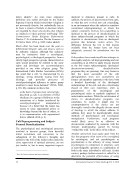
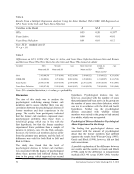
Table 5
Differences on GPA, CORE–OM, Years As Active, and Years Since Defection Between Men and Women
and Between Those Who Were Born Into the Cults and Those Who Joined As Adults
Variable Men
Mean and SD
Women
Mean and SD
t (p) Born Into Cult
Mean and SD
Joined As
Adults
Mean and SD
t (p)
GPA 3.45 (00.59) 3.47 (0.46) 0.022 (0.88) 3.49 (00.52) 3.43 (00.52) 0.24 (.630)
CORE-OM 1.24 (00.81) 1.25 (0.86) 0.003 (0.96) 1.28 (00.81) 1.21 (00.87) 0.14 (.710)
Years Active 20.50 (13.40) 15.60 (9.30) 2.930 (0.09) 21.50 (11.50) 13.00 (10.50) 9.41 (.003)
Years Since Defection 9.40 (07.40) 11.00 (8.60) 0.660 (0.42) 11.60 (08.30) 7.80 (06.80) 3.80 (.060)
Note. SD =standard deviation t =t-value p =probability
Discussion
The aim of this study was to analyze the
psychological well-being among former cult
members and to assess whether there was any
correlation between the psychological distress of
former members and their experiences in the
group. The results from participants indicated
that the former cult members expressed more
psychological problems than those from a
nonclinical group, which was in line with the
first hypothesis, but that the former members
experienced fewer problems than a sample of
patients in primary care. On the Risk subscale,
however, the former cult members did not differ
from the primary-care patients, and the lack of
difference was valid for both Risk to Self and
Risk to Others.
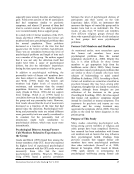
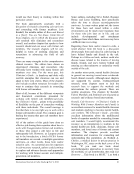
The study also found that the level of
psychological distress in former cult members
was associated with the degree of psychological
abuse these persons had suffered during their
time in the group, which supported our second
hypothesis. Psychological distress was not,
however, associated with the number of years
that participants had been active in the group nor
the number of years since their defection, which
was not in accordance with the third and fourth
hypotheses. Neither was the psychological
distress associated with whether former
members were raised in the group or had entered
it as adults, which was as expected.
Psychological Distress Related to Psychological
Abuse Experienced in the Group
The finding that psychological distress was
associated with the amount of psychological
abuse that the former members had suffered
supports the results from Winocur-Craig (1995).
Gasde and Block (1998), however, did not find
such associations.
A possible explanation of the difference between
our results and the results in Gasde and Block
(1998) could be the difference in measurement
methods (SCL-90 versus CORE–OM). Another
Table 4
Results From a Multiple Regression Analysis Using the Enter Method, With CORE–OM Regressed on
GPA, Years in the Cult, and Years Since Defection
Variables in the Model B SE B β
GPA 0.55 0.20 0.35**
Years Active 0.00 0.01 -0.01
Years Since Defection 0.01 0.01 0.12
Note. SE B =standard error B
**=p .01
Table 5
Differences on GPA, CORE–OM, Years As Active, and Years Since Defection Between Men and Women
and Between Those Who Were Born Into the Cults and Those Who Joined As Adults
Variable Men
Mean and SD
Women
Mean and SD
t (p) Born Into Cult
Mean and SD
Joined As
Adults
Mean and SD
t (p)
GPA 3.45 (00.59) 3.47 (0.46) 0.022 (0.88) 3.49 (00.52) 3.43 (00.52) 0.24 (.630)
CORE-OM 1.24 (00.81) 1.25 (0.86) 0.003 (0.96) 1.28 (00.81) 1.21 (00.87) 0.14 (.710)
Years Active 20.50 (13.40) 15.60 (9.30) 2.930 (0.09) 21.50 (11.50) 13.00 (10.50) 9.41 (.003)
Years Since Defection 9.40 (07.40) 11.00 (8.60) 0.660 (0.42) 11.60 (08.30) 7.80 (06.80) 3.80 (.060)
Note. SD =standard deviation t =t-value p =probability
Discussion
The aim of this study was to analyze the
psychological well-being among former cult
members and to assess whether there was any
correlation between the psychological distress of
former members and their experiences in the
group. The results from participants indicated
that the former cult members expressed more
psychological problems than those from a
nonclinical group, which was in line with the
first hypothesis, but that the former members
experienced fewer problems than a sample of
patients in primary care. On the Risk subscale,
however, the former cult members did not differ
from the primary-care patients, and the lack of
difference was valid for both Risk to Self and
Risk to Others.
The study also found that the level of
psychological distress in former cult members
was associated with the degree of psychological
abuse these persons had suffered during their
time in the group, which supported our second
hypothesis. Psychological distress was not,
however, associated with the number of years
that participants had been active in the group nor
the number of years since their defection, which
was not in accordance with the third and fourth
hypotheses. Neither was the psychological
distress associated with whether former
members were raised in the group or had entered
it as adults, which was as expected.
Psychological Distress Related to Psychological
Abuse Experienced in the Group
The finding that psychological distress was
associated with the amount of psychological
abuse that the former members had suffered
supports the results from Winocur-Craig (1995).
Gasde and Block (1998), however, did not find
such associations.
A possible explanation of the difference between
our results and the results in Gasde and Block
(1998) could be the difference in measurement
methods (SCL-90 versus CORE–OM). Another