Cultic Studies Journal, Vol. 9, No. 1, 1992, Page 85
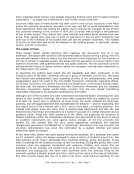
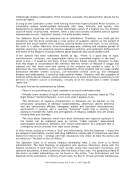
intellectually shallow politicization of the American university, the phenomenon should not be
construed lightly.
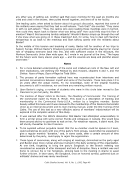
So long as the “politically correct” were nothing more than hypercultivated Milton scholars, or
inordinately arcane model-builders fascinated with class, ethnicity, and gender, who
happened to be obsessed with the socially fashionable causes of a bygone era, the problem
could be easily circumscribed. However, when a bald and scarcely concealed political agenda
masquerades as cool, “objective” science, it is quite another matter.
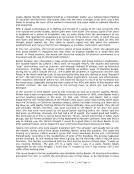
The Satanism Scare has an extensive list of contributors. Therefore, one could get the
impression that the book constitutes a cross section of academic opinion on the subject of
Satanism and occult-related crime. Nothing could be farther from the truth. To the contrary,
the book is a rather laborious, three-hundred-page-plus, blinking and bleeping parade of
sophistic reasoning, non sequiturs, spurious appeal to authority, and systematic disfigurement
and denial of the sheaves of actual evidence about Satanism and occult-related crime.
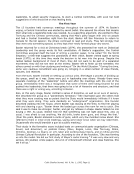
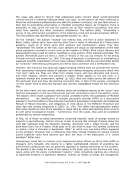
If the authors had been sufficiently honest to say, “There is a good deal of hype,
misinformation, confusion, and questionable claims by unqualified experts in the area” --
which is true --it would be one thing. If they had been honest enough, moreover, to draw
from this tangle of circumstances the inference that the terrain of research is craggy and
cratered and that much work and sorting of the evidence are needed in order to (1)
determine the real character, scope, and ramifications of the problem and (2) make careful
distinctions between witness accuracy, cult-motivated criminal cover-up, and ideological
blinders and enthusiasms, it would be quite another matter. However, with the exception of
historian Jeffrey Burton Russell, whose published work on belief and folklore pertaining to the
demonic in Western culture is exemplary, virtually all of the essays take a rather straight
“party line.”
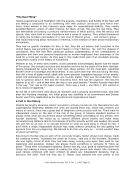
The party line can be summarized as follows:
--There is no such thing as a “bad” satanist or an occult-connected crime.
--Virtually every incident of occult criminality, including such notorious cases as “The
Night Stalker” (Richard Ramirez), is not at all what it appears to be.
--The attribution of negative characteristics to Satanism can be blamed on the
persecutory campaigns of Christian fundamentalists, small-town district attorneys
and law enforcement officials, newspaper editors and television anchorpersons,
psychiatrists in general, and a routinely “hysterical” public that is snorting and
pawing to trample the rights and prerogatives of religious oddballs who are simply
minding their own business.
--The facts about Satanism, which have been delineated and reported copiously in
the media, can be explained away as rumors, “urban legends,” deep-seated
psychological projections, fantasies, and “social constructions” of a populace that is
undergoing various stresses from rapid social change.
In other words, society as a whole is “sick” and hallucinating. Only the Satanists --those who
are alleged to burn babies, consort with drug traffickers, impale cats in ceremonies, and drink
blood from time to time --emerge with their reputations fully intact. At least the authors did
not wheel out “The Myth of the Six Million.”
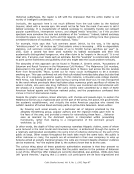
The Satanism Scare is to serious religious scholarship what 2 Live Crew is to family
entertainment. The bald flaunting of prejudices and spurious inferences, along with the
flagrant omissions of hard data from court records, police files, psychiatric transcripts, and
casework documents, is more numerous than the loves of Don Juan. The gangrenous flaws of
the book’s so-called methodology can be found in the article, “Law Enforcement and the
Satanism-Crime Connection: A Survey of Cult Cops,” by Ben M. Crouch and Kelly Damphouse.
intellectually shallow politicization of the American university, the phenomenon should not be
construed lightly.
So long as the “politically correct” were nothing more than hypercultivated Milton scholars, or
inordinately arcane model-builders fascinated with class, ethnicity, and gender, who
happened to be obsessed with the socially fashionable causes of a bygone era, the problem
could be easily circumscribed. However, when a bald and scarcely concealed political agenda
masquerades as cool, “objective” science, it is quite another matter.
The Satanism Scare has an extensive list of contributors. Therefore, one could get the
impression that the book constitutes a cross section of academic opinion on the subject of
Satanism and occult-related crime. Nothing could be farther from the truth. To the contrary,
the book is a rather laborious, three-hundred-page-plus, blinking and bleeping parade of
sophistic reasoning, non sequiturs, spurious appeal to authority, and systematic disfigurement
and denial of the sheaves of actual evidence about Satanism and occult-related crime.
If the authors had been sufficiently honest to say, “There is a good deal of hype,
misinformation, confusion, and questionable claims by unqualified experts in the area” --
which is true --it would be one thing. If they had been honest enough, moreover, to draw
from this tangle of circumstances the inference that the terrain of research is craggy and
cratered and that much work and sorting of the evidence are needed in order to (1)
determine the real character, scope, and ramifications of the problem and (2) make careful
distinctions between witness accuracy, cult-motivated criminal cover-up, and ideological
blinders and enthusiasms, it would be quite another matter. However, with the exception of
historian Jeffrey Burton Russell, whose published work on belief and folklore pertaining to the
demonic in Western culture is exemplary, virtually all of the essays take a rather straight
“party line.”
The party line can be summarized as follows:
--There is no such thing as a “bad” satanist or an occult-connected crime.
--Virtually every incident of occult criminality, including such notorious cases as “The
Night Stalker” (Richard Ramirez), is not at all what it appears to be.
--The attribution of negative characteristics to Satanism can be blamed on the
persecutory campaigns of Christian fundamentalists, small-town district attorneys
and law enforcement officials, newspaper editors and television anchorpersons,
psychiatrists in general, and a routinely “hysterical” public that is snorting and
pawing to trample the rights and prerogatives of religious oddballs who are simply
minding their own business.
--The facts about Satanism, which have been delineated and reported copiously in
the media, can be explained away as rumors, “urban legends,” deep-seated
psychological projections, fantasies, and “social constructions” of a populace that is
undergoing various stresses from rapid social change.
In other words, society as a whole is “sick” and hallucinating. Only the Satanists --those who
are alleged to burn babies, consort with drug traffickers, impale cats in ceremonies, and drink
blood from time to time --emerge with their reputations fully intact. At least the authors did
not wheel out “The Myth of the Six Million.”
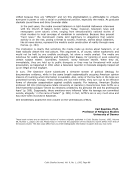
The Satanism Scare is to serious religious scholarship what 2 Live Crew is to family
entertainment. The bald flaunting of prejudices and spurious inferences, along with the
flagrant omissions of hard data from court records, police files, psychiatric transcripts, and
casework documents, is more numerous than the loves of Don Juan. The gangrenous flaws of
the book’s so-called methodology can be found in the article, “Law Enforcement and the
Satanism-Crime Connection: A Survey of Cult Cops,” by Ben M. Crouch and Kelly Damphouse.