Cultic Studies Journal, Vol. 9, No. 1, 1992, Page 69
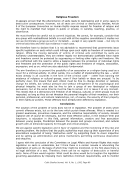
Religious Freedom
It appears proven that the phenomenon of sects leads to lawbreaking and in some cases to
destructive consequences. However, not all sects are criminal or destructive. Besides, Article
9 of the European Convention on Human Rights requires respect for freedom of religion and
the right to manifest that religion in public or private, in worship, teaching, practice, or
observance.
We must therefore be careful not to commit injustices. We cannot, for example, consider that
any group with nontraditional beliefs is a sect with all the negative connotations it implies nor
can we incriminate a group as such or its beliefs --except in very specific cases --but only its
criminal activities and with due evidence in each case.
We therefore have to declare that it is not advisable to recommend that governments issue
specific legislation on sects which could infringe upon such rights as freedom of conscience or
religion. While the moving demands of victims of criminal acts committed by sects are
humanely understandable, they are neither legally nor democratically justifiable since rights
and freedoms cannot be protected by suppressing or limiting other rights and freedoms. We
are confronted with the need to strike a balance between the protection of individual rights
and freedoms and the protection of the public rights and freedoms of religion, association,
expression, and so on, which are also absolutely fundamental.
The aim therefore is to prevent the possibility of an association or a religion being used as a
cover for a criminal activity. In other words, it is a matter of implementing the law --which
exists already in all countries in the form of the criminal code --rather than banning the
existence of religious or cultural groups, even if their beliefs or ideas are unusual. To be
perfectly clear, this means that each citizen must be free to change direction or radically
change his beliefs, but without pressure and without infringement of his psychological and
physical integrity he must also be free to join a group of any ideological or religious
persuasion, but at the same time he must be free to remain in it or leave it at any moment.
This means that in a democracy the freedom of all religious, cultural, or other groups must be
respected, as long as they do not threaten the personal integrity of their members, nor their
personal, professional, and cultural relationships, nor, of course, the security of their property
or their rights as workers. These offenses have already been defined by legislation.
Conclusions
The solution of the problem of sects does not lie in legislation. The problem of sects which
commit offenses exists, but so do the laws which punish these offenses. What is needed is a
greater awareness, preventive measures, and the collective responsibility of society. Greater
vigilance will of course be necessary, but the most effective action, in the medium-term and
long-term, is education in this field, general information, creative and free association
between young people, friendships between the people and groups concerned, and cultural
growth with an enhanced capacity for thought and critical analysis.
We are against specific legislation and in favor of vigilance and the monitoring of this new and
growing problem. We believe that the public authorities must step up their supervision of any
associations suspected of being "destructive sects" by subjecting them to closer inspection
and by setting up administrative and police mechanisms permitting continuous observation
and enquiries.
I agree with the conclusion of the Committee on Legal Affairs and Human Rights that major
legislation on sects is undesirable, but I think there is a certain naivete in advocating the
registration of sects on the basis of which they might be monitored. In the first place there is
no legal definition of a sect. Therefore, there can be no register of destructive or harmful
sects. None of them would register. What could be done would be to toughen the legislation
governing associations by imposing more restrictive minimum requirements, and to monitor
Religious Freedom
It appears proven that the phenomenon of sects leads to lawbreaking and in some cases to
destructive consequences. However, not all sects are criminal or destructive. Besides, Article
9 of the European Convention on Human Rights requires respect for freedom of religion and
the right to manifest that religion in public or private, in worship, teaching, practice, or
observance.
We must therefore be careful not to commit injustices. We cannot, for example, consider that
any group with nontraditional beliefs is a sect with all the negative connotations it implies nor
can we incriminate a group as such or its beliefs --except in very specific cases --but only its
criminal activities and with due evidence in each case.
We therefore have to declare that it is not advisable to recommend that governments issue
specific legislation on sects which could infringe upon such rights as freedom of conscience or
religion. While the moving demands of victims of criminal acts committed by sects are
humanely understandable, they are neither legally nor democratically justifiable since rights
and freedoms cannot be protected by suppressing or limiting other rights and freedoms. We
are confronted with the need to strike a balance between the protection of individual rights
and freedoms and the protection of the public rights and freedoms of religion, association,
expression, and so on, which are also absolutely fundamental.
The aim therefore is to prevent the possibility of an association or a religion being used as a
cover for a criminal activity. In other words, it is a matter of implementing the law --which
exists already in all countries in the form of the criminal code --rather than banning the
existence of religious or cultural groups, even if their beliefs or ideas are unusual. To be
perfectly clear, this means that each citizen must be free to change direction or radically
change his beliefs, but without pressure and without infringement of his psychological and
physical integrity he must also be free to join a group of any ideological or religious
persuasion, but at the same time he must be free to remain in it or leave it at any moment.
This means that in a democracy the freedom of all religious, cultural, or other groups must be
respected, as long as they do not threaten the personal integrity of their members, nor their
personal, professional, and cultural relationships, nor, of course, the security of their property
or their rights as workers. These offenses have already been defined by legislation.
Conclusions
The solution of the problem of sects does not lie in legislation. The problem of sects which
commit offenses exists, but so do the laws which punish these offenses. What is needed is a
greater awareness, preventive measures, and the collective responsibility of society. Greater
vigilance will of course be necessary, but the most effective action, in the medium-term and
long-term, is education in this field, general information, creative and free association
between young people, friendships between the people and groups concerned, and cultural
growth with an enhanced capacity for thought and critical analysis.
We are against specific legislation and in favor of vigilance and the monitoring of this new and
growing problem. We believe that the public authorities must step up their supervision of any
associations suspected of being "destructive sects" by subjecting them to closer inspection
and by setting up administrative and police mechanisms permitting continuous observation
and enquiries.
I agree with the conclusion of the Committee on Legal Affairs and Human Rights that major
legislation on sects is undesirable, but I think there is a certain naivete in advocating the
registration of sects on the basis of which they might be monitored. In the first place there is
no legal definition of a sect. Therefore, there can be no register of destructive or harmful
sects. None of them would register. What could be done would be to toughen the legislation
governing associations by imposing more restrictive minimum requirements, and to monitor