Cultic Studies Journal, Vol. 9, No. 1, 1992, Page 10
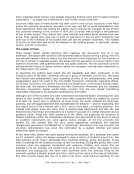
weeks. Baxter literally described herself as a charismatic leader, as a national figure fighting
for socialism and feminism. She stated often that the news coverage of her story was a key
factor in bringing the topic of the women’s movement and equal rights to national attention
and awareness.
With a repeat performance of in-fighting and threats of a purge at the next university (this
time outside the United States), Baxter grew even more bitter. She always spoke of her years
in academia as a period of irreparable loss, as years stolen from the development of her
thought. She regarded this experience as her pursuit of the politics of truth, in which she was
shot down and betrayed. And she never forgot nor forgave those who sided (or who she
thought sided) against her. She came to openly regard and talk about the academic
establishment and many of her former colleagues as mindless, malevolent, and stupid.
At the next university, she formed another coterie of loyal students, whom she advised and
took great interest in. Regularly she took them on political retreats to a small farm she
owned. In these sessions, she would talk about the necessity for political commitment to a
movement and the use of criticism/self-criticism.3
Baxter became very interested in mass social psychology and group behavior modification.
She studied Robert Jay Lifton’s (1963) work on thought reform she studied and admired
“total” communities, such as Synanon, and directed methods of change, such as Alcoholics
Anonymous. Ironically, she spoke of these methods as positive ways of changing people.
During her six years outside the U.S., she studied the problems of organization and the class
forces in the North American Left. It was during this time that she claimed to have “figured it
all out”: she had come to certain conclusions about organization, survival, and effectiveness.
With “academic dreamland” behind her, she made the decision to return to her homeland and
her home state. Especially during the early years of the WDU she spoke of this decision with
heartfelt emotion: she was returning to the working class, to where she was born and
belonged.
In the summer of 1974 Baxter went to San Francisco to look up a former student, Miriam.
Miriam hadn’t seen or had contact with Baxter since the summer of 1969, when Baxter held a
summer teaching position in the area. On that visit, Miriam and Baxter had a major
disagreement over interpretations of the People’s Park action which had recently taken place
near the University of California, Berkeley campus. Baxter had been drinking and there was a
big blow-up, with Baxter trashing Miriam for being politically naive and stupid. They did not
part amicably. Miriam, therefore, was quite surprised to see Baxter at her door five years
later. She was even more struck by the actual person standing before her. Baxter said she
had given up drinking obviously she had lost a lot of weight, she looked good and healthy.
She attributed all of this to having found Marxism. Miriam, herself entrenched in leftist study
groups, saw her former professor as a living testament to Marxism-Leninism. Here was truly a
way to change your life. Miriam thought it would be a good idea to introduce Baxter to her
other political friends, and so began the year of forming what was to become the WDU.
Having met women who were equally enamored with “the struggle” and equally fed up with
the system, during one of their group meetings, Baxter called the question. She urged the
forming of a serious, radical women’s group that would eventually evolve into a disciplined
Marxist party. According to the recollections of some of the founders, this process happened
almost overnight. At one meeting they were a group by the next they were a real pre-party
formation. One founder remembered both the thrill and the tension of these days: “I woke up
one morning thinking, `My god, I’m in a party now.’ I was in a panic, feeling totally
responsible for the class struggle. I knew that if I messed up now it was another nail in the
coffin of the working class.”
This move toward a formal organization was decidedly led by Baxter. All structural foundation
emanated from her: to solidify the amorphous-ness of their ideas, to be disciplined, to have
weeks. Baxter literally described herself as a charismatic leader, as a national figure fighting
for socialism and feminism. She stated often that the news coverage of her story was a key
factor in bringing the topic of the women’s movement and equal rights to national attention
and awareness.
With a repeat performance of in-fighting and threats of a purge at the next university (this
time outside the United States), Baxter grew even more bitter. She always spoke of her years
in academia as a period of irreparable loss, as years stolen from the development of her
thought. She regarded this experience as her pursuit of the politics of truth, in which she was
shot down and betrayed. And she never forgot nor forgave those who sided (or who she
thought sided) against her. She came to openly regard and talk about the academic
establishment and many of her former colleagues as mindless, malevolent, and stupid.
At the next university, she formed another coterie of loyal students, whom she advised and
took great interest in. Regularly she took them on political retreats to a small farm she
owned. In these sessions, she would talk about the necessity for political commitment to a
movement and the use of criticism/self-criticism.3
Baxter became very interested in mass social psychology and group behavior modification.
She studied Robert Jay Lifton’s (1963) work on thought reform she studied and admired
“total” communities, such as Synanon, and directed methods of change, such as Alcoholics
Anonymous. Ironically, she spoke of these methods as positive ways of changing people.
During her six years outside the U.S., she studied the problems of organization and the class
forces in the North American Left. It was during this time that she claimed to have “figured it
all out”: she had come to certain conclusions about organization, survival, and effectiveness.
With “academic dreamland” behind her, she made the decision to return to her homeland and
her home state. Especially during the early years of the WDU she spoke of this decision with
heartfelt emotion: she was returning to the working class, to where she was born and
belonged.
In the summer of 1974 Baxter went to San Francisco to look up a former student, Miriam.
Miriam hadn’t seen or had contact with Baxter since the summer of 1969, when Baxter held a
summer teaching position in the area. On that visit, Miriam and Baxter had a major
disagreement over interpretations of the People’s Park action which had recently taken place
near the University of California, Berkeley campus. Baxter had been drinking and there was a
big blow-up, with Baxter trashing Miriam for being politically naive and stupid. They did not
part amicably. Miriam, therefore, was quite surprised to see Baxter at her door five years
later. She was even more struck by the actual person standing before her. Baxter said she
had given up drinking obviously she had lost a lot of weight, she looked good and healthy.
She attributed all of this to having found Marxism. Miriam, herself entrenched in leftist study
groups, saw her former professor as a living testament to Marxism-Leninism. Here was truly a
way to change your life. Miriam thought it would be a good idea to introduce Baxter to her
other political friends, and so began the year of forming what was to become the WDU.
Having met women who were equally enamored with “the struggle” and equally fed up with
the system, during one of their group meetings, Baxter called the question. She urged the
forming of a serious, radical women’s group that would eventually evolve into a disciplined
Marxist party. According to the recollections of some of the founders, this process happened
almost overnight. At one meeting they were a group by the next they were a real pre-party
formation. One founder remembered both the thrill and the tension of these days: “I woke up
one morning thinking, `My god, I’m in a party now.’ I was in a panic, feeling totally
responsible for the class struggle. I knew that if I messed up now it was another nail in the
coffin of the working class.”
This move toward a formal organization was decidedly led by Baxter. All structural foundation
emanated from her: to solidify the amorphous-ness of their ideas, to be disciplined, to have