Cultic Studies Journal, Vol. 9, No. 1, 1992, Page 75
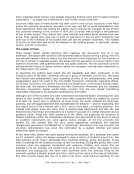
to freedom, but also to the undesirable consequences of exercising that freedom. The
approach of the report had been balanced and nonsectarian and he welcomed it.
Mr. de Puig (Spain) (Rapporteur of the Committee on Culture and Education) thanked the
participants in the debate, all of whom had supported the report. He said that the lesson he
had drawn from the debate was that it was very difficult to deal with the problem of sects, as
in many cases they were abusing existing freedoms which were guaranteed by law, but were
not actually breaking the law. The problem needed to be looked at from the point of view of
respect for human rights.
The problems raised by sects could not be solved by intolerance. In that context, it was
encouraging to know that a committee of the Assembly was looking at the problem of
religious tolerance, and would be holding a symposium on that subject in Jerusalem the
following month.
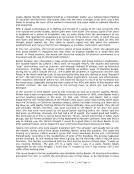
Sir John Hunt (United Kingdom) (Rapporteur of the Committee on Legal Affairs and Human
Rights): We have had a brief but very useful debate. I am most grateful to all those who have
spoken. I thank Mr. de Puig for what he has just said, for his personal support, and for the
support of his committee. Of course, Spain has set an example to many other countries in
Europe on ways in which to tackle the growing problems of sects and cults.
Two speakers, Mr. Worms and Mr. Moya, said that it was difficult to find the right balance, but
I am glad that they feel we have got it about right in the report. Mr. Muller picked up the
point in my report about the decline of traditional churches and classical religion. He said
quite rightly that many cults have come into being to meet the craving among young people
for new dependencies, but he went on also rightly to say that, having met that craving, they
then proceed in many cases to abuse it. That led him to the conclusion, which I certainly
endorse, that the state must supervise the activities of those groups --hence my
recommendation for a register.
Mr. Stoffelen spoke about the freedom of religion and tolerance, which I wholly endorse, and
the right to choose. Of course, we all support that. We also have the right to choose our
doctor. When we do so, however, we expect the government to ensure that that person is not
a bogus practitioner. In that sense, there must be some supervision. I assure Mr. Stoffelen
that there is absolutely no question of a witch-hunt against those groups. All that we are
seeking is to ensure that bad practices are exposed and publicized so that the public in
general, and young people and parents in particular, can be warned about them.
My colleague Andrew Rowe proposed a very interesting rule of thumb when judging sects. He
said that we should ask, "Are the founders rich?" I certainly commend that test to any young
people thinking of enlisting in those cults whose names I shall not mention. There are many
whose founders have become very rich indeed as a result of recruiting young people and their
subsequent activities. I am sorry that my colleague had doubts about registration. There are
precedents for that. I understand that Spain, Finland, and Iceland have enacted such
legislation, and it is essential if society is to carry out its watchdog role in dealing with those
groups.
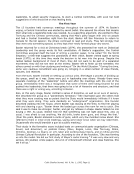
Mr. Espersen made an interesting speech. He recognized that it was a difficult problem. He
felt that the Church of Scientology, which he described as a "cool, cynical, manipulating
business," might fall outside the scope of registration. That is not my understanding. I should
be interested to know the experience of the other European countries to which I have referred
and which have brought in a scheme of registration. I should like to know whether they have
felt able to deal with the Church of Scientology if it operates in their countries. However, that
is a matter that we can look at again.
The main message that has come from the debate is the need for greater openness --the
need for more information. The way to get it is the dissemination of information to schools
to freedom, but also to the undesirable consequences of exercising that freedom. The
approach of the report had been balanced and nonsectarian and he welcomed it.
Mr. de Puig (Spain) (Rapporteur of the Committee on Culture and Education) thanked the
participants in the debate, all of whom had supported the report. He said that the lesson he
had drawn from the debate was that it was very difficult to deal with the problem of sects, as
in many cases they were abusing existing freedoms which were guaranteed by law, but were
not actually breaking the law. The problem needed to be looked at from the point of view of
respect for human rights.
The problems raised by sects could not be solved by intolerance. In that context, it was
encouraging to know that a committee of the Assembly was looking at the problem of
religious tolerance, and would be holding a symposium on that subject in Jerusalem the
following month.
Sir John Hunt (United Kingdom) (Rapporteur of the Committee on Legal Affairs and Human
Rights): We have had a brief but very useful debate. I am most grateful to all those who have
spoken. I thank Mr. de Puig for what he has just said, for his personal support, and for the
support of his committee. Of course, Spain has set an example to many other countries in
Europe on ways in which to tackle the growing problems of sects and cults.
Two speakers, Mr. Worms and Mr. Moya, said that it was difficult to find the right balance, but
I am glad that they feel we have got it about right in the report. Mr. Muller picked up the
point in my report about the decline of traditional churches and classical religion. He said
quite rightly that many cults have come into being to meet the craving among young people
for new dependencies, but he went on also rightly to say that, having met that craving, they
then proceed in many cases to abuse it. That led him to the conclusion, which I certainly
endorse, that the state must supervise the activities of those groups --hence my
recommendation for a register.
Mr. Stoffelen spoke about the freedom of religion and tolerance, which I wholly endorse, and
the right to choose. Of course, we all support that. We also have the right to choose our
doctor. When we do so, however, we expect the government to ensure that that person is not
a bogus practitioner. In that sense, there must be some supervision. I assure Mr. Stoffelen
that there is absolutely no question of a witch-hunt against those groups. All that we are
seeking is to ensure that bad practices are exposed and publicized so that the public in
general, and young people and parents in particular, can be warned about them.
My colleague Andrew Rowe proposed a very interesting rule of thumb when judging sects. He
said that we should ask, "Are the founders rich?" I certainly commend that test to any young
people thinking of enlisting in those cults whose names I shall not mention. There are many
whose founders have become very rich indeed as a result of recruiting young people and their
subsequent activities. I am sorry that my colleague had doubts about registration. There are
precedents for that. I understand that Spain, Finland, and Iceland have enacted such
legislation, and it is essential if society is to carry out its watchdog role in dealing with those
groups.
Mr. Espersen made an interesting speech. He recognized that it was a difficult problem. He
felt that the Church of Scientology, which he described as a "cool, cynical, manipulating
business," might fall outside the scope of registration. That is not my understanding. I should
be interested to know the experience of the other European countries to which I have referred
and which have brought in a scheme of registration. I should like to know whether they have
felt able to deal with the Church of Scientology if it operates in their countries. However, that
is a matter that we can look at again.
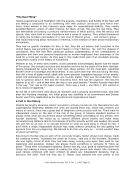
The main message that has come from the debate is the need for greater openness --the
need for more information. The way to get it is the dissemination of information to schools