Cultic Studies Journal, Vol. 9, No. 1, 1992, Page 26
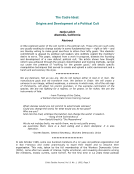
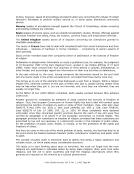
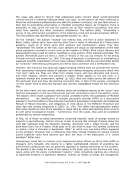
Having been a loner for so many years, and suddenly finding myself with exciting
political realizations coupled with a strong feminist leaning, I was immediately
attracted to an organization founded by women, supposedly nondogmatic and
serious. I was 30 years old and now willing to make a commitment. I had tried a lot
of things and had come to realize that there really is strength in numbers.
I was naturally wary upon joining (especially with all the secretiveness I didn’t
really know exactly what I was joining), and accepting the discipline was the hardest
for me. But overall I wanted to believe and to belong. I didn’t want to be alone
anymore and I wanted to do something meaningful with my life. For me, becoming
part of a serious political organization seemed like a way to unselfishly make my
mark on history.
I liked the idea of being part of an elite. I liked the claim that we were to be strong
and without emotion. I liked the idea that personal choices and desires were to be
subordinate to our political mission. I felt respected, cared for, recognized. What I
didn’t know was that playing by the rules meant losing myself, that total submission
creates total dominance as a counterpart, and that the loss of self-respect, self-
caring, and self-recognition brings on a slow and painful death.
But in the beginning I believed in it. I believed because politically and personally I
wanted to find an answer, because this seemed to be a genuine attempt at building
something different within the Left. From the onset, I yielded, painfully and
sacrificingly, to every criticism. I gave up my style of dress, I changed my identity, I
took on a party attitude toward everything. And I was spotted as a leader and soon
became one. I was trained by the top to despise my former self and build a party-
identified image. My pre-party self-image as a strong, intelligent, independent
woman was turned into a devotion to the party. I really wanted this to work and I
wanted to have a family again.
Joining the party, then, was the logical outcome of my political beliefs as they had
developed and my personal beliefs in wanting to help create a better world. Although
from the first I resisted the discipline, I had no reason to doubt the ideology rather I
believed in it fiercely. I gave myself up to it --and in the fervor of those beliefs I
wanted to help build the party, to make it something strong and viable. And so I
became a leader, a teacher, a recruiter.
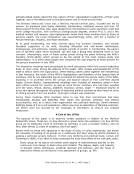
Life on the Inside
Once Doreen Baxter was asked by a curious outsider (who later became a member) how
exactly she was able to build such a strong and mindful organization. “How do you get all
those people to abide by the discipline, to follow orders all the time?” he asked. Baxter leaned
over in her chair, stared him in the eye, and replied, “With a little carrot and a lot of stick.”
Early Methods
The indoctrination process was two-fold: 1) the inculcation of necessary ideological beliefs
gleaned from the intensive study of Marxist political theories, and 2) the inculcation of
necessary behavioral changes brought about by the relentless practice of criticism/self-
criticism (both written and verbal) and by the collective examination of personal (or class)
histories.
In the WDU, criticism/self-criticism was a process by which a person was made to account for
some statement or action that was seen to be antiparty or politically incorrect. It was believed
that any act or thought was legitimate material for scrutiny and for what Baxter called “class-
stand analysis.” This could be brought up by the individual or by another member or
leadership. All criticisms were to be “accepted,” that is, internalized for the purpose of
“reforming your class standpoint.” Chairman Mao’s exhortation to “find the kernel of truth in
Having been a loner for so many years, and suddenly finding myself with exciting
political realizations coupled with a strong feminist leaning, I was immediately
attracted to an organization founded by women, supposedly nondogmatic and
serious. I was 30 years old and now willing to make a commitment. I had tried a lot
of things and had come to realize that there really is strength in numbers.
I was naturally wary upon joining (especially with all the secretiveness I didn’t
really know exactly what I was joining), and accepting the discipline was the hardest
for me. But overall I wanted to believe and to belong. I didn’t want to be alone
anymore and I wanted to do something meaningful with my life. For me, becoming
part of a serious political organization seemed like a way to unselfishly make my
mark on history.
I liked the idea of being part of an elite. I liked the claim that we were to be strong
and without emotion. I liked the idea that personal choices and desires were to be
subordinate to our political mission. I felt respected, cared for, recognized. What I
didn’t know was that playing by the rules meant losing myself, that total submission
creates total dominance as a counterpart, and that the loss of self-respect, self-
caring, and self-recognition brings on a slow and painful death.
But in the beginning I believed in it. I believed because politically and personally I
wanted to find an answer, because this seemed to be a genuine attempt at building
something different within the Left. From the onset, I yielded, painfully and
sacrificingly, to every criticism. I gave up my style of dress, I changed my identity, I
took on a party attitude toward everything. And I was spotted as a leader and soon
became one. I was trained by the top to despise my former self and build a party-
identified image. My pre-party self-image as a strong, intelligent, independent
woman was turned into a devotion to the party. I really wanted this to work and I
wanted to have a family again.
Joining the party, then, was the logical outcome of my political beliefs as they had
developed and my personal beliefs in wanting to help create a better world. Although
from the first I resisted the discipline, I had no reason to doubt the ideology rather I
believed in it fiercely. I gave myself up to it --and in the fervor of those beliefs I
wanted to help build the party, to make it something strong and viable. And so I
became a leader, a teacher, a recruiter.
Life on the Inside
Once Doreen Baxter was asked by a curious outsider (who later became a member) how
exactly she was able to build such a strong and mindful organization. “How do you get all
those people to abide by the discipline, to follow orders all the time?” he asked. Baxter leaned
over in her chair, stared him in the eye, and replied, “With a little carrot and a lot of stick.”
Early Methods
The indoctrination process was two-fold: 1) the inculcation of necessary ideological beliefs
gleaned from the intensive study of Marxist political theories, and 2) the inculcation of
necessary behavioral changes brought about by the relentless practice of criticism/self-
criticism (both written and verbal) and by the collective examination of personal (or class)
histories.
In the WDU, criticism/self-criticism was a process by which a person was made to account for
some statement or action that was seen to be antiparty or politically incorrect. It was believed
that any act or thought was legitimate material for scrutiny and for what Baxter called “class-
stand analysis.” This could be brought up by the individual or by another member or
leadership. All criticisms were to be “accepted,” that is, internalized for the purpose of
“reforming your class standpoint.” Chairman Mao’s exhortation to “find the kernel of truth in