Cultic Studies Journal, Vol. 9, No. 1, 1992, Page 68
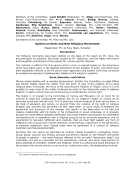
Members of the committee:* Lord Kirkhill (Chairman), Mr. Altug (Vice-Chairman), Mrs.
Ekman (Vice-Chairwoman), MM. Akcali, Amaral, Arnalds, Bindig, Brincat, Collette,
Colombo, Columberg, De Decker, Espersen, Esteves, Fodor, Fuhrmann, Ghalanos,
Gundersen, Stig Gustafsson, Hyland, Jansson, Karcsay, Mrs. Lentz-Cornette, MM.
Meimarakis, Negri, Nunez, Oehry, Petitpierre (Alternate: Mrs. Haller), Pontillon,
Posluch, Rodota, Rokofyllos, Ruiz (Alternate: Cuatrecasas), von Schmude (Alternate:
Zierer), Schwimmer, Sir Dudley Smith, Mrs. Soutendijk van Appeldoorn, Mrs. Staels-
Dompas, MM. Stoffelen, Vogel, Ward, Worms.
Secretaries of the committee: Mr. Plate and Ms. Coin.
Opinion on Sects and New Religious Movements
(Rapporteur: Mr. de Puig, Spain, Socialist)
Introduction
The following comments have been drafted on the basis of the report by Mr. Hunt, the
documentation he presents, the earlier studies by Mr. Jeambrun, and the highly informative
and thoughtful contributions of the experts Mr. Hancox and Mr. Messner.
This material is sufficient for this opinion which in turn is inspired largely by the discussions
which have taken place in the Spanish Parliament on the question of sects, and which have
been repeatedly referred to by the above-cited rapporteurs and experts since they constitute
an exceptional example of parliamentary debate on the subject in question.
Sects, Education, and Culture
We are clearly dealing with a complex phenomenon. Initially, the Committee on Legal Affairs
and Human Rights raised the matter from the point of view of the problem of so-called
religious sects. Eventually, the focus of the issue became freedom of religion. Since it is only
possible to come close to the reality of abuses by sects on the democratic basis of religious
freedom, it seems certain that we are discussing a fundamentally cultural right.
The matter is of interest to the Committee on Culture and Education not so much for its
criminal or legal and constitutional aspects but for its negative impact on society as an
abnormal social and cultural trend. It is of particular interest because of what can be done, in
the field of education and culture, to prevent firstly the violation of the right to religious
freedom and secondly the perversion of that right when, in some sects, it threatens the
equilibrium and autonomy of the member and results in the destruction of his free and
creative relationship with his family or his professional or social entourage. It is precisely
because we must defend complete intellectual and moral freedom and because we understand
membership [in] or association with a religious group to be an enriching experience, and an
opportunity for personal fulfillment and creativity, that we must fight against any form of
integration into a group that involves alienation, brainwashing, suppression of the personality,
or personal subjection, even though these may be performed in a context of religious
mysticism and transcendental faith.
Activities that can openly be described as criminal (illegal proselytism, kidnapping, fraud,
sexual abuse, coercion and threats, physical punishment, attacks on the freedom and safety
of people in general --the most frequent offenses of the so-called "destructive sects") are
intolerable, but just as intolerable are the educational, cultural, and social repercussions of
these activities on members' children and relatives. There is a cultural and social dimension to
the problem that should concern us as much as, indeed more than, the lawbreaking involved.
*The names of members who took part in the vote are highlighted.
Members of the committee:* Lord Kirkhill (Chairman), Mr. Altug (Vice-Chairman), Mrs.
Ekman (Vice-Chairwoman), MM. Akcali, Amaral, Arnalds, Bindig, Brincat, Collette,
Colombo, Columberg, De Decker, Espersen, Esteves, Fodor, Fuhrmann, Ghalanos,
Gundersen, Stig Gustafsson, Hyland, Jansson, Karcsay, Mrs. Lentz-Cornette, MM.
Meimarakis, Negri, Nunez, Oehry, Petitpierre (Alternate: Mrs. Haller), Pontillon,
Posluch, Rodota, Rokofyllos, Ruiz (Alternate: Cuatrecasas), von Schmude (Alternate:
Zierer), Schwimmer, Sir Dudley Smith, Mrs. Soutendijk van Appeldoorn, Mrs. Staels-
Dompas, MM. Stoffelen, Vogel, Ward, Worms.
Secretaries of the committee: Mr. Plate and Ms. Coin.
Opinion on Sects and New Religious Movements
(Rapporteur: Mr. de Puig, Spain, Socialist)
Introduction
The following comments have been drafted on the basis of the report by Mr. Hunt, the
documentation he presents, the earlier studies by Mr. Jeambrun, and the highly informative
and thoughtful contributions of the experts Mr. Hancox and Mr. Messner.
This material is sufficient for this opinion which in turn is inspired largely by the discussions
which have taken place in the Spanish Parliament on the question of sects, and which have
been repeatedly referred to by the above-cited rapporteurs and experts since they constitute
an exceptional example of parliamentary debate on the subject in question.
Sects, Education, and Culture
We are clearly dealing with a complex phenomenon. Initially, the Committee on Legal Affairs
and Human Rights raised the matter from the point of view of the problem of so-called
religious sects. Eventually, the focus of the issue became freedom of religion. Since it is only
possible to come close to the reality of abuses by sects on the democratic basis of religious
freedom, it seems certain that we are discussing a fundamentally cultural right.
The matter is of interest to the Committee on Culture and Education not so much for its
criminal or legal and constitutional aspects but for its negative impact on society as an
abnormal social and cultural trend. It is of particular interest because of what can be done, in
the field of education and culture, to prevent firstly the violation of the right to religious
freedom and secondly the perversion of that right when, in some sects, it threatens the
equilibrium and autonomy of the member and results in the destruction of his free and
creative relationship with his family or his professional or social entourage. It is precisely
because we must defend complete intellectual and moral freedom and because we understand
membership [in] or association with a religious group to be an enriching experience, and an
opportunity for personal fulfillment and creativity, that we must fight against any form of
integration into a group that involves alienation, brainwashing, suppression of the personality,
or personal subjection, even though these may be performed in a context of religious
mysticism and transcendental faith.
Activities that can openly be described as criminal (illegal proselytism, kidnapping, fraud,
sexual abuse, coercion and threats, physical punishment, attacks on the freedom and safety
of people in general --the most frequent offenses of the so-called "destructive sects") are
intolerable, but just as intolerable are the educational, cultural, and social repercussions of
these activities on members' children and relatives. There is a cultural and social dimension to
the problem that should concern us as much as, indeed more than, the lawbreaking involved.
*The names of members who took part in the vote are highlighted.