Cultic Studies Review, Vol. 8, No. 2, 2009, Page 66
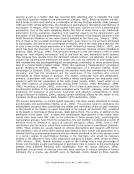
Jane Doherty, a teacher in the Washington, DC, area, says that Planet Aid‘s International
Institute for Communication and Development, for which she volunteered ten years ago, is
a cult. Instead of going to Africa, she was sent to Boston. ―We each had to raise in the
neighborhood of $125 a day ...to go where we were supposed to be going. That is what
they told us, ‗You have to complete these goals.‘ ‖ She says she and others were cut off
from friends and family and not allowed to sleep much. ―I was less and less lucid. We were
sort of as vulnerable as we could be so they could get what they needed from us.‖
Cult expert Rick Ross says Planet Aid‘s parent organization, Tvind, has all the features of a
cult, including a leadership that lives very well and ―volunteers [who] often suffer and live in
substandard conditions.‖ Leader Amdi Pederson is wanted by the Danish government on
charges of tax fraud and embezzlement. The Planet Aid website says belonging to Tvind is
―a lifestyle choice that may not be for everyone,‖ and that ―anyone is free to leave the
group at any time.‖ Doherty says, ―If you give money to them, you are giving money to a
huge international organization that is manipulative and mistreating young people.‖
Polygamy. HOPE is a small, Washington, Utah-based nonprofit, assisted by a $40,000
grant from a women‘s organization affiliated with the national Presbyterian Church, that
helps women and children leave polygamous lifestyles. HOPE‘s Jump Start is a life-skills
program aimed to help children 6–17 build self-esteem, develop interpersonal skills, and
understand mainstream society. Most of HOPE‘s clients are members of families that have
left the Fundamentalist Church of Jesus Christ of Latter Day Saints.
Singapore Prime Minister Lee has warned that proselytizing through ―aggressive
preaching‖ by religious groups threatened the country‘s stability, noting that a Christian
couple had been jailed for distributing religious pamphlets deemed offensive to adherents of
other faiths. He also condemned those who try to convert hospital patients ―who don‘t want
to be converted,‖ and he pointed to a group that briefly took control of a women‘s
association and then declared it opposed the association‘s advocacy of homosexuality. In
the 2000 census, 43 percent of Singaporeans said they were Buddhist, 15 percent Muslim,
15 percent Christian, 8.5 percent Taoist, and 4 percent Hindu.
Raëlian bishop Daniel Chabot‘s $10,000 lawsuit, claiming he suffered religious
discrimination perpetrated by video game giant Ubisoft Entertainment, will soon be decided
by a Montreal judge. Ubisoft canceled his company‘s 2003 employee training project—even
though the first sessions received good evaluations—when it learned of his Reälian
connection. In a taped conversation made available to the court, a Ubisoft executive
compared Raëlians to neo-Nazis, which Chabot called an attack on his human dignity and
the cause of stress and anxiety.
The Sun Media Corporation of Canada has been ordered by a court to pay $10,000 each to
two Raëlians for violating their privacy in a series of articles in the Journal de Montreal and
the Journal de Québec in 2003. The judge condemned reporters Brigitte McCann and
Chantal Poirier, and their superiors, for clandestine, dishonest, and abusive practices. They
took pictures of Raëlians without permission.
While millions of people believe in reincarnation, few claim to have memories of past lives,
which usually arise during the controversial psychotherapy technique called ―past life
regression.‖ This method was used in the 1950s case of the American Virginia Tighe, who
was purportedly the reincarnation of Bridey Murphy, a 19th century Irish woman. Evidence
showed that the claim, the basis of a bestseller by the psychiatrist in the case, was false.
Nonetheless, the idea of reincarnation still fuels a cottage industry of publications and
seminars aimed at believers.
Religious Conversion. The recently released Pew Forum on Religion &Public Life‘s ―Faith
in Flux‖ survey of American religions finds that: half of Americans, mostly on the younger
Jane Doherty, a teacher in the Washington, DC, area, says that Planet Aid‘s International
Institute for Communication and Development, for which she volunteered ten years ago, is
a cult. Instead of going to Africa, she was sent to Boston. ―We each had to raise in the
neighborhood of $125 a day ...to go where we were supposed to be going. That is what
they told us, ‗You have to complete these goals.‘ ‖ She says she and others were cut off
from friends and family and not allowed to sleep much. ―I was less and less lucid. We were
sort of as vulnerable as we could be so they could get what they needed from us.‖
Cult expert Rick Ross says Planet Aid‘s parent organization, Tvind, has all the features of a
cult, including a leadership that lives very well and ―volunteers [who] often suffer and live in
substandard conditions.‖ Leader Amdi Pederson is wanted by the Danish government on
charges of tax fraud and embezzlement. The Planet Aid website says belonging to Tvind is
―a lifestyle choice that may not be for everyone,‖ and that ―anyone is free to leave the
group at any time.‖ Doherty says, ―If you give money to them, you are giving money to a
huge international organization that is manipulative and mistreating young people.‖
Polygamy. HOPE is a small, Washington, Utah-based nonprofit, assisted by a $40,000
grant from a women‘s organization affiliated with the national Presbyterian Church, that
helps women and children leave polygamous lifestyles. HOPE‘s Jump Start is a life-skills
program aimed to help children 6–17 build self-esteem, develop interpersonal skills, and
understand mainstream society. Most of HOPE‘s clients are members of families that have
left the Fundamentalist Church of Jesus Christ of Latter Day Saints.
Singapore Prime Minister Lee has warned that proselytizing through ―aggressive
preaching‖ by religious groups threatened the country‘s stability, noting that a Christian
couple had been jailed for distributing religious pamphlets deemed offensive to adherents of
other faiths. He also condemned those who try to convert hospital patients ―who don‘t want
to be converted,‖ and he pointed to a group that briefly took control of a women‘s
association and then declared it opposed the association‘s advocacy of homosexuality. In
the 2000 census, 43 percent of Singaporeans said they were Buddhist, 15 percent Muslim,
15 percent Christian, 8.5 percent Taoist, and 4 percent Hindu.
Raëlian bishop Daniel Chabot‘s $10,000 lawsuit, claiming he suffered religious
discrimination perpetrated by video game giant Ubisoft Entertainment, will soon be decided
by a Montreal judge. Ubisoft canceled his company‘s 2003 employee training project—even
though the first sessions received good evaluations—when it learned of his Reälian
connection. In a taped conversation made available to the court, a Ubisoft executive
compared Raëlians to neo-Nazis, which Chabot called an attack on his human dignity and
the cause of stress and anxiety.
The Sun Media Corporation of Canada has been ordered by a court to pay $10,000 each to
two Raëlians for violating their privacy in a series of articles in the Journal de Montreal and
the Journal de Québec in 2003. The judge condemned reporters Brigitte McCann and
Chantal Poirier, and their superiors, for clandestine, dishonest, and abusive practices. They
took pictures of Raëlians without permission.
While millions of people believe in reincarnation, few claim to have memories of past lives,
which usually arise during the controversial psychotherapy technique called ―past life
regression.‖ This method was used in the 1950s case of the American Virginia Tighe, who
was purportedly the reincarnation of Bridey Murphy, a 19th century Irish woman. Evidence
showed that the claim, the basis of a bestseller by the psychiatrist in the case, was false.
Nonetheless, the idea of reincarnation still fuels a cottage industry of publications and
seminars aimed at believers.
Religious Conversion. The recently released Pew Forum on Religion &Public Life‘s ―Faith
in Flux‖ survey of American religions finds that: half of Americans, mostly on the younger