Cultic Studies Review, Vol. 8, No. 2, 2009, Page 13
Psychological Distress
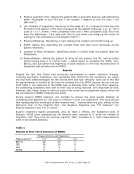
Eighty-two participants completed the Symptom Checklist-90-R (SCL-90-R) correctly of
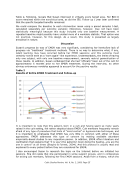
those, 52.4% was male and 47.6% female. The mean scores for the Global Severity Index
(GSI) were 0.68 (SD: 0.60) for the males and 0.92 (SD: 0.69) for the females. We used the
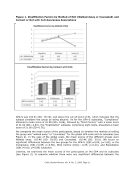
Student‘s t-test to compare the mean scores on the GSI (see Figure 3) separately, taking
into consideration the participants‘ sex according to their exit method (walked away or
counseled) we did not find any significant differences between the groups, nor between the
male (t(31)=0.32 p=0.75) and female participants (t(32)=0.12 p=0.91).
Likewise, we compared the mean scores on the GSI between those participants who had
been counseled by a CAA and those who had not (see Figure 3). The groups did not present
any significant differences in their mean scores, or between the male (t‘(40.9)=1.65
p=0.11) and female participants (t(35)=-1.32 p=0.20).
Discussion
Despite the limitations of our sample of self-identified former members of abusive groups—
i.e., the small sample size, the difficulty of ensuring that the sample is representative, and
the fact that it is based on retrospective information, it would appear to be reasonably
appropriate for the comparisons that we have undertaken here. In this sense, we do
manage to overcome some limitations noted by Wright (1984), Lewis (1986), Lewis and
Bromley (1987) and others. Researchers‘ selection of groups that they call ―cults‖ or some
related term has been criticized. In this study, however, the subjects, not the researchers,
identified their groups as ―abusive.‖
Also, it has been noted that samples are most frequently compiled with the collaboration of
cult-awareness groups. Only about one-third (32.7%) of our participants was contacted
through data provided by these organizations. The reliance on samples composed
predominantly of individuals who left the group with the aid of deprogramming or other
―exit therapy,‖ or of those whose accounts may have been influenced by their socialization
with the so-called anti-cult movement, has been questioned. None of our participants was
deprogrammed, and only 25% left the group after counseling. Only 29.6% had sometimes
taken advice from a CAA because of their cultic group experience. Finally, the reliance on
clinical samples of people who were seeking psychotherapy or were about to initiate
treatment with the researchers has been criticized. Just a few of our subjects (18.2%)
were receiving psychological advice at the moment the study took place, and not
necessarily concerning their cultic experiences.
Psychological Distress
Eighty-two participants completed the Symptom Checklist-90-R (SCL-90-R) correctly of
those, 52.4% was male and 47.6% female. The mean scores for the Global Severity Index
(GSI) were 0.68 (SD: 0.60) for the males and 0.92 (SD: 0.69) for the females. We used the
Student‘s t-test to compare the mean scores on the GSI (see Figure 3) separately, taking
into consideration the participants‘ sex according to their exit method (walked away or
counseled) we did not find any significant differences between the groups, nor between the
male (t(31)=0.32 p=0.75) and female participants (t(32)=0.12 p=0.91).
Likewise, we compared the mean scores on the GSI between those participants who had
been counseled by a CAA and those who had not (see Figure 3). The groups did not present
any significant differences in their mean scores, or between the male (t‘(40.9)=1.65
p=0.11) and female participants (t(35)=-1.32 p=0.20).
Discussion
Despite the limitations of our sample of self-identified former members of abusive groups—
i.e., the small sample size, the difficulty of ensuring that the sample is representative, and
the fact that it is based on retrospective information, it would appear to be reasonably
appropriate for the comparisons that we have undertaken here. In this sense, we do
manage to overcome some limitations noted by Wright (1984), Lewis (1986), Lewis and
Bromley (1987) and others. Researchers‘ selection of groups that they call ―cults‖ or some
related term has been criticized. In this study, however, the subjects, not the researchers,
identified their groups as ―abusive.‖
Also, it has been noted that samples are most frequently compiled with the collaboration of
cult-awareness groups. Only about one-third (32.7%) of our participants was contacted
through data provided by these organizations. The reliance on samples composed
predominantly of individuals who left the group with the aid of deprogramming or other
―exit therapy,‖ or of those whose accounts may have been influenced by their socialization
with the so-called anti-cult movement, has been questioned. None of our participants was
deprogrammed, and only 25% left the group after counseling. Only 29.6% had sometimes
taken advice from a CAA because of their cultic group experience. Finally, the reliance on
clinical samples of people who were seeking psychotherapy or were about to initiate
treatment with the researchers has been criticized. Just a few of our subjects (18.2%)
were receiving psychological advice at the moment the study took place, and not
necessarily concerning their cultic experiences.