Cultic Studies Review, Vol. 8, No. 2, 2009, Page 20
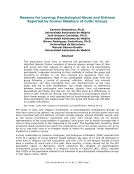
A Single-Case Design Implementing Eye-Movement
Desensitization and Reprocessing (EMDR) with an Ex-Cult
Member
Robert R. DeYoung, Ed.D.
The Family Center for Behavioral Health
Abstract
This single case study used a repeated-measures design with an ex-Jehovah‘s
Witness who was treated with EMDR over a two-month period. A follow-up
session was conducted one year later, which indicated that all targeted gains
remained. A brief background relevant to a 37-year-old female who was
―disfellowshipped‖ by her entire support network and family after 28 years
served as a backdrop for treatment. A limited review of criteria related to
cult-like behaviors and attitudes commonly exhibited by Jehovah‘s Witnesses
(JWs) is included. Symptoms relevant to Post-Cult Trauma Syndrome (PCTS),
as defined by Singer (1979), are addressed via the Validity of Cognitions
Scale (VOC) and the Subjective Units of Distress Scale (SUDS) used by
practitioners of EMDR. In addition, the Beck Depression Inventory (BDI) and
the Impact of Event Scale (IES) were implemented to further assess
intervention results. All measures revealed significant improvement in
targeted symptoms following this brief, short-term treatment. Follow-up
results indicated symptoms did not reoccur.
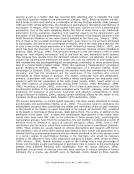
By 1997, Francine Shapiro‘s1 eye-movement desensitization and reprocessing (EMDR) had
already become one of the most popular and well-researched approaches in the field to
post-traumatic stress disorder (PTSD) treatment. A relatively simple technique to learn,
EMDR utilizes eye movements and cognitive, emotive, and imagery changes in reference to
past upsetting events. This approach quickly gained momentum as an innovative clinical
treatment that could be applied effectively not only to various forms of trauma but also to
depression, phobias, nightmares, grief, and addiction (Shapiro &Forrest, 2004). The actual
dynamics of how EMDR works remain debatable (Bruhn, 2008), and there has been criticism
about whether or not it is more efficacious than other treatments (Rauch &Cahill, 2003).
EMDR, however, has been the subject of many empirically based studies that support it as
an effective brief, short-term intervention (Shapiro, 2002) with long-term benefits that
appear to last at least as long as any other form of psychotherapy (Tootell, 2004). Many
state departments and trauma organizations now accept EMDR as a treatment of choice for
trauma victims.2 It is noteworthy, however, that there are virtually no studies that explore
the application of EMDR with individuals exiting from cults.
We can define the term cult as ―an ideological organization held together by charismatic
relationships and demanding total commitment‖ (Zablocki, cited in ICSA, 2008, p. 4).
According to the ICSA, the high-demand, leader-centered atmosphere generated in many
cults produces social settings that can place such groups at substantial risk of injuring and
exploiting its members. Landau, Tobias, and Lalich (1994), in their seminal book on cults,
Captive Hearts—Captive Minds, claim many members of cults typically describe themselves
as being ―enthralled‖ (p. 11) with an ideal, a group, or a person—usually a leader. The
dictionary defines thrall as ―One held in bondage slave servitude‖ (American Heritage
Dictionary, 2001, p. 851).
Cults in Our Midst: The Hidden Menace in Our Everyday Lives (Singer &Lalich, 1995) is
considered essential reading for individuals who work with cult members. According to
Singer, some researchers count religious groups as cults only when followers can, in fact, be
A Single-Case Design Implementing Eye-Movement
Desensitization and Reprocessing (EMDR) with an Ex-Cult
Member
Robert R. DeYoung, Ed.D.
The Family Center for Behavioral Health
Abstract
This single case study used a repeated-measures design with an ex-Jehovah‘s
Witness who was treated with EMDR over a two-month period. A follow-up
session was conducted one year later, which indicated that all targeted gains
remained. A brief background relevant to a 37-year-old female who was
―disfellowshipped‖ by her entire support network and family after 28 years
served as a backdrop for treatment. A limited review of criteria related to
cult-like behaviors and attitudes commonly exhibited by Jehovah‘s Witnesses
(JWs) is included. Symptoms relevant to Post-Cult Trauma Syndrome (PCTS),
as defined by Singer (1979), are addressed via the Validity of Cognitions
Scale (VOC) and the Subjective Units of Distress Scale (SUDS) used by
practitioners of EMDR. In addition, the Beck Depression Inventory (BDI) and
the Impact of Event Scale (IES) were implemented to further assess
intervention results. All measures revealed significant improvement in
targeted symptoms following this brief, short-term treatment. Follow-up
results indicated symptoms did not reoccur.
By 1997, Francine Shapiro‘s1 eye-movement desensitization and reprocessing (EMDR) had
already become one of the most popular and well-researched approaches in the field to
post-traumatic stress disorder (PTSD) treatment. A relatively simple technique to learn,
EMDR utilizes eye movements and cognitive, emotive, and imagery changes in reference to
past upsetting events. This approach quickly gained momentum as an innovative clinical
treatment that could be applied effectively not only to various forms of trauma but also to
depression, phobias, nightmares, grief, and addiction (Shapiro &Forrest, 2004). The actual
dynamics of how EMDR works remain debatable (Bruhn, 2008), and there has been criticism
about whether or not it is more efficacious than other treatments (Rauch &Cahill, 2003).
EMDR, however, has been the subject of many empirically based studies that support it as
an effective brief, short-term intervention (Shapiro, 2002) with long-term benefits that
appear to last at least as long as any other form of psychotherapy (Tootell, 2004). Many
state departments and trauma organizations now accept EMDR as a treatment of choice for
trauma victims.2 It is noteworthy, however, that there are virtually no studies that explore
the application of EMDR with individuals exiting from cults.
We can define the term cult as ―an ideological organization held together by charismatic
relationships and demanding total commitment‖ (Zablocki, cited in ICSA, 2008, p. 4).
According to the ICSA, the high-demand, leader-centered atmosphere generated in many
cults produces social settings that can place such groups at substantial risk of injuring and
exploiting its members. Landau, Tobias, and Lalich (1994), in their seminal book on cults,
Captive Hearts—Captive Minds, claim many members of cults typically describe themselves
as being ―enthralled‖ (p. 11) with an ideal, a group, or a person—usually a leader. The
dictionary defines thrall as ―One held in bondage slave servitude‖ (American Heritage
Dictionary, 2001, p. 851).
Cults in Our Midst: The Hidden Menace in Our Everyday Lives (Singer &Lalich, 1995) is
considered essential reading for individuals who work with cult members. According to
Singer, some researchers count religious groups as cults only when followers can, in fact, be