Cultic Studies Review, Vol. 8, No. 2, 2009, Page 29
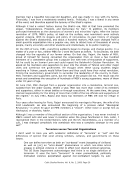
married, had a beautiful two-year-old daughter, and was madly in love with my family.
Financially, I was from a moderately wealthy family. Politically, I was a liberal in any sense
of the word, and therefore against the tyranny of the Shah‘s regime.
Although it had a violent history during the Shah‘s era, MEK at that time promoted the
slogan, ―Independence, Freedom, and Democracy for Iran.‖ In addition, its members
portrayed themselves as the champions of women‘s and minorities‘ rights. After the Iranian
revolution of 1979, MEK‘s policy, at least on the surface, was nonviolent—even actively
against violence. With its slogans and policy of nonviolence, its past history of struggle
against the Shah‘s dictatorship, and about a hundred martyrs, MEK soon changed from a
small guerrilla organization into a popular one, able to attract tens of thousands of young
people, mainly university and other students and intellectuals, to its public meetings.
On the 20th of June, 1981, everything suddenly began to change, and change quickly. In a
matter of a year or two, neither MEK nor I were the same as before. To be precise, we both
changed into the opposite of our former selves. On that day, Rajavi, the leader of MEK,
proud of himself for having converted the organization from at most a few hundred
members of a clandestine group into a popular one with tens of thousands of supporters,
felt he could be an Iranian Lenin and could repeat the Bolshevik‘s October Revolution. He
asked all his members and supporters to pour into the streets of Tehran and other major
cities and overthrow the government. He thought when these young students began
marching in Tehran, people would follow them and they could have their velvet revolution,
forcing the revolutionary government to surrender the leadership of the country to them.
Well, members and supporters came, but the rest of the people did not. The result was the
arrest and sometimes the execution of hundreds of MEK's young supporters, many of them
under 18 years of age.
On June 21st, MEK changed from a popular organization into a clandestine, terrorist one,
isolated from the wider society. Within a year, MEK lost more than 7,000 of its members
and supporters, either in street battles or through executions. At the same time, the group
claimed responsibility for the killing of more than 2,000 of the top officials and supporters of
the regime.1 In July 1981, Rajavi and many top members of MEK left Iran for refuge in
Paris.
Four years after leaving for Paris, Rajavi announced his marriage to Maryam, the wife of his
First Lieutenant. He also announced the beginning of a process called ―Ideological
Revolution,‖ in which he gave all MEK members a ―choice‖: either leave or accept him as
ideological, or absolute, leader.
Although I was a member of the political section of the organization, I was never involved in
MEK‘s violent acts and was never in isolation when the group functioned in Iran. Later, I
represented them in the United Nations (UN) and the US. Nevertheless, as a member of a
cult, I was changed completely into somebody who was a complete stranger to my past
self.2
Terrorism versus Terrorist Organizations
I don‘t want to bore you with academic definitions of ―terrorism‖ or ―cult‖ and the
differences of opinion that exist among scholars, cultures, and governments on these
issues.
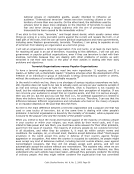
One can define terrorism as both an ―act-based‖ event (targeting of civilians)
as well as [sic] an ―actor-based‖ phenomenon in which non-state actors
engage in political violence in order to affect [sic] desired political outcomes.
The US State Department acknowledges that there is no single definition of
terrorism. It uses the term ―terrorism‖ to mean premeditated, politically
motivated violence perpetrated against non-combatant targets by sub-
married, had a beautiful two-year-old daughter, and was madly in love with my family.
Financially, I was from a moderately wealthy family. Politically, I was a liberal in any sense
of the word, and therefore against the tyranny of the Shah‘s regime.
Although it had a violent history during the Shah‘s era, MEK at that time promoted the
slogan, ―Independence, Freedom, and Democracy for Iran.‖ In addition, its members
portrayed themselves as the champions of women‘s and minorities‘ rights. After the Iranian
revolution of 1979, MEK‘s policy, at least on the surface, was nonviolent—even actively
against violence. With its slogans and policy of nonviolence, its past history of struggle
against the Shah‘s dictatorship, and about a hundred martyrs, MEK soon changed from a
small guerrilla organization into a popular one, able to attract tens of thousands of young
people, mainly university and other students and intellectuals, to its public meetings.
On the 20th of June, 1981, everything suddenly began to change, and change quickly. In a
matter of a year or two, neither MEK nor I were the same as before. To be precise, we both
changed into the opposite of our former selves. On that day, Rajavi, the leader of MEK,
proud of himself for having converted the organization from at most a few hundred
members of a clandestine group into a popular one with tens of thousands of supporters,
felt he could be an Iranian Lenin and could repeat the Bolshevik‘s October Revolution. He
asked all his members and supporters to pour into the streets of Tehran and other major
cities and overthrow the government. He thought when these young students began
marching in Tehran, people would follow them and they could have their velvet revolution,
forcing the revolutionary government to surrender the leadership of the country to them.
Well, members and supporters came, but the rest of the people did not. The result was the
arrest and sometimes the execution of hundreds of MEK's young supporters, many of them
under 18 years of age.
On June 21st, MEK changed from a popular organization into a clandestine, terrorist one,
isolated from the wider society. Within a year, MEK lost more than 7,000 of its members
and supporters, either in street battles or through executions. At the same time, the group
claimed responsibility for the killing of more than 2,000 of the top officials and supporters of
the regime.1 In July 1981, Rajavi and many top members of MEK left Iran for refuge in
Paris.
Four years after leaving for Paris, Rajavi announced his marriage to Maryam, the wife of his
First Lieutenant. He also announced the beginning of a process called ―Ideological
Revolution,‖ in which he gave all MEK members a ―choice‖: either leave or accept him as
ideological, or absolute, leader.
Although I was a member of the political section of the organization, I was never involved in
MEK‘s violent acts and was never in isolation when the group functioned in Iran. Later, I
represented them in the United Nations (UN) and the US. Nevertheless, as a member of a
cult, I was changed completely into somebody who was a complete stranger to my past
self.2
Terrorism versus Terrorist Organizations
I don‘t want to bore you with academic definitions of ―terrorism‖ or ―cult‖ and the
differences of opinion that exist among scholars, cultures, and governments on these
issues.
One can define terrorism as both an ―act-based‖ event (targeting of civilians)
as well as [sic] an ―actor-based‖ phenomenon in which non-state actors
engage in political violence in order to affect [sic] desired political outcomes.
The US State Department acknowledges that there is no single definition of
terrorism. It uses the term ―terrorism‖ to mean premeditated, politically
motivated violence perpetrated against non-combatant targets by sub-