Cultic Studies Review, Vol. 8, No. 2, 2009, Page 61
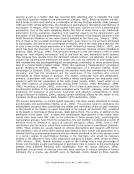
Last year, ultra-Orthodox rabbis forced department stores in Tiberius to cover up
mannequins that displayed bathing suits in its windows. They‘ve also persuaded billboard
companies to excise pictures of women, including Kadima Party leader Tzipi Livni. Busses
with service to Heredi communities are now segregated women sit in the back. (Some
ultra-Orthodox women said they liked the separate seating arrangement.) Females in the
Knesset [parliament] choir were not permitted to perform inside the main Knesset chamber
so they wouldn‘t offend Haredi in the audience. ―A day will come when there won‘t be a
single secular mayor anywhere,‖ says Meier Porush, a Haredi leader who almost won
Jerusalem‘s mayoral election last year. Israeli novelist Amos Oz suggested in 1982 that
Zionism [the movement that built Israel] was ―a passing, secular interlude, a historical and
political upheaval, and that halachic Judaism [the kind practiced by the ultra-Orthodox]
would return to overwhelm Zionism and re-absorb it.‖
The economic recession is apparently leading a growing number of stressed Canadians to
consult with members of the ―intuitive community‖—astrologers, palmists, numerologists,
and intuitive counselors. Seekers are asking these counselors everything from whether
the stars are correctly aligned for a new business venture to whether to jump in or out of
the stock market. ―There‘s uncertainty right now and people are looking for certainty, says
Julie Cusmariu, an intuitive consultant and life coach, who adds that the intuitive counseling
process operates beyond the linear, rational mind. Cusmariu was working in business when
she became interested in alternative therapies, took a course in energetic healing, and then
got two certificates, one as a ―six-sensory practitioner‖ and another as a life coach. She
says she ―helps others to connect with their sixth sense. It‘s a direct knowing without direct
experience. It‘s beyond the conscious mind. ..I see [client‘s] gifts and talents and help
them take steps to open up to possibilities, to trust themselves.‖
Although Islamic fundamentalism is on the rise throughout much of the Muslim world —
due mainly to the widespread failure of political and economic development—most
Islamists, including the Afghan Taliban, do not advocate or pursue global jihad. Nor do they
host terrorists or undertake operations against the outside world. The Swat Valley in
Pakistan is a good example of fundamentalists stepping in to provide, among other things, a
functioning court system and social order amidst the chaos and corruption of a secular
national government. In Northern Nigeria, the Islamic ―revolution‖ of 2002, which was to
have transformed the country, has all but petered out ―The government has helped push
Sharia [law] in a tamer direction by outlawing religious militias.‖ Even Southern Iraq, where
the Shiite majority has implemented a very strict version of Islam, is not a hotbed of jihad.
―The veil is not the same as the suicide belt.‖ [Fareed Zakaria develops these views in the
March 9, 2009, issue of Newsweek.]
Jacques Robideaux, former head of The Body [a tiny cultic group in Massachusetts], who
is serving a prison term following his 2002 conviction in the starvation death of his infant
son, asked in June for a new trial. His attorney argues that Robideaux had not been
competent to stand trial and that he should have been psychologically evaluated. Robideaux
said at the time that he and his wife believed they were obeying God‘s will by denying their
son solid food.
As people raised in the Jehovah’s Witnesses, we were especially interested in reviewing
Kyria Abrahams‘ new book, I’m Perfect, You’re Doomed: Tales from a Jehovah’s Witness
Upbringing, for ―Sacramento News and Reviews.‖ The book is hilarious [says journalist Jenn
Kistler]. When I was a child, I tried to convert my friends. In the second grade, I placed the
Bible Stories Book with one of them. The next day she brought it back and never spoke to
me again. [Fellow journalist Kel Munger reports that] Abrahams says the belief that the
world would be destroyed any minute kept me from forming attachments to people outside
the Jehovah‘s Witnesses. When my mother was disfellowshipped, I joined in shunning her,
and when I was disfellowshipped, she shunned me. When my father was disfellowhipped,
Last year, ultra-Orthodox rabbis forced department stores in Tiberius to cover up
mannequins that displayed bathing suits in its windows. They‘ve also persuaded billboard
companies to excise pictures of women, including Kadima Party leader Tzipi Livni. Busses
with service to Heredi communities are now segregated women sit in the back. (Some
ultra-Orthodox women said they liked the separate seating arrangement.) Females in the
Knesset [parliament] choir were not permitted to perform inside the main Knesset chamber
so they wouldn‘t offend Haredi in the audience. ―A day will come when there won‘t be a
single secular mayor anywhere,‖ says Meier Porush, a Haredi leader who almost won
Jerusalem‘s mayoral election last year. Israeli novelist Amos Oz suggested in 1982 that
Zionism [the movement that built Israel] was ―a passing, secular interlude, a historical and
political upheaval, and that halachic Judaism [the kind practiced by the ultra-Orthodox]
would return to overwhelm Zionism and re-absorb it.‖
The economic recession is apparently leading a growing number of stressed Canadians to
consult with members of the ―intuitive community‖—astrologers, palmists, numerologists,
and intuitive counselors. Seekers are asking these counselors everything from whether
the stars are correctly aligned for a new business venture to whether to jump in or out of
the stock market. ―There‘s uncertainty right now and people are looking for certainty, says
Julie Cusmariu, an intuitive consultant and life coach, who adds that the intuitive counseling
process operates beyond the linear, rational mind. Cusmariu was working in business when
she became interested in alternative therapies, took a course in energetic healing, and then
got two certificates, one as a ―six-sensory practitioner‖ and another as a life coach. She
says she ―helps others to connect with their sixth sense. It‘s a direct knowing without direct
experience. It‘s beyond the conscious mind. ..I see [client‘s] gifts and talents and help
them take steps to open up to possibilities, to trust themselves.‖
Although Islamic fundamentalism is on the rise throughout much of the Muslim world —
due mainly to the widespread failure of political and economic development—most
Islamists, including the Afghan Taliban, do not advocate or pursue global jihad. Nor do they
host terrorists or undertake operations against the outside world. The Swat Valley in
Pakistan is a good example of fundamentalists stepping in to provide, among other things, a
functioning court system and social order amidst the chaos and corruption of a secular
national government. In Northern Nigeria, the Islamic ―revolution‖ of 2002, which was to
have transformed the country, has all but petered out ―The government has helped push
Sharia [law] in a tamer direction by outlawing religious militias.‖ Even Southern Iraq, where
the Shiite majority has implemented a very strict version of Islam, is not a hotbed of jihad.
―The veil is not the same as the suicide belt.‖ [Fareed Zakaria develops these views in the
March 9, 2009, issue of Newsweek.]
Jacques Robideaux, former head of The Body [a tiny cultic group in Massachusetts], who
is serving a prison term following his 2002 conviction in the starvation death of his infant
son, asked in June for a new trial. His attorney argues that Robideaux had not been
competent to stand trial and that he should have been psychologically evaluated. Robideaux
said at the time that he and his wife believed they were obeying God‘s will by denying their
son solid food.
As people raised in the Jehovah’s Witnesses, we were especially interested in reviewing
Kyria Abrahams‘ new book, I’m Perfect, You’re Doomed: Tales from a Jehovah’s Witness
Upbringing, for ―Sacramento News and Reviews.‖ The book is hilarious [says journalist Jenn
Kistler]. When I was a child, I tried to convert my friends. In the second grade, I placed the
Bible Stories Book with one of them. The next day she brought it back and never spoke to
me again. [Fellow journalist Kel Munger reports that] Abrahams says the belief that the
world would be destroyed any minute kept me from forming attachments to people outside
the Jehovah‘s Witnesses. When my mother was disfellowshipped, I joined in shunning her,
and when I was disfellowshipped, she shunned me. When my father was disfellowhipped,