Cultic Studies Review, Vol. 8, No. 2, 2009, Page 10
intimacy and private space not controlled by the group‖ (0.68) ―A feeling of being abused
and/or exploited‖ (0.66) ―Spending time away from or without contact with the group‖
(0.41). Following a theoretical analysis of the items that made up the factors, we labeled
the first of these Regulation, in reference to the living conditions in the group where the
individual‘s life, including his or her private space, is controlled, including the obligations
and restrictions that can even result in his or her exploitation. The second factor (25.45%
2.29) was composed of four items: ―Disillusionment with the leader and/or group‖ (0.78)
―Contradictions between the group‘s doctrine and practices‖ (0.74) ―Becoming aware of
deceitful practices or manipulation‖ (0.67) ―Repeated errors of prediction or failed
prophecy‖ (0.61). We have called this second factor Disillusion, in reference to the
inconsistencies within the group or as manifest by the leader and the expressed perception
of having been deceived. Cronbach‘s Alpha coefficients for the subscales were acceptable
(Regulation: 0.75 Disillusion: 0.69) considering the small number of items (five and four,
respectively). We also calculated the mean scores for both subscales, as well as for item 4,
which we considered an independent factor. The factor with the highest mean score, with a
possible range from 0 to 5, was that of ―Disillusion‖ (3.39 SD: 1.35), followed by that of
―Regulation‖ (2.49 SD: 1.37), and finally that of ―Family Intervention‖ (2.00 SD: 2.08).
To examine the disaffiliation factors in relation to whether or not the method the subject
used to leave the group involved external intervention, we used Student‘s t-test for
independent samples. This t-test let us examine whether there were any statistically
significant differences between the scores of the two CDF scales and the item of ―Family
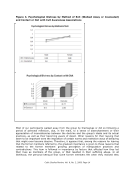
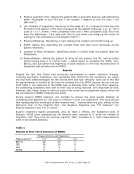
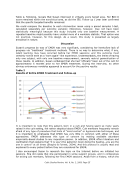
Intervention‖ for the two groups—walk-away exits and counseled exits. Figure 1 is a graphic
representation of the mean scores of the subscales and the item in relation to the method
used to leave the group. Our results indicate the absence of any significant differences
between the groups, whatever the method of group exit, when the reasons for leaving were
―Regulation‖ (t(77)=-0.55 p=0.58) and ―Disillusion‖ (t(75)=-0.70 p=0.49). We found
statistically significant differences, however, between the methods of exit (t(78)=-7.04
p=0.00) in the case of ―Family Intervention,‖ whereby those subjects who left the group
after professional, family member/s, or friendly advice presented a greater intervention by
family members.
We used the same Student‘s t-test to analyze the differences we found between the mean
scores for the disaffiliation factors in terms of the contact maintained by the participants
with any CAA. Here again, we did not find any significant differences between the scores of
the two groups (those who were assisted by an association and those who were not) for the
factors of ―Regulation‖ (t(91)=-0.74 p=0.46) and ―Disillusion‖ (t(88)=-0.47 p=0.64). By
contrast, we found significant differences for the item ―Family Intervention‖ between the
two groups (t(92)=-3.72 p=0.00), so that some kind of family intervention was more likely
in the case of those who had been in contact with a CAA (see Figure 1).
Post-Exit Perceptions of the Group
To examine whether the method of exit or whether contact with a CAA influenced the
former members‘ perception of the degree of psychological abuse inflicted within their
groups, we considered their responses to the Group Psychological Abuse Scale. The mean
score of all the participants on the
intimacy and private space not controlled by the group‖ (0.68) ―A feeling of being abused
and/or exploited‖ (0.66) ―Spending time away from or without contact with the group‖
(0.41). Following a theoretical analysis of the items that made up the factors, we labeled
the first of these Regulation, in reference to the living conditions in the group where the
individual‘s life, including his or her private space, is controlled, including the obligations
and restrictions that can even result in his or her exploitation. The second factor (25.45%
2.29) was composed of four items: ―Disillusionment with the leader and/or group‖ (0.78)
―Contradictions between the group‘s doctrine and practices‖ (0.74) ―Becoming aware of
deceitful practices or manipulation‖ (0.67) ―Repeated errors of prediction or failed
prophecy‖ (0.61). We have called this second factor Disillusion, in reference to the
inconsistencies within the group or as manifest by the leader and the expressed perception
of having been deceived. Cronbach‘s Alpha coefficients for the subscales were acceptable
(Regulation: 0.75 Disillusion: 0.69) considering the small number of items (five and four,
respectively). We also calculated the mean scores for both subscales, as well as for item 4,
which we considered an independent factor. The factor with the highest mean score, with a
possible range from 0 to 5, was that of ―Disillusion‖ (3.39 SD: 1.35), followed by that of
―Regulation‖ (2.49 SD: 1.37), and finally that of ―Family Intervention‖ (2.00 SD: 2.08).
To examine the disaffiliation factors in relation to whether or not the method the subject
used to leave the group involved external intervention, we used Student‘s t-test for
independent samples. This t-test let us examine whether there were any statistically
significant differences between the scores of the two CDF scales and the item of ―Family
Intervention‖ for the two groups—walk-away exits and counseled exits. Figure 1 is a graphic
representation of the mean scores of the subscales and the item in relation to the method
used to leave the group. Our results indicate the absence of any significant differences
between the groups, whatever the method of group exit, when the reasons for leaving were
―Regulation‖ (t(77)=-0.55 p=0.58) and ―Disillusion‖ (t(75)=-0.70 p=0.49). We found
statistically significant differences, however, between the methods of exit (t(78)=-7.04
p=0.00) in the case of ―Family Intervention,‖ whereby those subjects who left the group
after professional, family member/s, or friendly advice presented a greater intervention by
family members.
We used the same Student‘s t-test to analyze the differences we found between the mean
scores for the disaffiliation factors in terms of the contact maintained by the participants
with any CAA. Here again, we did not find any significant differences between the scores of
the two groups (those who were assisted by an association and those who were not) for the
factors of ―Regulation‖ (t(91)=-0.74 p=0.46) and ―Disillusion‖ (t(88)=-0.47 p=0.64). By
contrast, we found significant differences for the item ―Family Intervention‖ between the
two groups (t(92)=-3.72 p=0.00), so that some kind of family intervention was more likely
in the case of those who had been in contact with a CAA (see Figure 1).
Post-Exit Perceptions of the Group
To examine whether the method of exit or whether contact with a CAA influenced the
former members‘ perception of the degree of psychological abuse inflicted within their
groups, we considered their responses to the Group Psychological Abuse Scale. The mean
score of all the participants on the