Cultic Studies Review, Vol. 8, No. 2, 2009, Page 31
that act, nor consider that organization to be a terrorist group.6 Even so, if the suicide
attack is the only action or tactic that organization uses, and if the group continues using
the same tactics without considering any of the moral codes and boundaries of the people
as a whole, or any restrictions on the timing of such actions, then again it is very difficult for
that organization to hold on to the support of the majority, even within its own group.
Now consider Al-Qaeda and the act of terrorism of 9/11. Although the majority of Muslims
around the world might not love the United States government and might consider it a
bully, still, overall, the majority of Muslims in almost all countries not only condemned the
terrorist act of 9/11 from the bottom of their heart, but also recognized Al-Qaeda as a
terrorist organization and condemned it vehemently. And this is where we must differentiate
the two types of organizations from each other. Al-Qaeda‘s pool for fishing, contrary to
some comments in the West, is not in general the ordinary Muslim community. Al-Qaeda
has its own pool. And contrary to Palestinian organizations, it doesn‘t need to be bound by
the morality of the majority of Muslims. It can even kill Muslims ―in the name of Islam.‖ As
a matter of fact, the majority of the victims of Al-Qaeda have been Muslims, not non-
Muslims. Look at the events in Iraq, Afghanistan, and now Pakistan. Al-Qaeda doesn‘t claim
to be an alternative to this or that government therefore, it doesn‘t need to have a solution
for other problems of the people, and therefore it doesn‘t need to commit itself to doing
other things apart from terrorism under the banner of the Jihad.
Looking at these two examples, one can see that the main difference between the two types
of organizations is that a popular organization is bound by society‘s morality, while a
terrorist organization is free in this sense, and strangely its members are bound instead by
the morals or principles of the organization or its leader.
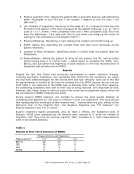
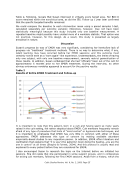
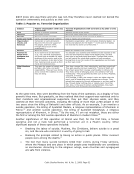
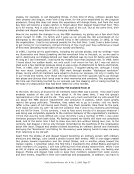
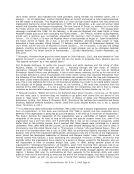
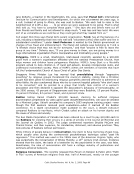
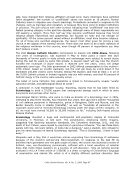
In Table 1, you can see other essential differences between the two types of organizations:
Change Them or Lose Them
At this point, I want to discuss what happens to the morality of the members when the
organization transforms from popular to terrorist. If the organization‘s sole or main tactic is
terrorism, sooner or later it must begin changing the morality of its members because it
cannot match the morality of the society from which they have come. The organization must
either change the member‘s morality and belief system or accept factions within and
defections from the group on a large scale.
During the Shah‘s era, MEK carried out only a few terrorist acts—mainly against American
military advisers stationed in Iran, and one or two acts against the Shah‘s top generals. At
the time, they were bound by the popular view and moral code therefore, the group‘s
slogan was ―Better a revolutionary killed in vain than he kills an innocent by mistake.‖7
During the new phase of the organization‘s actions after the revolution, in isolation from
wider society, the extent of MEK‘s terrorism and its moral code changed completely.
After the 20th of June, 1981, when its ―velvet revolution‖ failed, MEK changed its tactic and
went after the head of the regime.8 By then, the group‘s leaders were thinking that
Ayatollahs cannot run the country because they are not sophisticated enough and don‘t
know anything about how to run a 20th century country. They were saying to us supporters
that the regime has no alternative but to become dependent on imperialism and change into
lackeys of America. They were saying the only person within the Iranian establishment who
might be able to work with Americans and save the regime from collapsing was Ayatollah
Behashtii. Therefore, on the 28th of June, 1981, MEK exploded the centre of the Islamic
Republic party and killed Behashtii, along with more than 70 top officials of the new
establishment. But because MEK still was a popular organization—or its members still
thought so—and their act of terrorism was not against one person, but a building, and they
that act, nor consider that organization to be a terrorist group.6 Even so, if the suicide
attack is the only action or tactic that organization uses, and if the group continues using
the same tactics without considering any of the moral codes and boundaries of the people
as a whole, or any restrictions on the timing of such actions, then again it is very difficult for
that organization to hold on to the support of the majority, even within its own group.
Now consider Al-Qaeda and the act of terrorism of 9/11. Although the majority of Muslims
around the world might not love the United States government and might consider it a
bully, still, overall, the majority of Muslims in almost all countries not only condemned the
terrorist act of 9/11 from the bottom of their heart, but also recognized Al-Qaeda as a
terrorist organization and condemned it vehemently. And this is where we must differentiate
the two types of organizations from each other. Al-Qaeda‘s pool for fishing, contrary to
some comments in the West, is not in general the ordinary Muslim community. Al-Qaeda
has its own pool. And contrary to Palestinian organizations, it doesn‘t need to be bound by
the morality of the majority of Muslims. It can even kill Muslims ―in the name of Islam.‖ As
a matter of fact, the majority of the victims of Al-Qaeda have been Muslims, not non-
Muslims. Look at the events in Iraq, Afghanistan, and now Pakistan. Al-Qaeda doesn‘t claim
to be an alternative to this or that government therefore, it doesn‘t need to have a solution
for other problems of the people, and therefore it doesn‘t need to commit itself to doing
other things apart from terrorism under the banner of the Jihad.
Looking at these two examples, one can see that the main difference between the two types
of organizations is that a popular organization is bound by society‘s morality, while a
terrorist organization is free in this sense, and strangely its members are bound instead by
the morals or principles of the organization or its leader.
In Table 1, you can see other essential differences between the two types of organizations:
Change Them or Lose Them
At this point, I want to discuss what happens to the morality of the members when the
organization transforms from popular to terrorist. If the organization‘s sole or main tactic is
terrorism, sooner or later it must begin changing the morality of its members because it
cannot match the morality of the society from which they have come. The organization must
either change the member‘s morality and belief system or accept factions within and
defections from the group on a large scale.
During the Shah‘s era, MEK carried out only a few terrorist acts—mainly against American
military advisers stationed in Iran, and one or two acts against the Shah‘s top generals. At
the time, they were bound by the popular view and moral code therefore, the group‘s
slogan was ―Better a revolutionary killed in vain than he kills an innocent by mistake.‖7
During the new phase of the organization‘s actions after the revolution, in isolation from
wider society, the extent of MEK‘s terrorism and its moral code changed completely.
After the 20th of June, 1981, when its ―velvet revolution‖ failed, MEK changed its tactic and
went after the head of the regime.8 By then, the group‘s leaders were thinking that
Ayatollahs cannot run the country because they are not sophisticated enough and don‘t
know anything about how to run a 20th century country. They were saying to us supporters
that the regime has no alternative but to become dependent on imperialism and change into
lackeys of America. They were saying the only person within the Iranian establishment who
might be able to work with Americans and save the regime from collapsing was Ayatollah
Behashtii. Therefore, on the 28th of June, 1981, MEK exploded the centre of the Islamic
Republic party and killed Behashtii, along with more than 70 top officials of the new
establishment. But because MEK still was a popular organization—or its members still
thought so—and their act of terrorism was not against one person, but a building, and they