9 VOLUME 8 |ISSUE 1 |2017
Text Question
The last question in the survey said, “In the box
below, please briefly describe how your exercise
of free speech has been threatened.”
Although names and other identifying
demographic details are not provided in this
report, I have decided not to list all of the
narrative responses because too many of them
implicitly, if not explicitly, reveal the identity
of the respondent. Moreover, the comments
amount to nearly 10,000 words.
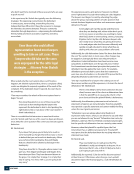
I will, however, try to give readers a sense of the
kinds of comments respondents made.
First of all, it should be noted that not all
perceptions of suppressed speech rise to the
level of actual or threatened lawsuits. Some
respondents reported that they felt speech-
inhibited, because of
• intimidation by family members
• threats of eternal damnation, disfellowshipping, or
excommunication
• a fear of being outed on private Web forums or having
information given in confidence (e.g., in confessions) made
public
• telephone calls demanding that the person stop criticizing
the group
• fear that current group members would come to the critic’s
home
• fear that criticism would mean loss of contact with family
still in the group
• complaints to university authorities, professional
associations, or licensing agencies
• fear of hurting people still in the group
• a residual sense of loyalty to the group
• attacks on social-media platforms
• a fear that lawsuits might follow public criticism
• a reluctance to experience the harassment that more
outspoken critics had experienced
• attempts to prevent the respondent from testifying in a
court case
• fear of being called crazy
• physical threats
Though these kinds of speech inhibition characterize the
majority of respondents, more than 10% of respondents (14)
were formally sued, and nearly half were threatened with
lawsuits or received intimidating legal letters.
Of 79 who responded to the question asking respondents to
rate the degree to which their educational efforts had been
inhibited, eight said that they had stopped those efforts entirely,
18 said their efforts had been significantly reduced, and 24 said
that their efforts had been reduced. We cannot say which of the
29 who said that they were not affected by speech-suppression
threats did not experience harassment or how many continued
with their work in spite of harassment.
In some cases, critics may have been suppressed by intimidating
legal tactics because they did not have the money to defend
themselves, not because they had acted improperly. In other
cases, critics may have been injudicious in their speech, though
sometimes even irresponsibly articulated criticisms may be valid
at their core.
This brief report will not discuss legal intimidation in depth, for
to do so would require details about specific cases that this brief
survey does not provide. A future study could explore this issue.
It is noteworthy that more than one-third of respondents
were definitely interested in education/training on the legal
dimensions of exercising free speech, and more than half were
open to such education/training.
Those who decry the use of the legal system as a speech-
inhibiting weapon can support critics of cultic groups by
1. supporting or contributing to the development of
resources aimed at making critics and whistleblowers
more careful and more effective in their testimonies,
and
2. providing pro bono or subsidized legal aid to those
critics whose economic resources are dwarfed by the
resources of those they criticize.
If you did not take part in the survey, but would like to share your
experiences regarding free speech suppression, please contact ICSA at
mail@icsamail.com n
About the Author
Michael D. Langone, PhD, a counseling
psychologist, received a doctorate in
Counseling Psychology from the University of
California, Santa Barbara in 1979. Since 1981
he has been Executive Director of International
Cultic Studies Association (ICSA). He has written
and spoken widely on cult-related topics and is
Editor-in-Chief of ICSA Today. n
Text Question
The last question in the survey said, “In the box
below, please briefly describe how your exercise
of free speech has been threatened.”
Although names and other identifying
demographic details are not provided in this
report, I have decided not to list all of the
narrative responses because too many of them
implicitly, if not explicitly, reveal the identity
of the respondent. Moreover, the comments
amount to nearly 10,000 words.
I will, however, try to give readers a sense of the
kinds of comments respondents made.
First of all, it should be noted that not all
perceptions of suppressed speech rise to the
level of actual or threatened lawsuits. Some
respondents reported that they felt speech-
inhibited, because of
• intimidation by family members
• threats of eternal damnation, disfellowshipping, or
excommunication
• a fear of being outed on private Web forums or having
information given in confidence (e.g., in confessions) made
public
• telephone calls demanding that the person stop criticizing
the group
• fear that current group members would come to the critic’s
home
• fear that criticism would mean loss of contact with family
still in the group
• complaints to university authorities, professional
associations, or licensing agencies
• fear of hurting people still in the group
• a residual sense of loyalty to the group
• attacks on social-media platforms
• a fear that lawsuits might follow public criticism
• a reluctance to experience the harassment that more
outspoken critics had experienced
• attempts to prevent the respondent from testifying in a
court case
• fear of being called crazy
• physical threats
Though these kinds of speech inhibition characterize the
majority of respondents, more than 10% of respondents (14)
were formally sued, and nearly half were threatened with
lawsuits or received intimidating legal letters.
Of 79 who responded to the question asking respondents to
rate the degree to which their educational efforts had been
inhibited, eight said that they had stopped those efforts entirely,
18 said their efforts had been significantly reduced, and 24 said
that their efforts had been reduced. We cannot say which of the
29 who said that they were not affected by speech-suppression
threats did not experience harassment or how many continued
with their work in spite of harassment.
In some cases, critics may have been suppressed by intimidating
legal tactics because they did not have the money to defend
themselves, not because they had acted improperly. In other
cases, critics may have been injudicious in their speech, though
sometimes even irresponsibly articulated criticisms may be valid
at their core.
This brief report will not discuss legal intimidation in depth, for
to do so would require details about specific cases that this brief
survey does not provide. A future study could explore this issue.
It is noteworthy that more than one-third of respondents
were definitely interested in education/training on the legal
dimensions of exercising free speech, and more than half were
open to such education/training.
Those who decry the use of the legal system as a speech-
inhibiting weapon can support critics of cultic groups by
1. supporting or contributing to the development of
resources aimed at making critics and whistleblowers
more careful and more effective in their testimonies,
and
2. providing pro bono or subsidized legal aid to those
critics whose economic resources are dwarfed by the
resources of those they criticize.
If you did not take part in the survey, but would like to share your
experiences regarding free speech suppression, please contact ICSA at
mail@icsamail.com n
About the Author
Michael D. Langone, PhD, a counseling
psychologist, received a doctorate in
Counseling Psychology from the University of
California, Santa Barbara in 1979. Since 1981
he has been Executive Director of International
Cultic Studies Association (ICSA). He has written
and spoken widely on cult-related topics and is
Editor-in-Chief of ICSA Today. n