21 VOLUME 8 |ISSUE 1 |2017
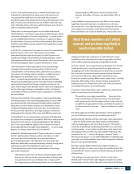
In a horrifying illustration of this power to confer existence,
Cohen created a category of women who he declared had
utterly failed in their spiritual quest and faithfulness to him.
They were termed No Women. These outcasts lived together
(as all other members did) and were not allowed to speak
to or have contact with others, even while performing their
menial duties. Toward the end of her stay, Marlowe was
placed into this group and, through her fellowship with the
other No Women, eventually found the strength to leave the
cult.
Marlowe describes in great detail her life in the group. One
chapter (9) is a very interesting journal of her trip to India
(Cohen held special meetings and workshops in various parts
of the world, and his avid followers embarked on long and
expensive journeys on their own dime to attend.) In what
to me is the most heartbreaking chapter of the memoir (6),
Marlowe relates how, when she was deemed worthy, she
was put in charge of managing the construction of a new
meeting hall in Cohen’s Berkshires estate. She and other
members worked extremely hard for months, but when it
was finished Marlowe was not invited to the dedication.
Andrew never acknowledged her hard work. This experience
seems to be the beginning of her doubts:
Although we rationalized why Andrew had
ignored my work, I think we knew that we were
rationalizing. This might have been the moment
when I had an inkling that my private response
to the situation trumped what the Community
thought. A part of me had grown strong during this
building project and would not leave me even if
things got tough. (p. 182)
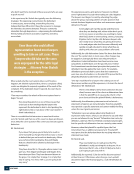
After nearly fifteen years, Marlowe did decide to leave. Out of
the group, Marlowe networked with other former members
and came to realize Andrew’s sole responsibility:
I had always imagined that Andrew was unaware of
some of the cruelty meted out by his students. Now
I learned from those in his inner circle that he had
not only ordered it, but received detailed reports
about it. I realized then that his condition was not
just a mixed bag of benevolent and cruel his was,
or had become, a pathological condition. Nothing
stood in the way of Andrew’s demands for control
and adoration. There was no check on his abuse of
power. (p. 234)
Marlowe is still attempting to process her experience.
Remarkably, her two daughters weathered their unusual
upbringing well, and she and her ex-husband are on good
terms. She has remarried and established a solid professional
life. Andrew Cohen has retired from his teaching and, with
the group experiencing severe financial problems, Marlowe
reports, “It is unclear to what extent Andrew’s teachings and
the culture that surrounds them are continuing under other
names” (p. 252 ).
In my nearly forty years of involvement in the countercult
movement, I have read numerous former-member accounts
of their experiences. I should be used to these stories of
sacrifice, abandonment of former lives, often abandonment
of children and other family relationships, pain, humiliation,
and the struggle to finally break free and recover. But one
never gets used to the stories, and this book resonated
with me deeply. Perhaps it is because of the author’s very
powerful writing and insight.
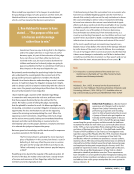
I believe this memoir deserves a wide public audience. A
listing of References and Further Reading and Web Sites at
the end of the book is helpful for those who want to further
explore this specific group. n
About the Review
Marcia R. Rudin received a joint MA
degree in Religion from Columbia
University and Union Theological
Seminary, specializing in Philosophy of
Religion, and taught at William Paterson
College in New Jersey. In addition to
numerous articles and book reviews on a
wide variety of subjects, she is author and
coauthor of many books, including (with Rabbis A. James
Rudin and Hirshel Jaffe) Why Me? Why Anyone?, and (with
Rabbi Rudin) Prison or Paradise? The New Religious Cults. She
edited and contributed to the anthology Cults on Campus:
Continuing Challenge, published by ICSA’s International Cult
Education Program.
Ms. Rudin has appeared at conferences and panel discussions
about cults and psychological manipulation, and has lectured
on these topics throughout the United States and in Canada
and Poland. She has been cited as a cult expert in The New
York Times, Newsweek, The Washington Post, The Philadelphia
Enquirer, The Los Angeles Times, Modern Maturity, The Chicago
Sun Times, The Portland Oregonian, The Austin-American
Statesman, and Woman’s Day. She has also been interviewed
on many TV and radio programs.
She presently writes novels, plays, and screenplays six of
her plays have received 11 productions in Manhattan New
Jersey Santa Cruz and San Diego, California and Canton,
Michigan several have received staged readings. n
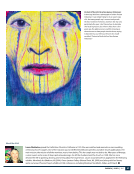
…he completely controlled
his members’ lives through
capricious evaluation of
their spiritual quests.
In a horrifying illustration of this power to confer existence,
Cohen created a category of women who he declared had
utterly failed in their spiritual quest and faithfulness to him.
They were termed No Women. These outcasts lived together
(as all other members did) and were not allowed to speak
to or have contact with others, even while performing their
menial duties. Toward the end of her stay, Marlowe was
placed into this group and, through her fellowship with the
other No Women, eventually found the strength to leave the
cult.
Marlowe describes in great detail her life in the group. One
chapter (9) is a very interesting journal of her trip to India
(Cohen held special meetings and workshops in various parts
of the world, and his avid followers embarked on long and
expensive journeys on their own dime to attend.) In what
to me is the most heartbreaking chapter of the memoir (6),
Marlowe relates how, when she was deemed worthy, she
was put in charge of managing the construction of a new
meeting hall in Cohen’s Berkshires estate. She and other
members worked extremely hard for months, but when it
was finished Marlowe was not invited to the dedication.
Andrew never acknowledged her hard work. This experience
seems to be the beginning of her doubts:
Although we rationalized why Andrew had
ignored my work, I think we knew that we were
rationalizing. This might have been the moment
when I had an inkling that my private response
to the situation trumped what the Community
thought. A part of me had grown strong during this
building project and would not leave me even if
things got tough. (p. 182)
After nearly fifteen years, Marlowe did decide to leave. Out of
the group, Marlowe networked with other former members
and came to realize Andrew’s sole responsibility:
I had always imagined that Andrew was unaware of
some of the cruelty meted out by his students. Now
I learned from those in his inner circle that he had
not only ordered it, but received detailed reports
about it. I realized then that his condition was not
just a mixed bag of benevolent and cruel his was,
or had become, a pathological condition. Nothing
stood in the way of Andrew’s demands for control
and adoration. There was no check on his abuse of
power. (p. 234)
Marlowe is still attempting to process her experience.
Remarkably, her two daughters weathered their unusual
upbringing well, and she and her ex-husband are on good
terms. She has remarried and established a solid professional
life. Andrew Cohen has retired from his teaching and, with
the group experiencing severe financial problems, Marlowe
reports, “It is unclear to what extent Andrew’s teachings and
the culture that surrounds them are continuing under other
names” (p. 252 ).
In my nearly forty years of involvement in the countercult
movement, I have read numerous former-member accounts
of their experiences. I should be used to these stories of
sacrifice, abandonment of former lives, often abandonment
of children and other family relationships, pain, humiliation,
and the struggle to finally break free and recover. But one
never gets used to the stories, and this book resonated
with me deeply. Perhaps it is because of the author’s very
powerful writing and insight.
I believe this memoir deserves a wide public audience. A
listing of References and Further Reading and Web Sites at
the end of the book is helpful for those who want to further
explore this specific group. n
About the Review
Marcia R. Rudin received a joint MA
degree in Religion from Columbia
University and Union Theological
Seminary, specializing in Philosophy of
Religion, and taught at William Paterson
College in New Jersey. In addition to
numerous articles and book reviews on a
wide variety of subjects, she is author and
coauthor of many books, including (with Rabbis A. James
Rudin and Hirshel Jaffe) Why Me? Why Anyone?, and (with
Rabbi Rudin) Prison or Paradise? The New Religious Cults. She
edited and contributed to the anthology Cults on Campus:
Continuing Challenge, published by ICSA’s International Cult
Education Program.
Ms. Rudin has appeared at conferences and panel discussions
about cults and psychological manipulation, and has lectured
on these topics throughout the United States and in Canada
and Poland. She has been cited as a cult expert in The New
York Times, Newsweek, The Washington Post, The Philadelphia
Enquirer, The Los Angeles Times, Modern Maturity, The Chicago
Sun Times, The Portland Oregonian, The Austin-American
Statesman, and Woman’s Day. She has also been interviewed
on many TV and radio programs.
She presently writes novels, plays, and screenplays six of
her plays have received 11 productions in Manhattan New
Jersey Santa Cruz and San Diego, California and Canton,
Michigan several have received staged readings. n
…he completely controlled
his members’ lives through
capricious evaluation of
their spiritual quests.