5 VOLUME 8 |ISSUE 1 |2017
In 2011, I left a philosophy group. I started researching cults.
Everything I read echoed my experiences to the letter, and
I recognized that I had been recruited and indoctrinated. I
decided to expose this deception in a blog (cultconfessions.com)
and, of course, the cult tried to sue me. It didn’t work, but I was
lucky. Typically when a cult sues a whistle-blower, years of stress
and accumulating expense follow.
Today cults can leverage litigation to intimidate and muzzle
whistle-blowers. Cults have money and can afford lawyers. Many
cults have a template for frivolous legal filings. In contrast, there
are no established protections, structures, or supports in place
for defendants. Resources are few and far between. Most former
members can’t afford counsel, and pro bono legal help is nearly
impossible to find.
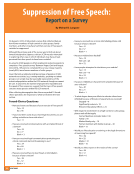
In 2014, ICSA conducted a free-speech survey of its membership
(see the report in this issue). The purpose was to begin
understanding the extent and impact of cultic litigation and
start documenting it. Respondents provided snapshots of how
cults suppressed their free speech through the court system, and
the toll such litigation takes on those threatened or sued.
I interviewed nine of the respondents. They reported legal
strategies that ranged from manipulation of divorce and
custody battles to restraining orders, defamation accusations,
accusations of violating religious freedom, multiple lawsuits
filed against one defendant, and—in the most extreme
cases—criminal charges and jail time. All reported multiple
obstacles to finding legal counsel. Even those who could afford
representation found most lawyers unwilling to take on cult
cases. Those lawyers who did take on the cases were unprepared
for the cultic legal strategies: intimidation tactics, intentional
convolution of the facts, unnecessary complications, relentless
discovery filings.
Attorney Peter Skolnik is the exception. I interviewed the New
York-based lawyer, who started litigating against cults in 2000.
He represented the Cult Education Institute when Landmark
Education sued its founder, Rick Ross, for defamation. He has
continued litigating against cults ever since. In an interview,
he discussed his experiences, the legal strategies commonly
employed in the majority of his cases, and effective responses.
“I think that, for me, it’s always been a function of finding that
my clients were intelligent, sympathetic folks who really needed
protection from onerous, overbearing litigation,” Mr. Skolnik
said. “I have never had the slightest iota of respect for any of
the groups that have brought these litigations … to some large
degree, I’ve always viewed this all as a mitzvah.”1
Indeed, Mr. Skolnik has provided 15 years of pro bono counsel
for the Cult Education Institute, and also has taken on other
cult cases. Most of the time the cult in question follows
the Scientology model—the objective is to wear down the
defendant financially and psychologically winning, losing, truth,
and justice are all inconsequential in such cases. As
L. Ron Hubbard is known to have stated within Scientology
policy documentation:
The purpose of the suit is to harass and discourage rather
than to win. The law can be used very easily to harass, and
enough harassment on somebody who is simply on the
thin edge anyway, well knowing that he is not authorized,
will generally be sufficient to cause his professional
decease. If possible, of course, ruin him utterly. (1955, p.
157)
Sadly, Hubbard’s statement proves true. When I was seeking
legal help, many who had seen, or experienced, cult cases
discouraged me. I was told that the more tangled the web, the
more expense accumulates—both financial and emotional.
Many defendants are sued into bankruptcy many settle cases
simply to end the stress and move on with their lives many
plaintiffs are thus empowered to impose gag orders on those
who could be exposing deceptive and predatory groups.
I am not a lawyer. I am an expressive-arts therapist. As a mental
health professional, I would argue that these gag orders are
damaging, both to the individual and to democracy as a whole.
But, as noted, no protections exist against frivolous litigation,
and cults don’t like to be called cults. It’s bad for business.
People join religious groups, Bible studies, yoga classes, self-help
programs, philosophy classes, theater groups, management
trainings, and so on. People don’t join cults. Cults must brand
and market themselves as something else.
It stands to reason that when a cult is called out, a lawsuit may
follow. In the interview, Mr. Skolnik said,
The word has a very ugly connotation … there are other
kinds of cults that are more innocuous, more fan-based
than anything else. But the leaders of these cults, who rely
on adherence, typically for money, sometimes for power, or
for their own sense of power … they don’t like to be called
cults.
The label might get members questioning: “I never wanted to
join a cult! Why aren’t you doing something about this?”
Additionally, Mr. Skolnik said that cult leaders typically believe,
“…they are really on the side of the angels and that there’s
nothing inappropriate with what they’re doing.” This belief is
necessary to proliferate an ideology that relies on a contrived
social hierarchy—one in which societal laws, rules, and norms
don’t apply to those in the cult, especially the leadership. The
narrative of an “us” — those in the group—verses a “them”—
those not in the group—is one of the hallmarks of culthood and,
ironically, one of the hallmarks that could be exposed if whistle-
blowers were protected legally.
But when groups believe themselves superior beings on
altruistic missions, it is also easy to buy into another belief: The
end justifies the means. Justice and truth seeking can drop out
of the picture.
“The strategy is to wear you down, I think, in most cases,”
Skolnik said. “A lot of them [cults] litigate a lot and are used to
having lawyers on the other side who haven’t done this before,
Most former members can’t afford
counsel, and pro bono legal help is
nearly impossible to find.
In 2011, I left a philosophy group. I started researching cults.
Everything I read echoed my experiences to the letter, and
I recognized that I had been recruited and indoctrinated. I
decided to expose this deception in a blog (cultconfessions.com)
and, of course, the cult tried to sue me. It didn’t work, but I was
lucky. Typically when a cult sues a whistle-blower, years of stress
and accumulating expense follow.
Today cults can leverage litigation to intimidate and muzzle
whistle-blowers. Cults have money and can afford lawyers. Many
cults have a template for frivolous legal filings. In contrast, there
are no established protections, structures, or supports in place
for defendants. Resources are few and far between. Most former
members can’t afford counsel, and pro bono legal help is nearly
impossible to find.
In 2014, ICSA conducted a free-speech survey of its membership
(see the report in this issue). The purpose was to begin
understanding the extent and impact of cultic litigation and
start documenting it. Respondents provided snapshots of how
cults suppressed their free speech through the court system, and
the toll such litigation takes on those threatened or sued.
I interviewed nine of the respondents. They reported legal
strategies that ranged from manipulation of divorce and
custody battles to restraining orders, defamation accusations,
accusations of violating religious freedom, multiple lawsuits
filed against one defendant, and—in the most extreme
cases—criminal charges and jail time. All reported multiple
obstacles to finding legal counsel. Even those who could afford
representation found most lawyers unwilling to take on cult
cases. Those lawyers who did take on the cases were unprepared
for the cultic legal strategies: intimidation tactics, intentional
convolution of the facts, unnecessary complications, relentless
discovery filings.
Attorney Peter Skolnik is the exception. I interviewed the New
York-based lawyer, who started litigating against cults in 2000.
He represented the Cult Education Institute when Landmark
Education sued its founder, Rick Ross, for defamation. He has
continued litigating against cults ever since. In an interview,
he discussed his experiences, the legal strategies commonly
employed in the majority of his cases, and effective responses.
“I think that, for me, it’s always been a function of finding that
my clients were intelligent, sympathetic folks who really needed
protection from onerous, overbearing litigation,” Mr. Skolnik
said. “I have never had the slightest iota of respect for any of
the groups that have brought these litigations … to some large
degree, I’ve always viewed this all as a mitzvah.”1
Indeed, Mr. Skolnik has provided 15 years of pro bono counsel
for the Cult Education Institute, and also has taken on other
cult cases. Most of the time the cult in question follows
the Scientology model—the objective is to wear down the
defendant financially and psychologically winning, losing, truth,
and justice are all inconsequential in such cases. As
L. Ron Hubbard is known to have stated within Scientology
policy documentation:
The purpose of the suit is to harass and discourage rather
than to win. The law can be used very easily to harass, and
enough harassment on somebody who is simply on the
thin edge anyway, well knowing that he is not authorized,
will generally be sufficient to cause his professional
decease. If possible, of course, ruin him utterly. (1955, p.
157)
Sadly, Hubbard’s statement proves true. When I was seeking
legal help, many who had seen, or experienced, cult cases
discouraged me. I was told that the more tangled the web, the
more expense accumulates—both financial and emotional.
Many defendants are sued into bankruptcy many settle cases
simply to end the stress and move on with their lives many
plaintiffs are thus empowered to impose gag orders on those
who could be exposing deceptive and predatory groups.
I am not a lawyer. I am an expressive-arts therapist. As a mental
health professional, I would argue that these gag orders are
damaging, both to the individual and to democracy as a whole.
But, as noted, no protections exist against frivolous litigation,
and cults don’t like to be called cults. It’s bad for business.
People join religious groups, Bible studies, yoga classes, self-help
programs, philosophy classes, theater groups, management
trainings, and so on. People don’t join cults. Cults must brand
and market themselves as something else.
It stands to reason that when a cult is called out, a lawsuit may
follow. In the interview, Mr. Skolnik said,
The word has a very ugly connotation … there are other
kinds of cults that are more innocuous, more fan-based
than anything else. But the leaders of these cults, who rely
on adherence, typically for money, sometimes for power, or
for their own sense of power … they don’t like to be called
cults.
The label might get members questioning: “I never wanted to
join a cult! Why aren’t you doing something about this?”
Additionally, Mr. Skolnik said that cult leaders typically believe,
“…they are really on the side of the angels and that there’s
nothing inappropriate with what they’re doing.” This belief is
necessary to proliferate an ideology that relies on a contrived
social hierarchy—one in which societal laws, rules, and norms
don’t apply to those in the cult, especially the leadership. The
narrative of an “us” — those in the group—verses a “them”—
those not in the group—is one of the hallmarks of culthood and,
ironically, one of the hallmarks that could be exposed if whistle-
blowers were protected legally.
But when groups believe themselves superior beings on
altruistic missions, it is also easy to buy into another belief: The
end justifies the means. Justice and truth seeking can drop out
of the picture.
“The strategy is to wear you down, I think, in most cases,”
Skolnik said. “A lot of them [cults] litigate a lot and are used to
having lawyers on the other side who haven’t done this before,
Most former members can’t afford
counsel, and pro bono legal help is
nearly impossible to find.