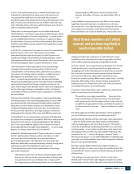
15 VOLUME 8 |ISSUE 1 |2017
Cults 101
Presenter: Jonibeth Whitney
Following introductory remarks by Dean Flynn of the USC School
of Social Work, Dr. Jonibeth Whitney gave an overview of cults,
including a discussion of common myths and misconceptions.
Dr. Whitney emphasized that cult participation and affiliation
is often involuntary, and that people can be attracted to cults
for a combination of psychological and environmental reasons
that may escape their conscious awareness. In reality, cults take
advantage of certain psychological needs inherent in every
individual—to belong, to find answers to universal questions
(“What is the meaning of life?”), and to escape from stressful
circumstances. And in dealing with these psychological needs,
people are particularly vulnerable during normal transitional
periods, such as when they are entering or leaving college
or in middle age. And while some cult members may have
a history of trauma or psychological disturbance that led to
their involvement, research suggests that members are largely
representative of the general population. Furthermore, Dr.
Whitney pointed out that cult members are often subject to a
bait-and-switch tactic—the group often turns out to be different
from what the person signed up for. The difficulty new members
have with recognizing the dangers of cults parallels the difficulty
of attempting to define them.
The process of labeling and defining cult can be challenging,
one of the reasons ICSA does not maintain a list of cultic groups.
Instead of trying to list or categorize cults, Dr. Whitney suggested
that it is more useful to isolate a number of cult characteristics
that are helpful in identifying dangerous groups. She encouraged
the audience to think not of a categorical cult-versus-noncult
distinction, but of a continuum of control and potential harm.
Dr. Whitney asserted that “there’s a cult for everyone, you just
have to look hard enough”—dispelling the myth that cults are
reserved only for those who are easily manipulated, desperate, or
mentally ill.
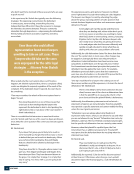
Treating Former Cult Members
Presenter: Doni Whitsett
For the second morning session, with
the audience on roughly the same
page in terms of their understanding
of cults, Dr. Doni Whitsett presented on
treating former cult members, assisted
by Mary Jo Cysewski’s contribution of
a PowerPoint presentation available
from the Conference page of the
ICSA website listed previously. Coming from a trauma-informed
perspective, Dr. Whitsett identified and targeted the traumatic
reactions that often follow cult experiences. The postcult
syndrome, a disorder comparable to PTSD, can lead to symptoms
of hyperarousal, avoidance, withdrawal or numbing, and altered
cognitions or mood states. In extreme cases, individuals may
even suffer from a dissociative disorder. While clinicians can
target these symptoms through trauma-informed interventions,
survivors of cult experiences may struggle with the therapeutic
relationship itself. Establishing trust within a therapeutic
relationship is a major obstacle with cult survivors. In any setting,
the therapist-client relationship is inherently unequal. Regardless
of how earnestly the therapist seeks to alter this dynamic, there
exists a difference in power and authority. Survivors may also feel
that revealing private thoughts and emotions will put them at
risk, as was the case before. Dr. Whitsett advised that clinicians
validate such concerns about self-disclosure, which may initially
appear to be a barrier to treatment. Likewise, Dr. Whitsett
suggested that clinicians encourage the survivor’s critical-thinking
abilities and confidence to disagree with the therapist. This
reinforcement should be part of the larger effort to assist survivors
in reestablishing their own identity separate from the cult.
The process of reestablishing identity involves the recognition
that the cult experience is now part of the survivor’s personal
history. Despite the damage done by the group, there may have
been benefits to participation, and even pleasant memories,
however few. The therapist can facilitate the process of
integrating the good and the bad of the cult experience. The
therapist’s assistance is particularly useful when helping the
survivor’s support network. As Dr. Whitsett noted, families and
other close supports may not want to hear about the good
things. Outside observers may struggle to understand the
ambivalence that some survivors express. Here, clinicians with
knowledge of cult dynamics can provide education and insight
to family and friends, emphasizing the elements that attract
members to the group and challenging black-and-white thinking.
During the question-and-answer session following Dr.
Whitsett’s presentation, the discussion turned once again to the
complexities of defining cults. Those who have witnessed a loved
one suffering because of a manipulative group may search for
an expert to label such a group as a cult. Likewise, victims of cult
exploitation may become less prone to blame themselves when
they can tag the denigrative label cult on their former group.
However, the most important goal is identifying the abusive
…cult members are often subject to
a bait-and-switch tactic—the group
often turns out to be different from
what the person signed up for.
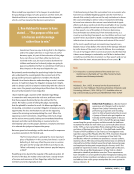
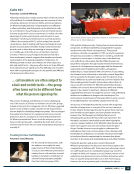
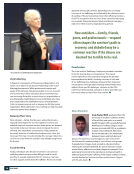
(left to right) Dr. Michael Langone, Andrea Moore-Emmett, Dr. Jonibeth Whitney, Dr. Doni
Whitsett, and Dr. Halleh Seddighzadeh
Cults 101
Presenter: Jonibeth Whitney
Following introductory remarks by Dean Flynn of the USC School
of Social Work, Dr. Jonibeth Whitney gave an overview of cults,
including a discussion of common myths and misconceptions.
Dr. Whitney emphasized that cult participation and affiliation
is often involuntary, and that people can be attracted to cults
for a combination of psychological and environmental reasons
that may escape their conscious awareness. In reality, cults take
advantage of certain psychological needs inherent in every
individual—to belong, to find answers to universal questions
(“What is the meaning of life?”), and to escape from stressful
circumstances. And in dealing with these psychological needs,
people are particularly vulnerable during normal transitional
periods, such as when they are entering or leaving college
or in middle age. And while some cult members may have
a history of trauma or psychological disturbance that led to
their involvement, research suggests that members are largely
representative of the general population. Furthermore, Dr.
Whitney pointed out that cult members are often subject to a
bait-and-switch tactic—the group often turns out to be different
from what the person signed up for. The difficulty new members
have with recognizing the dangers of cults parallels the difficulty
of attempting to define them.
The process of labeling and defining cult can be challenging,
one of the reasons ICSA does not maintain a list of cultic groups.
Instead of trying to list or categorize cults, Dr. Whitney suggested
that it is more useful to isolate a number of cult characteristics
that are helpful in identifying dangerous groups. She encouraged
the audience to think not of a categorical cult-versus-noncult
distinction, but of a continuum of control and potential harm.
Dr. Whitney asserted that “there’s a cult for everyone, you just
have to look hard enough”—dispelling the myth that cults are
reserved only for those who are easily manipulated, desperate, or
mentally ill.
Treating Former Cult Members
Presenter: Doni Whitsett
For the second morning session, with
the audience on roughly the same
page in terms of their understanding
of cults, Dr. Doni Whitsett presented on
treating former cult members, assisted
by Mary Jo Cysewski’s contribution of
a PowerPoint presentation available
from the Conference page of the
ICSA website listed previously. Coming from a trauma-informed
perspective, Dr. Whitsett identified and targeted the traumatic
reactions that often follow cult experiences. The postcult
syndrome, a disorder comparable to PTSD, can lead to symptoms
of hyperarousal, avoidance, withdrawal or numbing, and altered
cognitions or mood states. In extreme cases, individuals may
even suffer from a dissociative disorder. While clinicians can
target these symptoms through trauma-informed interventions,
survivors of cult experiences may struggle with the therapeutic
relationship itself. Establishing trust within a therapeutic
relationship is a major obstacle with cult survivors. In any setting,
the therapist-client relationship is inherently unequal. Regardless
of how earnestly the therapist seeks to alter this dynamic, there
exists a difference in power and authority. Survivors may also feel
that revealing private thoughts and emotions will put them at
risk, as was the case before. Dr. Whitsett advised that clinicians
validate such concerns about self-disclosure, which may initially
appear to be a barrier to treatment. Likewise, Dr. Whitsett
suggested that clinicians encourage the survivor’s critical-thinking
abilities and confidence to disagree with the therapist. This
reinforcement should be part of the larger effort to assist survivors
in reestablishing their own identity separate from the cult.
The process of reestablishing identity involves the recognition
that the cult experience is now part of the survivor’s personal
history. Despite the damage done by the group, there may have
been benefits to participation, and even pleasant memories,
however few. The therapist can facilitate the process of
integrating the good and the bad of the cult experience. The
therapist’s assistance is particularly useful when helping the
survivor’s support network. As Dr. Whitsett noted, families and
other close supports may not want to hear about the good
things. Outside observers may struggle to understand the
ambivalence that some survivors express. Here, clinicians with
knowledge of cult dynamics can provide education and insight
to family and friends, emphasizing the elements that attract
members to the group and challenging black-and-white thinking.
During the question-and-answer session following Dr.
Whitsett’s presentation, the discussion turned once again to the
complexities of defining cults. Those who have witnessed a loved
one suffering because of a manipulative group may search for
an expert to label such a group as a cult. Likewise, victims of cult
exploitation may become less prone to blame themselves when
they can tag the denigrative label cult on their former group.
However, the most important goal is identifying the abusive
…cult members are often subject to
a bait-and-switch tactic—the group
often turns out to be different from
what the person signed up for.
(left to right) Dr. Michael Langone, Andrea Moore-Emmett, Dr. Jonibeth Whitney, Dr. Doni
Whitsett, and Dr. Halleh Seddighzadeh