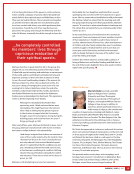
Alan W. Scheflin, JD, LLM, Professor of Law, Emeritus at Santa Clara
University School of Law in California, is past president and current
member of ICSA’s Board of Directors and serves on the Editorial
Advisory Board of ICSA’s International Journal of Cultic Studies. Among
his publications is Memory, Trauma Treatment, and the Law (coauthored
with Daniel Brown and D. Corydon Hammond), for which he received
the 1999 Guttmacher Award from the American Psychiatric Association.
He is the recipient of 18 professional awards throughout his distinguished career, including
the 2001 American Psychological Association’s Division 30 (Hypnosis) highest honor (the
Distinguished Contribution to Professional Hypnosis Award) the 2001 American Board of
Psychological Hypnosis Professional Recognition Award, created to honor his achievements in
promoting the legal and ethical use of hypnosis and the 2004 ICSA Herbert L. Rosedale Award
in recognition of leadership in the effort to preserve and protect individual freedom. He has
delivered more than a hundred invited addresses at professional conferences all over the
world in furtherance of his commitment to human rights. n
Dear Friends,
The articles in this issue of ICSA Today discuss various obstacles to recovery that victims of
cultic abuse face. I felt, on reading them, what Marcia R. Rudin writes in her review of Promises
and Passions: “I should be used to these stories of sacrifice, abandonment of former lives,
often abandonment of children and other family relationships, pain, humiliation, and the
struggle to finally break free and recover. But one never gets used to [them]...”
Russell Bradshaw’s article painfully and poetically addresses the dynamics of escaping from
the clutches of controlling groups and manipulative leaders. Once free, however, victims
often have a dual problem telling their stories. First, their experiences are so unpleasant
people do not want to hear them. Or the response is one of amazement that the exploited
individual allowed it happen. “Couldn’t you see what the group was doing to you? How could
you be so easily fooled?” Soon, it may become too painful for them to say anything at all.
And if former victims develop the courage to speak out, they often get shamed in another
way, facing threats of lawsuits, character assassinations, or invocations of eternal damnation.
Although the First Amendment to the Constitution guarantees a victim’s freedom to criticize,
it also protects the exploiters’ freedom to respond. Michael D. Langone explores this point in
his report on the survey about impediments to free speech.
Many threats made against former members do not fall within the protection of free
speech, but only a lawyer can explain which might be actionable in court. At this juncture,
the recovering victim yet again faces difficulties, many of which are detailed in Esther
Friedman’s “Interview With Attorney Peter Skolnik,” whom I consider a genuine hero. The
first problem is finding an attorney. Few lawyers are willing to take even a single case in this
highly controversial and esoteric area of the law. Once a lawyer is retained, there is often a
steep learning curve because cultic issues raise unique and unfamiliar jurisprudential legal
questions, and judges often dismiss these cases because (a) there is a strong preference in the
law for protecting matters of religion and (b) brainwashing, mind control, and psychological
coercion are often not considered valid legal topics for courtroom adjudication.
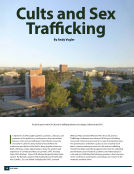
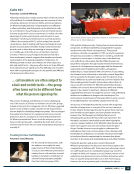
Andy Vogler’s summary of the April 2016 ICSA Cults and Sex Trafficking Conference offers
encouragement that the legal environment may be undergoing positive change. Specialists
in cultic matters, including myself, met with specialists in matters of human trafficking, and
we worked together to develop strategies to sensitize the legal system to these types of
victimization.
The future holds much to be hopeful about in working within the legal system to reduce its
protection of the exploiters and to expand its protection of the exploited.
Sincerely,
Alan W. Scheflin
About ICSA Today
ICSA Today (IT) serves ICSA members by
providing information that enhances
understanding of all aspects of the cult
phenomenon, including how groups
function, how they affect members,
techniques of influence, dealing with
harmful effects, educational and legal
implications, and other subjects.
ICSA Today issues may include
• practical articles for former
members, families, helping
professionals, researchers,
and others
• opinion essays
• theoretical articles
• reports on research
• summaries of news reports on
groups
• information on books, articles, links
• information on ICSA members
• biographical profiles on selected
members
• personal accounts
• art work
• poetry
• short stories and other literary
articles
• special reports from correspondents
around the world
ICSA Today is published three times a
year.
Regular ICSA members receive the print
edition of ICSA Today and have access
to its Web edition. Students and other
special members gain access to the
online edition only.
Nonmember print subscriptions are
available. Submissions to the magazine
should be sent to the Editor-in-Chief,
Michael Langone, PhD:
mail@icsamail.com
We prefer Microsoft Word or a program
compatible with Word. Articles should
be no more than 2,500 words. Please
include a jpeg photo (no less than 360
dpi) and biographical sketch (less than
150 words) with your submission.
Appropriate submissions are reviewed
by the relevant section editor and,
when appropriate, editorial review
advisors.
International Cultic Studies Association
P.O. Box 2265 • Bonita Springs, FL 34133
Phone: 239.514.3081
Email: mail@icsamail.com
Website: icsahome.com
University School of Law in California, is past president and current
member of ICSA’s Board of Directors and serves on the Editorial
Advisory Board of ICSA’s International Journal of Cultic Studies. Among
his publications is Memory, Trauma Treatment, and the Law (coauthored
with Daniel Brown and D. Corydon Hammond), for which he received
the 1999 Guttmacher Award from the American Psychiatric Association.
He is the recipient of 18 professional awards throughout his distinguished career, including
the 2001 American Psychological Association’s Division 30 (Hypnosis) highest honor (the
Distinguished Contribution to Professional Hypnosis Award) the 2001 American Board of
Psychological Hypnosis Professional Recognition Award, created to honor his achievements in
promoting the legal and ethical use of hypnosis and the 2004 ICSA Herbert L. Rosedale Award
in recognition of leadership in the effort to preserve and protect individual freedom. He has
delivered more than a hundred invited addresses at professional conferences all over the
world in furtherance of his commitment to human rights. n
Dear Friends,
The articles in this issue of ICSA Today discuss various obstacles to recovery that victims of
cultic abuse face. I felt, on reading them, what Marcia R. Rudin writes in her review of Promises
and Passions: “I should be used to these stories of sacrifice, abandonment of former lives,
often abandonment of children and other family relationships, pain, humiliation, and the
struggle to finally break free and recover. But one never gets used to [them]...”
Russell Bradshaw’s article painfully and poetically addresses the dynamics of escaping from
the clutches of controlling groups and manipulative leaders. Once free, however, victims
often have a dual problem telling their stories. First, their experiences are so unpleasant
people do not want to hear them. Or the response is one of amazement that the exploited
individual allowed it happen. “Couldn’t you see what the group was doing to you? How could
you be so easily fooled?” Soon, it may become too painful for them to say anything at all.
And if former victims develop the courage to speak out, they often get shamed in another
way, facing threats of lawsuits, character assassinations, or invocations of eternal damnation.
Although the First Amendment to the Constitution guarantees a victim’s freedom to criticize,
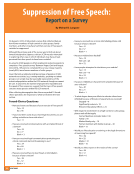
it also protects the exploiters’ freedom to respond. Michael D. Langone explores this point in
his report on the survey about impediments to free speech.
Many threats made against former members do not fall within the protection of free
speech, but only a lawyer can explain which might be actionable in court. At this juncture,
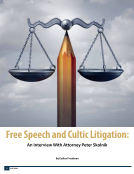
the recovering victim yet again faces difficulties, many of which are detailed in Esther
Friedman’s “Interview With Attorney Peter Skolnik,” whom I consider a genuine hero. The
first problem is finding an attorney. Few lawyers are willing to take even a single case in this
highly controversial and esoteric area of the law. Once a lawyer is retained, there is often a
steep learning curve because cultic issues raise unique and unfamiliar jurisprudential legal
questions, and judges often dismiss these cases because (a) there is a strong preference in the
law for protecting matters of religion and (b) brainwashing, mind control, and psychological
coercion are often not considered valid legal topics for courtroom adjudication.
Andy Vogler’s summary of the April 2016 ICSA Cults and Sex Trafficking Conference offers
encouragement that the legal environment may be undergoing positive change. Specialists
in cultic matters, including myself, met with specialists in matters of human trafficking, and
we worked together to develop strategies to sensitize the legal system to these types of
victimization.
The future holds much to be hopeful about in working within the legal system to reduce its
protection of the exploiters and to expand its protection of the exploited.
Sincerely,
Alan W. Scheflin
About ICSA Today
ICSA Today (IT) serves ICSA members by
providing information that enhances
understanding of all aspects of the cult
phenomenon, including how groups
function, how they affect members,
techniques of influence, dealing with
harmful effects, educational and legal
implications, and other subjects.
ICSA Today issues may include
• practical articles for former
members, families, helping
professionals, researchers,
and others
• opinion essays
• theoretical articles
• reports on research
• summaries of news reports on
groups
• information on books, articles, links
• information on ICSA members
• biographical profiles on selected
members
• personal accounts
• art work
• poetry
• short stories and other literary
articles
• special reports from correspondents
around the world
ICSA Today is published three times a
year.
Regular ICSA members receive the print
edition of ICSA Today and have access
to its Web edition. Students and other
special members gain access to the
online edition only.
Nonmember print subscriptions are
available. Submissions to the magazine
should be sent to the Editor-in-Chief,
Michael Langone, PhD:
mail@icsamail.com
We prefer Microsoft Word or a program
compatible with Word. Articles should
be no more than 2,500 words. Please
include a jpeg photo (no less than 360
dpi) and biographical sketch (less than
150 words) with your submission.
Appropriate submissions are reviewed
by the relevant section editor and,
when appropriate, editorial review
advisors.
International Cultic Studies Association
P.O. Box 2265 • Bonita Springs, FL 34133
Phone: 239.514.3081
Email: mail@icsamail.com
Website: icsahome.com