Cultic Studies Journal, Volume 17, 2000, Page 5
But it does not follow they are free, in identical circumstances, to make martyrs of their
children before they have reached the age of full and legal discretion. ...‖7
Despite this ruling, in late 1974 the US Department of Health, Education, and Welfare
required states receiving federal child abuse prevention and treatment grants to have
religious exemptions to child abuse and neglect charges.8 With federal money at stake,
states rapidly enacted exemptions in the juvenile code, criminal code, or both.9, 10
A few cases of children who died because of religion-motivated medical neglect have
received national press coverage, but most get little or none. Reports in the medical
literature are also rare. The American Academy of Pediatrics‘ first policy statement against
religion-based medical neglect in 1988 cited press accounts rather than case reports.11
Outbreaks of vaccine-preventable disease among groups with religious objections to
immunization are reported frequently.12-14 However, medical citations of fatalities are
rare.14,15 One study of perinatal events reported an Indiana sect that had a threefold
increase in infant mortality and an 80-fold increase in maternal mortality compared with the
general population.16 The study reported here describes deaths that have occurred after the
federal government required religious exemptions to child abuse and neglect laws.
Methods
We compiled a list of child fatalities in the United States that occurred during the period
from 1975 through 1995. Initial cases were from the files of children‘s Healthcare Is a Legal
Duty (CHILD), Inc, a nonprofit organization that gathers information on religion-based child
abuse and neglect. These cases were collected from newspaper articles, trial records,
personal communications, and public documents. With institutional review board approval,
police records, coroners‘ files, and other confidential materials were examined for additional
information. During this supplemental search, four additional candidates were identified.
Cases were included if the available information, including clinically descriptive histories
and/or post mortem medical data, was sufficient to determine the cause of death with
reasonable medical certainty, the standard for presentation of a medical opinion in most
courts. This was assessed by one author (S.M.A.), a pediatrician who has qualified in court
to examine records and present expert opinion in child fatality cases.
Cases were excluded if documentation of the cause of death was inadequate or if the history
did not indicate that failure to seek medical care was primarily based on a reliance on faith
healing. Examples of the latter include children of some Amish communities where the
barriers to care are more cultural than theological and children of Jehovah‘s Witnesses who
were denied only blood products and were not expected to be healed by divine intervention.
After considering the underlying conditions and diagnoses that directly contributed to death,
children were assigned a likely outcome when commonly available remedial or preventive
medically supervised care (Table 1). Because medical advances altered expected mortality
rates during the study period, comparisons were based on clinical experience and published
statistics of the appropriate era. For chronic conditions (e.g., tumors, diabetes) survival
was compared with long-term survival rates published in journals or textbooks from the
relevant field. For acute problems, such as infections and perinatal complications, the
logical comparison was expected mortality during the acute process.
In most cases, the diagnosis permitted an assignment to an expected outcome based on a
published statistic. For example, the mortality rate for treated cases of Rocky Mountain
Spotted Fever in 1983 was less than 2%, less than one-third the rate for untreated cases.17
Thus, a death during 1984 was considered to have an excellent probable outcome with
medical treatment.
But it does not follow they are free, in identical circumstances, to make martyrs of their
children before they have reached the age of full and legal discretion. ...‖7
Despite this ruling, in late 1974 the US Department of Health, Education, and Welfare
required states receiving federal child abuse prevention and treatment grants to have
religious exemptions to child abuse and neglect charges.8 With federal money at stake,
states rapidly enacted exemptions in the juvenile code, criminal code, or both.9, 10
A few cases of children who died because of religion-motivated medical neglect have
received national press coverage, but most get little or none. Reports in the medical
literature are also rare. The American Academy of Pediatrics‘ first policy statement against
religion-based medical neglect in 1988 cited press accounts rather than case reports.11
Outbreaks of vaccine-preventable disease among groups with religious objections to
immunization are reported frequently.12-14 However, medical citations of fatalities are
rare.14,15 One study of perinatal events reported an Indiana sect that had a threefold
increase in infant mortality and an 80-fold increase in maternal mortality compared with the
general population.16 The study reported here describes deaths that have occurred after the
federal government required religious exemptions to child abuse and neglect laws.
Methods
We compiled a list of child fatalities in the United States that occurred during the period
from 1975 through 1995. Initial cases were from the files of children‘s Healthcare Is a Legal
Duty (CHILD), Inc, a nonprofit organization that gathers information on religion-based child
abuse and neglect. These cases were collected from newspaper articles, trial records,
personal communications, and public documents. With institutional review board approval,
police records, coroners‘ files, and other confidential materials were examined for additional
information. During this supplemental search, four additional candidates were identified.
Cases were included if the available information, including clinically descriptive histories
and/or post mortem medical data, was sufficient to determine the cause of death with
reasonable medical certainty, the standard for presentation of a medical opinion in most
courts. This was assessed by one author (S.M.A.), a pediatrician who has qualified in court
to examine records and present expert opinion in child fatality cases.
Cases were excluded if documentation of the cause of death was inadequate or if the history
did not indicate that failure to seek medical care was primarily based on a reliance on faith
healing. Examples of the latter include children of some Amish communities where the
barriers to care are more cultural than theological and children of Jehovah‘s Witnesses who
were denied only blood products and were not expected to be healed by divine intervention.
After considering the underlying conditions and diagnoses that directly contributed to death,
children were assigned a likely outcome when commonly available remedial or preventive
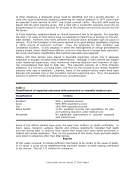
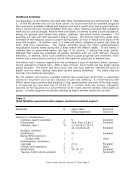
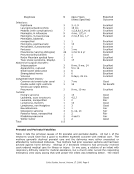
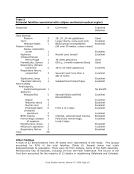
medically supervised care (Table 1). Because medical advances altered expected mortality
rates during the study period, comparisons were based on clinical experience and published
statistics of the appropriate era. For chronic conditions (e.g., tumors, diabetes) survival
was compared with long-term survival rates published in journals or textbooks from the
relevant field. For acute problems, such as infections and perinatal complications, the
logical comparison was expected mortality during the acute process.
In most cases, the diagnosis permitted an assignment to an expected outcome based on a
published statistic. For example, the mortality rate for treated cases of Rocky Mountain
Spotted Fever in 1983 was less than 2%, less than one-third the rate for untreated cases.17
Thus, a death during 1984 was considered to have an excellent probable outcome with
medical treatment.