Cultic Studies Journal, Vol. 15, No. 1, 1998, page 43
voiced concern about cults on college and university campuses in general, with 21.5% being
concerned about their own campus.
Demographic Information
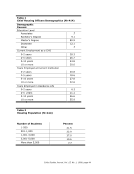
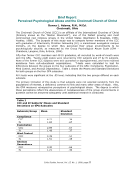
Information about the chief housing officer‟s institutions, educational level, and employment
information is described (See Table 1). The study also obtained information about the types
of cults active on campuses, student and staff involvement, and the training of staff to deal
with cult issues. CHOs were 52.3% male and 47.7% female.
Institutional Characteristics
Of the 414 respondents, 212 (51.2%) represented private institutions. Those at public
institutions numbered 201 (48.6%). One respondent did not report the type of institution.
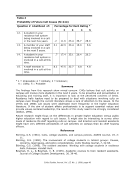
The housing population varied from small (less than 500) to more than 5,000. Most
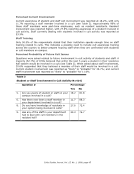
institutions had between 1,001 and 3,000 residents living in on-campus housing (see
Table 2). The colleges and universities sampled were situated in varied regions of the United
States. The western region contributed 18.8% of the population the central region had the
largest percentage at 29.5% the southern region contributed 25.7% and the eastern
region comprised 25.2% of the total sample. Literature access about cults on campus had
wide discrepancy, from 35.7% reporting “unlikely” to 25.6% “likely,” and 23.2%
“unknown.”
Cults
Types of cults that CHOs reported on campus included the following: religiously affiliated
(74%), satanic (12%), witches and magic (7%), political (3%), gangs (3%), and military
(1%). CHOs specifically identified the following as cults on their campuses: The Boston
Movement (International Churches of Christ) (41%), the Unification Church (27%), The Way
International (6%), Scientology (5%), Jehovah‟s Witnesses (4%), Hare Krishna (4%),
Maranatha (4%), Mormonism (3%), Church of God (2%), Universal Church (2%), and
Branch Davidian (2%).
voiced concern about cults on college and university campuses in general, with 21.5% being
concerned about their own campus.
Demographic Information
Information about the chief housing officer‟s institutions, educational level, and employment
information is described (See Table 1). The study also obtained information about the types
of cults active on campuses, student and staff involvement, and the training of staff to deal
with cult issues. CHOs were 52.3% male and 47.7% female.
Institutional Characteristics
Of the 414 respondents, 212 (51.2%) represented private institutions. Those at public
institutions numbered 201 (48.6%). One respondent did not report the type of institution.
The housing population varied from small (less than 500) to more than 5,000. Most
institutions had between 1,001 and 3,000 residents living in on-campus housing (see
Table 2). The colleges and universities sampled were situated in varied regions of the United
States. The western region contributed 18.8% of the population the central region had the
largest percentage at 29.5% the southern region contributed 25.7% and the eastern
region comprised 25.2% of the total sample. Literature access about cults on campus had
wide discrepancy, from 35.7% reporting “unlikely” to 25.6% “likely,” and 23.2%
“unknown.”
Cults
Types of cults that CHOs reported on campus included the following: religiously affiliated
(74%), satanic (12%), witches and magic (7%), political (3%), gangs (3%), and military
(1%). CHOs specifically identified the following as cults on their campuses: The Boston
Movement (International Churches of Christ) (41%), the Unification Church (27%), The Way
International (6%), Scientology (5%), Jehovah‟s Witnesses (4%), Hare Krishna (4%),
Maranatha (4%), Mormonism (3%), Church of God (2%), Universal Church (2%), and
Branch Davidian (2%).