Cultic Studies Journal, Vol. 15, No. 1, 1998, page 31
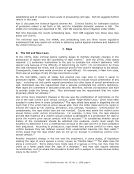
many ex-members have testified, the effect of this was to create a feeling that the potential
recruit was gaining privileged information, and being invited to participate in the
transformation of history. Furthermore, recruits could only access more of this knowledge
by escalating their involvement with the group. The excitement at this stage was
considerable.
In the 1970s, before the CWI grew to any significant size, the mystical aura around joining
was heightened by the formality with which it was concluded. New recruits traveled to
London, where they were personally vetted by the organization‟s founders. When this
became impractical, they were formally welcomed “in” by the nearest member of the
Central Committee --an exercise close to the “laying on of hands” found in baptism
ceremonies. Tremendous feelings of loyalty were engendered by this process, and fused
together a group which saw itself as intensely cohesive and blessed with the evangelical
mission of leading the world revolution. Research suggests that merely being a member of a
group encourages the development of shared norms, beliefs systems, conformity, and
compliance (Turner, 1991). Belonging to a group with such a deep and all-embracing belief
system as that offered by the CWI encourages this process all the more.
Once in, however, the picture began to change. More and more demands were placed on
members. In particular, they were expected to contribute between 10% and 15% of their
income to the party, buy the weekly newspaper, contribute to special press fund collections,
subscribe to irregular levies (perhaps to the extent of a week‟s income), recruit new
members, and raise money from sympathizers. Tobias and Lalich (1994) argue that cults
have only two real purposes: recruiting other members and raising money. These certainly
emerge as central preoccupations of the CWI. Crick (1986) cites a former member as
follows on some of these issues:
A lot of it boiled down to selling papers. The pace didn‟t bother me, but one day
I suddenly realized that after a year my social circle had totally drifted. I had
only political friends left, simply because of the lack of time. There‟d be the ...
branch meeting on Monday evening, the Young Socialists meeting another
evening, “contact” work on Friday night, selling papers on Sunday afternoon,
and on top of that, to prove to the local Labor Party we were good party
members, we went canvassing for them every week and worked like hell in the
local elections (p.178).
Such a level of activity could be physically and emotionally ruinous, and required members
to redefine their entire existence in terms of their membership in the CWI. Crick cites
another interviewee as recalling:
The most abiding memories of life (in the CWI) are filled with the sheer strain of
it all. If you were even moderately active, you would be asked to attend up to
six or seven boring meetings in one week.
You built up an alternative set of social contacts as much as political activity. It
can easily take over people‟s lives. It became obsessive. They were almost
inventing meetings to attend. There was a ridiculous number of meetings held to
discuss such a small amount of work. Even if you didn‟t have a meeting one
evening, you‟d end up drinking with them.
The kind of commitment ...required was bundled together in the form of highly
alienating personal relationships. You had to make sure your subscriptions were
paid and your papers sold so as not to feel guilty when you chatted to other
members. The only way out seemed to be “family commitment” and the
unspoken truth that as soon as a young ...member got a girlfriend he either
recruited her or left. (p. 182)
many ex-members have testified, the effect of this was to create a feeling that the potential
recruit was gaining privileged information, and being invited to participate in the
transformation of history. Furthermore, recruits could only access more of this knowledge
by escalating their involvement with the group. The excitement at this stage was
considerable.
In the 1970s, before the CWI grew to any significant size, the mystical aura around joining
was heightened by the formality with which it was concluded. New recruits traveled to
London, where they were personally vetted by the organization‟s founders. When this
became impractical, they were formally welcomed “in” by the nearest member of the
Central Committee --an exercise close to the “laying on of hands” found in baptism
ceremonies. Tremendous feelings of loyalty were engendered by this process, and fused
together a group which saw itself as intensely cohesive and blessed with the evangelical
mission of leading the world revolution. Research suggests that merely being a member of a
group encourages the development of shared norms, beliefs systems, conformity, and
compliance (Turner, 1991). Belonging to a group with such a deep and all-embracing belief
system as that offered by the CWI encourages this process all the more.
Once in, however, the picture began to change. More and more demands were placed on
members. In particular, they were expected to contribute between 10% and 15% of their
income to the party, buy the weekly newspaper, contribute to special press fund collections,
subscribe to irregular levies (perhaps to the extent of a week‟s income), recruit new
members, and raise money from sympathizers. Tobias and Lalich (1994) argue that cults
have only two real purposes: recruiting other members and raising money. These certainly
emerge as central preoccupations of the CWI. Crick (1986) cites a former member as
follows on some of these issues:
A lot of it boiled down to selling papers. The pace didn‟t bother me, but one day
I suddenly realized that after a year my social circle had totally drifted. I had
only political friends left, simply because of the lack of time. There‟d be the ...
branch meeting on Monday evening, the Young Socialists meeting another
evening, “contact” work on Friday night, selling papers on Sunday afternoon,
and on top of that, to prove to the local Labor Party we were good party
members, we went canvassing for them every week and worked like hell in the
local elections (p.178).
Such a level of activity could be physically and emotionally ruinous, and required members
to redefine their entire existence in terms of their membership in the CWI. Crick cites
another interviewee as recalling:
The most abiding memories of life (in the CWI) are filled with the sheer strain of
it all. If you were even moderately active, you would be asked to attend up to
six or seven boring meetings in one week.
You built up an alternative set of social contacts as much as political activity. It
can easily take over people‟s lives. It became obsessive. They were almost
inventing meetings to attend. There was a ridiculous number of meetings held to
discuss such a small amount of work. Even if you didn‟t have a meeting one
evening, you‟d end up drinking with them.
The kind of commitment ...required was bundled together in the form of highly
alienating personal relationships. You had to make sure your subscriptions were
paid and your papers sold so as not to feel guilty when you chatted to other
members. The only way out seemed to be “family commitment” and the
unspoken truth that as soon as a young ...member got a girlfriend he either
recruited her or left. (p. 182)