Cultic Studies Journal, Vol. 15, No. 1, 1998, page 29
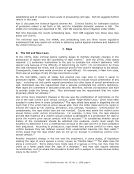
decline of world capitalism ...the search for lasting concessions and lasting
reforms is now as futile as the search for flesh on an ancient skeleton.
It is further held that this economic contingency will have enormous political repercussions.
In particular, it is argued that it poses a “black and white” choice for society: there will be
either a triumph for socialism or the planet will be engulfed by unprecedented barbarism. A
CWI internal document from 1975 proclaims that the period of class struggle inaugurated by
the 1973 oil crisis will
end either in the greatest victory of the working class achieving power and the
overthrow of the rule of capital with the installation of workers democracy or we
will have a military police dictatorship which will destroy the labor movement
and kill millions of advanced workers, shop stewards, ward secretaries, Labor
youth, trade union branch secretaries and even individual members of the Labor
movement.
Such a toxic perspective poisons the internal atmosphere of the organization concerned.
First, it tends toward black-and-white thinking in terms of prognosis, combined with a
straining sense of urgency. Mutually exclusive and totalistic options for the future are
assured. Either there will be a completely new form of society, hitherto unknown in human
history, or there will be a relapse into forms of Nazism, this time threatening global nuclear
destruction. No other options are available. The future is presented as a choice between
imminent salvation or eternal damnation, and one which hinges on every action that party
members take.
Second, such a perspective is a classic cultic means of extracting maximum involvement
from people alongside a minimum critique of the group‟s position. It imbues the
organization‟s routine activities with a sense of colossal urgency, purposes, and conviction
which normal politics can never hope to match. This reinforces a conviction on the part of
members that they are destined to play a more vital and indispensable role than any
previous group in human history.
Power Dynamics and Life Within the CWI
It has already been noted that the organizational norms of democratic centralism imply a
concentration of power at the top. There is abundant evidence that such a concentration has
been a vital feature of the CWI.
A passive membership uncritically adopted a political position handed down by the
leadership. Structures, communication systems, and organizational behaviors ensured a
one-way transmission of information and precluded the possibility of corrective pressure
being exerted by the rank and file. Callaghan (1984), writing of the CWI, observed:
It is unclear what the contribution of the ordinary supporter can be. For a
perusal of the group‟s internal documents ...reveals that these consist of
unsigned articles carrying instructions, reports and, in general, attempts to co-
ordinate or in some way organize the membership. There is no evidence of
discussion and debate or of the involvement of the rank and file.... The national
meetings which (CWI) does hold appear to be organized more like rallies than
conferences with the audience playing a relatively passive role. (p. 180)
The question arises at this point: What did life within the CWI under such a regime feel like
to the average member? How were members recruited and how was their compliance and
then conformity to the group‟s ideology obtained? The following comments on these issues
from one interviewee is typical of the accounts gained from many former CWI members.
(One told me that when meeting other former members he felt that they had all been
through a shared religious experience together!) Ronnie spent a number of years working
decline of world capitalism ...the search for lasting concessions and lasting
reforms is now as futile as the search for flesh on an ancient skeleton.
It is further held that this economic contingency will have enormous political repercussions.
In particular, it is argued that it poses a “black and white” choice for society: there will be
either a triumph for socialism or the planet will be engulfed by unprecedented barbarism. A
CWI internal document from 1975 proclaims that the period of class struggle inaugurated by
the 1973 oil crisis will
end either in the greatest victory of the working class achieving power and the
overthrow of the rule of capital with the installation of workers democracy or we
will have a military police dictatorship which will destroy the labor movement
and kill millions of advanced workers, shop stewards, ward secretaries, Labor
youth, trade union branch secretaries and even individual members of the Labor
movement.
Such a toxic perspective poisons the internal atmosphere of the organization concerned.
First, it tends toward black-and-white thinking in terms of prognosis, combined with a
straining sense of urgency. Mutually exclusive and totalistic options for the future are
assured. Either there will be a completely new form of society, hitherto unknown in human
history, or there will be a relapse into forms of Nazism, this time threatening global nuclear
destruction. No other options are available. The future is presented as a choice between
imminent salvation or eternal damnation, and one which hinges on every action that party
members take.
Second, such a perspective is a classic cultic means of extracting maximum involvement
from people alongside a minimum critique of the group‟s position. It imbues the
organization‟s routine activities with a sense of colossal urgency, purposes, and conviction
which normal politics can never hope to match. This reinforces a conviction on the part of
members that they are destined to play a more vital and indispensable role than any
previous group in human history.
Power Dynamics and Life Within the CWI
It has already been noted that the organizational norms of democratic centralism imply a
concentration of power at the top. There is abundant evidence that such a concentration has
been a vital feature of the CWI.
A passive membership uncritically adopted a political position handed down by the
leadership. Structures, communication systems, and organizational behaviors ensured a
one-way transmission of information and precluded the possibility of corrective pressure
being exerted by the rank and file. Callaghan (1984), writing of the CWI, observed:
It is unclear what the contribution of the ordinary supporter can be. For a
perusal of the group‟s internal documents ...reveals that these consist of
unsigned articles carrying instructions, reports and, in general, attempts to co-
ordinate or in some way organize the membership. There is no evidence of
discussion and debate or of the involvement of the rank and file.... The national
meetings which (CWI) does hold appear to be organized more like rallies than
conferences with the audience playing a relatively passive role. (p. 180)
The question arises at this point: What did life within the CWI under such a regime feel like
to the average member? How were members recruited and how was their compliance and
then conformity to the group‟s ideology obtained? The following comments on these issues
from one interviewee is typical of the accounts gained from many former CWI members.
(One told me that when meeting other former members he felt that they had all been
through a shared religious experience together!) Ronnie spent a number of years working