Cultic Studies Journal, Vol. 15, No. 1, 1998, page 42
more religious when, in fact, they are joining a cult. Developmentally, students in the late
teens and early twenties are resolving developmental issues as they move toward adulthood
and may be more susceptible to cult influence as a means of resolving these issues
(Blimling, 1981). For these reasons college students are particularly vulnerable to the cult
recruiter. Residence life staff, and particularly resident assistants (Polselli, 1991), can be
particularly effective in combating cult issues on campus through the use of educational
programs (Thornburg, 1991).
It is also known that first-year students are targets for cults (Enroth, 1979). First-year
students face the challenges of adapting to their new surroundings, taking on new academic
responsibilities, and developing new relationships. In addition, residence halls are a prime
cult recruiting ground (Blimling, 1995). Cult members have been known to walk the
hallways of residence halls on the weekends to find lonely students. Recruiters for cults are
also very cognizant of students‟ vulnerabilities (Maher, 1982). These issues are not local in
nature, but indeed reach across our nation (Geraghty, 1996).
This study sought to assess chief housing officers‟ perceptions of the prevalence of cult
activity in residence halls, both with students and staff. A secondary issue was to discover if
any training concerning cults is being conducted for staff in residence halls. Finally, data
were collected on chief housing officers‟ level of concern about cults in the residence halls.
Bliming‟s (1995) definition of cults was utilized because of housing directors‟ familiarity with
his work (Bowman &Bowman, 1995).
Method
Participants
Chief housing officers (CHOs) were chosen for this study for two reasons. First, cults are
especially interested in first-year college students, and these students are often required to
live in university-sponsored living units. Second, research has shown that cults are attracted
to the residence hall environment (Blimling, 1981). The entire population of CHOs affiliated
with the Association of College and University Housing Officers -International (ACUHO-I)
was asked to participate in the study by questionnaire.
Instrument
The instrument was developed to engage the CHO in reference to the knowledge he or she
has with regards to cults in the residence halls. Questions concerned both student/staff
issues and demographic data. There were nine forced-answer questions five questions
based on a semantic scale range of “impossible -unlikely -unknown -likely -probable”
and eight demographic items. The Research and Information Committee of ACUHO-I
reviewed and approved the instrument for distribution to member CHOs.
Procedure
A questionnaire was sent out to 907 CHOs, accompanied by a cover letter, asking that the
instrument be returned in 2 weeks. A second questionnaire was sent 2 weeks later to CHOs
who had not yet returned the survey, asking that it be returned in 1 week. A follow-up
postcard was sent asking the respondent to reply to the questionnaire as soon as possible.
Results
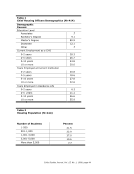
Surveys were returned by 414 CHOs, which is a 46% return rate. Of the surveys returned,
348 (84.7%) agreed with the definition of cults: “groups having a close allegiance to a
charismatic leader, an inordinate preoccupation on the part of the group with the attainment
of money, and the use of behavior modification practices and brainwashing techniques to
convert and retain members” (Blimling, 1995, p. 394). An overwhelming majority (94.2%)
more religious when, in fact, they are joining a cult. Developmentally, students in the late
teens and early twenties are resolving developmental issues as they move toward adulthood
and may be more susceptible to cult influence as a means of resolving these issues
(Blimling, 1981). For these reasons college students are particularly vulnerable to the cult
recruiter. Residence life staff, and particularly resident assistants (Polselli, 1991), can be
particularly effective in combating cult issues on campus through the use of educational
programs (Thornburg, 1991).
It is also known that first-year students are targets for cults (Enroth, 1979). First-year
students face the challenges of adapting to their new surroundings, taking on new academic
responsibilities, and developing new relationships. In addition, residence halls are a prime
cult recruiting ground (Blimling, 1995). Cult members have been known to walk the
hallways of residence halls on the weekends to find lonely students. Recruiters for cults are
also very cognizant of students‟ vulnerabilities (Maher, 1982). These issues are not local in
nature, but indeed reach across our nation (Geraghty, 1996).
This study sought to assess chief housing officers‟ perceptions of the prevalence of cult
activity in residence halls, both with students and staff. A secondary issue was to discover if
any training concerning cults is being conducted for staff in residence halls. Finally, data
were collected on chief housing officers‟ level of concern about cults in the residence halls.
Bliming‟s (1995) definition of cults was utilized because of housing directors‟ familiarity with
his work (Bowman &Bowman, 1995).
Method
Participants
Chief housing officers (CHOs) were chosen for this study for two reasons. First, cults are
especially interested in first-year college students, and these students are often required to
live in university-sponsored living units. Second, research has shown that cults are attracted
to the residence hall environment (Blimling, 1981). The entire population of CHOs affiliated
with the Association of College and University Housing Officers -International (ACUHO-I)
was asked to participate in the study by questionnaire.
Instrument
The instrument was developed to engage the CHO in reference to the knowledge he or she
has with regards to cults in the residence halls. Questions concerned both student/staff
issues and demographic data. There were nine forced-answer questions five questions
based on a semantic scale range of “impossible -unlikely -unknown -likely -probable”
and eight demographic items. The Research and Information Committee of ACUHO-I
reviewed and approved the instrument for distribution to member CHOs.
Procedure
A questionnaire was sent out to 907 CHOs, accompanied by a cover letter, asking that the
instrument be returned in 2 weeks. A second questionnaire was sent 2 weeks later to CHOs
who had not yet returned the survey, asking that it be returned in 1 week. A follow-up
postcard was sent asking the respondent to reply to the questionnaire as soon as possible.
Results
Surveys were returned by 414 CHOs, which is a 46% return rate. Of the surveys returned,
348 (84.7%) agreed with the definition of cults: “groups having a close allegiance to a
charismatic leader, an inordinate preoccupation on the part of the group with the attainment
of money, and the use of behavior modification practices and brainwashing techniques to
convert and retain members” (Blimling, 1995, p. 394). An overwhelming majority (94.2%)