Cultic Studies Journal, Vol. 15, No. 1, 1998, page 33
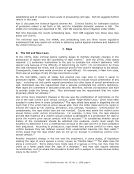
Collapse and Disintegration
The steady growth which the CWI experienced in the late 1970s and 1980s created the
twofold illusion that the party‟s entire program had been confirmed, and that permanent
expansion was assured, if everyone merely redoubled their already incredible work rates.
New members were recruited without the period of lengthy indoctrination which had
hitherto been a major condition of CWI membership. Consequently, their loyalty,
conformity, and respect for CWI methods of working were much less pronounced.
Simultaneously, the Labor Party began to take action against CWI members, expelling them
in large numbers. This created the first ripples of doubt concerning the organization‟s
rationale for its existence.
Fundamentally, the CWI was hoping to remain a highly cohesive grouping, but with a mass
membership: in essence, it was attempting to design a round square. Given an influx of new
members not prepared to devote all their energies to party building, nor to avoid
challenging CWI leaders when their predictions failed to materialize, this proved impossible.
For many, after a short period of time, applause gave way to a slow hand clap. The
consequences are well summarized in a document published in 1992 by those expelled from
the organization:
1987 was a watershed.... The membership fell each year.... Then the sickness of
commandism and substitutionism rose apace. The leadership hid the real
situation from the ranks. Instead of “success” we were faced with retreat, which
did not suit the prestige of the leadership. Comrades were telling other
comrades what they wanted to hear. The Center became more and more out of
touch with the situation on the ground. The CC generally accepted this state of
affairs as they were too fearful of raising real criticisms and being labeled
“conservative.” The situation led to the burning out of a whole layer of comrades
and Full Timers. Since 1988, the organization halved in size ...the turnover
reached 38% in 1990 ...we have lost 1,000 comrades since Jan. 1991 --a
turnover of 20% ...according to the census conducted at the 1990 congress less
than 1,100 were attending the branches, which includes 200 FTers.
For years the uniformity then exhibited began to be transformed into conformity.
Those who stepped out of line were clarified (sic) as “pessimists,”
“conservatives,” “troublemakers,” etc. More and more the pressure was exerted
to accept the line -more or less to stop thinking for yourself. The need for a
critical minded membership was transformed into its opposite.
Latest reports suggest that the CWI has continued to decline since the early 1990s. An
official history of the organization (Taaffe, 1995) boasts of increased membership figures up
until the late 1980s, when it seems to have peaked at around 8,000. Thereafter, no figures
are claimed. However, material published by expelled members of the Opposition suggests
that membership had fallen to below 3,000 by 1993, with only a small proportion of that
active in any meaningful sense. It appears that this has since dwindled to well under 1,000,
and falling. It has lost its three MPs, positions in trade unions, and a great deal of money. In
a real sense, the glowing future once anticipated by its leaders is by now well behind it.
Ideological Totalism
The rise and fall of the CWI can also be understood in terms of Lifton‟s (1961) classic study
of thought reform programs in China. His work introduced the term ideological totalism into
the literature on social influence. Lifton defined this as “the coming together of immoderate
ideology with equally immoderate individual character traits --an extremist meeting ground
between people and ideas” (p. 477). He made it clear that the potential for such ideological
Collapse and Disintegration
The steady growth which the CWI experienced in the late 1970s and 1980s created the
twofold illusion that the party‟s entire program had been confirmed, and that permanent
expansion was assured, if everyone merely redoubled their already incredible work rates.
New members were recruited without the period of lengthy indoctrination which had
hitherto been a major condition of CWI membership. Consequently, their loyalty,
conformity, and respect for CWI methods of working were much less pronounced.
Simultaneously, the Labor Party began to take action against CWI members, expelling them
in large numbers. This created the first ripples of doubt concerning the organization‟s
rationale for its existence.
Fundamentally, the CWI was hoping to remain a highly cohesive grouping, but with a mass
membership: in essence, it was attempting to design a round square. Given an influx of new
members not prepared to devote all their energies to party building, nor to avoid
challenging CWI leaders when their predictions failed to materialize, this proved impossible.
For many, after a short period of time, applause gave way to a slow hand clap. The
consequences are well summarized in a document published in 1992 by those expelled from
the organization:
1987 was a watershed.... The membership fell each year.... Then the sickness of
commandism and substitutionism rose apace. The leadership hid the real
situation from the ranks. Instead of “success” we were faced with retreat, which
did not suit the prestige of the leadership. Comrades were telling other
comrades what they wanted to hear. The Center became more and more out of
touch with the situation on the ground. The CC generally accepted this state of
affairs as they were too fearful of raising real criticisms and being labeled
“conservative.” The situation led to the burning out of a whole layer of comrades
and Full Timers. Since 1988, the organization halved in size ...the turnover
reached 38% in 1990 ...we have lost 1,000 comrades since Jan. 1991 --a
turnover of 20% ...according to the census conducted at the 1990 congress less
than 1,100 were attending the branches, which includes 200 FTers.
For years the uniformity then exhibited began to be transformed into conformity.
Those who stepped out of line were clarified (sic) as “pessimists,”
“conservatives,” “troublemakers,” etc. More and more the pressure was exerted
to accept the line -more or less to stop thinking for yourself. The need for a
critical minded membership was transformed into its opposite.
Latest reports suggest that the CWI has continued to decline since the early 1990s. An
official history of the organization (Taaffe, 1995) boasts of increased membership figures up
until the late 1980s, when it seems to have peaked at around 8,000. Thereafter, no figures
are claimed. However, material published by expelled members of the Opposition suggests
that membership had fallen to below 3,000 by 1993, with only a small proportion of that
active in any meaningful sense. It appears that this has since dwindled to well under 1,000,
and falling. It has lost its three MPs, positions in trade unions, and a great deal of money. In
a real sense, the glowing future once anticipated by its leaders is by now well behind it.
Ideological Totalism
The rise and fall of the CWI can also be understood in terms of Lifton‟s (1961) classic study
of thought reform programs in China. His work introduced the term ideological totalism into
the literature on social influence. Lifton defined this as “the coming together of immoderate
ideology with equally immoderate individual character traits --an extremist meeting ground
between people and ideas” (p. 477). He made it clear that the potential for such ideological