Cultic Studies Journal, Vol. 15, No. 1, 1998, page 11
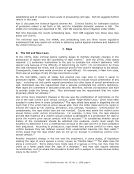
fraud,” resulting in an intentionally injurious act to that spouse or partner in violation of a
protection order.83
Orders of protection have become increasingly easy to obtain and are a common legal
means of protection for women struggling with a violent partner. Former cult members who
fear reprisals by their former cult leaders may consider obtaining orders of protection issued
by courts that would require specified persons to refrain from contact or violent behavior
during the time the order is in force.
B. Criminal Liability for Interstate Domestic Violence
Stiff criminal penalties are also provided for acts of domestic violence under the VAWA,
including life imprisonment if death results.84 A criminal case can be brought upon the
triggering of one of two events. First, when a person “travels across a State line ...with
the intent to injure, harass, or intimidate that person‟s spouse or intimate partner, and who,
in the course of or as a result of such travel, intentionally commits a crime of violence and
thereby causes bodily injury to such spouse or intimate partner ....”85 Or, second, when
the person, “causes a spouse or intimate partner to cross a State line or to enter ...by
force, coercion, duress, or fraud, and, in the course of or as a result of that conduct,
intentionally commits a crime of violence and thereby causes bodily injury to the person‟s
spouse or intimate partner. ...”86
The elements of the federal crime are as follows. First, the victim must be a spouse or
intimate partner of the defendant. Second, either (1) the defendant must have crossed the
state lines with the intent to injure, harass, or intimidate the spouse or intimate partner or
(2) the defendant caused the victim spouse or intimate partner to cross a state line by
force, coercion, duress or fraud. Third, the defendant intentionally committed a crime of
violence against the spouse or intimate partner. Fourth, the defendant thereby caused the
victim or intimate partner bodily injury, or death.
Cult victims should be able to take advantage of the VAWA just as could any other victim of
a crime of domestic violence or of gender animus. When cult members cross state lines
under the conduct proscribed in the VAWA, the Act may be a legal basis for a criminal
prosecution, so long as the victim is a “spouse or intimate partner”87 of her abuser.
The relationships among cult members may not fit neatly into society‟s perception of a
“spouse or an intimate partner.” For instance, where a cult member is a victim of a crime
meeting the statutory requirements of VAWA as described above, but the perpetrator is
another cult member with whom she does not share a monogamous relationship, a court
may have difficulty applying the VAWA remedies. In such a case where lack of monogamy
exists, prosecutors would be wise to refer courts to the expanding definitions of “domestic
partnership.” “Domestic partnership” is a term that is gaining frequent use. One
commentator offered the following definition of domestic partnership: a “legal mechanism
used to recognize homosexual couples and unmarried heterosexual couples who publicly
declare an emotional and economic commitment to each other.”88 This definition could be
useful to describe cult relationships based upon the premise that cult members share
emotional and/or economic partnership typically through a cooperative business or
household.
Another commentator defined domestic partnership as:
“In its simplicity, domestic partnership is one step more than cohabitation,
but one step less than marriage. Its essential ingredient is a business or
government recognition of benefits conferred on a nonmarital adult couple of
the same or opposite sex because of conformity with a procedure established
by the business or government.”89
fraud,” resulting in an intentionally injurious act to that spouse or partner in violation of a
protection order.83
Orders of protection have become increasingly easy to obtain and are a common legal
means of protection for women struggling with a violent partner. Former cult members who
fear reprisals by their former cult leaders may consider obtaining orders of protection issued
by courts that would require specified persons to refrain from contact or violent behavior
during the time the order is in force.
B. Criminal Liability for Interstate Domestic Violence
Stiff criminal penalties are also provided for acts of domestic violence under the VAWA,
including life imprisonment if death results.84 A criminal case can be brought upon the
triggering of one of two events. First, when a person “travels across a State line ...with
the intent to injure, harass, or intimidate that person‟s spouse or intimate partner, and who,
in the course of or as a result of such travel, intentionally commits a crime of violence and
thereby causes bodily injury to such spouse or intimate partner ....”85 Or, second, when
the person, “causes a spouse or intimate partner to cross a State line or to enter ...by
force, coercion, duress, or fraud, and, in the course of or as a result of that conduct,
intentionally commits a crime of violence and thereby causes bodily injury to the person‟s
spouse or intimate partner. ...”86
The elements of the federal crime are as follows. First, the victim must be a spouse or
intimate partner of the defendant. Second, either (1) the defendant must have crossed the
state lines with the intent to injure, harass, or intimidate the spouse or intimate partner or
(2) the defendant caused the victim spouse or intimate partner to cross a state line by
force, coercion, duress or fraud. Third, the defendant intentionally committed a crime of
violence against the spouse or intimate partner. Fourth, the defendant thereby caused the
victim or intimate partner bodily injury, or death.
Cult victims should be able to take advantage of the VAWA just as could any other victim of
a crime of domestic violence or of gender animus. When cult members cross state lines
under the conduct proscribed in the VAWA, the Act may be a legal basis for a criminal
prosecution, so long as the victim is a “spouse or intimate partner”87 of her abuser.
The relationships among cult members may not fit neatly into society‟s perception of a
“spouse or an intimate partner.” For instance, where a cult member is a victim of a crime
meeting the statutory requirements of VAWA as described above, but the perpetrator is
another cult member with whom she does not share a monogamous relationship, a court
may have difficulty applying the VAWA remedies. In such a case where lack of monogamy
exists, prosecutors would be wise to refer courts to the expanding definitions of “domestic
partnership.” “Domestic partnership” is a term that is gaining frequent use. One
commentator offered the following definition of domestic partnership: a “legal mechanism
used to recognize homosexual couples and unmarried heterosexual couples who publicly
declare an emotional and economic commitment to each other.”88 This definition could be
useful to describe cult relationships based upon the premise that cult members share
emotional and/or economic partnership typically through a cooperative business or
household.
Another commentator defined domestic partnership as:
“In its simplicity, domestic partnership is one step more than cohabitation,
but one step less than marriage. Its essential ingredient is a business or
government recognition of benefits conferred on a nonmarital adult couple of
the same or opposite sex because of conformity with a procedure established
by the business or government.”89