Cultic Studies Journal, Vol. 15, No. 1, 1998, page 30
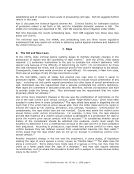
full time for the CWI. Much of his experience echoes the points made by Siegel et al. (1987)
and Lalich (1992, 1993) concerning the DWP:
6/7 day weeks for activists were common, particularly those full time. We
nominally had a day off, but I can remember another leader saying to me
proudly of another that “he uses his day off to prepare his lead-offs [introductory
lectures] for meetings.” Full timers were also kept in poverty. Wages were
virtually nonexistent, and I found out recently that from 1985 to 1991 they got
no pay raise at all!
When we worked, the pressure was awful. Key committees often met Saturday
and Sunday 9 to 5, on top of your normal week‟s work. There would be different
sessions, with a leader making an hour-long introduction which laid out the line.
Everyone else then would come in and agree. The more you agreed with the
leader, the more he or she cited your contribution in a 15 -20 minute summing
up at the end. If you disagreed, your contribution would be unpicked, but if it
wasn‟t sufficiently enthusiastic about the line it would --even worse --be
ignored. In this way you soon knew who was in and who was out. There was a
distinct tendency to promote the most conformist comrades to key positions,
even if they were also the most bland.
High dues or subs were extracted from members. A certain minimum sub per
week was set, which at several pounds a week was far in excess of what normal
parties extract. But people were “encouraged” to go beyond this. At big
meetings a speech would be made asking for money. Normally, some comrade
would have been approached beforehand and would have agreed to make a
particularly high donation, say £500. The speaker would then start off asking for
£500, its donation would produce an immense ovation, and people would then
be pressured to follow suit.
Everything was also run by committees, and we had plenty of those. Branches
had branch committees which met in advance of branch meetings to allocate all
sorts of work, this went on to districts, areas, and nationally and internationally.
Very often it was the same people on these committees wearing different hats!
But nothing moved without the committees‟ say-so. This was accompanied by
persistent demands for people to take more initiative, but in practice there was
no mechanism for this to happen. Also, at national conferences, leaders were
elected by a slate system, that is, the CC proposed a full list of names for CC
membership. If you opposed it you theoretically stood up to propose a full list of
new names, but needless to say no one ever did. New members were regarded
as “contact members” and allocated a more experienced comrade who was
supposed to have weekly discussions as part of the “political education.”
I do remember feeling absolutely terrified when I first left --what was there for
me now, what would I do, where did I start? I eventually managed to get my life
together, but it was a hard slog.
Indoctrination began with the recruitment process. Given the CWI‟s secret existence within
the Labor Party, people who came into contact with it would not have immediately known
that it was an organization, with its own annual conference, full-time officials, and central
committee. Potential sympathizers encountered CWI members in the normal environment of
the Labor Party or trade unions. Once their left-wing credentials were established they
would be asked to buy the CWI newspaper, make a small donation, and support CWI
motions at other meetings --a process of escalating commitment. Only after a series of
such tests had been passed would the person be initiated into the secret of the CWI‟s
existence, and provided with further internal documents detailing aspects of its program. As
full time for the CWI. Much of his experience echoes the points made by Siegel et al. (1987)
and Lalich (1992, 1993) concerning the DWP:
6/7 day weeks for activists were common, particularly those full time. We
nominally had a day off, but I can remember another leader saying to me
proudly of another that “he uses his day off to prepare his lead-offs [introductory
lectures] for meetings.” Full timers were also kept in poverty. Wages were
virtually nonexistent, and I found out recently that from 1985 to 1991 they got
no pay raise at all!
When we worked, the pressure was awful. Key committees often met Saturday
and Sunday 9 to 5, on top of your normal week‟s work. There would be different
sessions, with a leader making an hour-long introduction which laid out the line.
Everyone else then would come in and agree. The more you agreed with the
leader, the more he or she cited your contribution in a 15 -20 minute summing
up at the end. If you disagreed, your contribution would be unpicked, but if it
wasn‟t sufficiently enthusiastic about the line it would --even worse --be
ignored. In this way you soon knew who was in and who was out. There was a
distinct tendency to promote the most conformist comrades to key positions,
even if they were also the most bland.
High dues or subs were extracted from members. A certain minimum sub per
week was set, which at several pounds a week was far in excess of what normal
parties extract. But people were “encouraged” to go beyond this. At big
meetings a speech would be made asking for money. Normally, some comrade
would have been approached beforehand and would have agreed to make a
particularly high donation, say £500. The speaker would then start off asking for
£500, its donation would produce an immense ovation, and people would then
be pressured to follow suit.
Everything was also run by committees, and we had plenty of those. Branches
had branch committees which met in advance of branch meetings to allocate all
sorts of work, this went on to districts, areas, and nationally and internationally.
Very often it was the same people on these committees wearing different hats!
But nothing moved without the committees‟ say-so. This was accompanied by
persistent demands for people to take more initiative, but in practice there was
no mechanism for this to happen. Also, at national conferences, leaders were
elected by a slate system, that is, the CC proposed a full list of names for CC
membership. If you opposed it you theoretically stood up to propose a full list of
new names, but needless to say no one ever did. New members were regarded
as “contact members” and allocated a more experienced comrade who was
supposed to have weekly discussions as part of the “political education.”
I do remember feeling absolutely terrified when I first left --what was there for
me now, what would I do, where did I start? I eventually managed to get my life
together, but it was a hard slog.
Indoctrination began with the recruitment process. Given the CWI‟s secret existence within
the Labor Party, people who came into contact with it would not have immediately known
that it was an organization, with its own annual conference, full-time officials, and central
committee. Potential sympathizers encountered CWI members in the normal environment of
the Labor Party or trade unions. Once their left-wing credentials were established they
would be asked to buy the CWI newspaper, make a small donation, and support CWI
motions at other meetings --a process of escalating commitment. Only after a series of
such tests had been passed would the person be initiated into the secret of the CWI‟s
existence, and provided with further internal documents detailing aspects of its program. As