Cultic Studies Journal, Vol. 15, No. 1, 1998, page 37
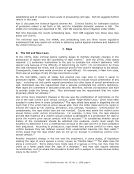
Trotskyist organizations have no shortage of such historical myths, but the one that is most
doggedly advanced concerns the 1917 Russian Revolution --often simply referred to in CWI
circles as “October.” A recent article in the journal of those expelled in 1992 is typical, and
reads in part:
The October Revolution was, and remains, the most significant event in history
...perhaps the most important lesson of the October Revolution, and the failed
revolutions which followed it, is the role of Marxist leadership. Among Lenin‟s
greatest contributions to the ideas of Marxism are his writings on the role of the
party --ideas upon which he built and molded the Bolshevik Party.
The objective then becomes one of repeating this glorious chapter under modern conditions.
Countless subsidiary myths are woven around the primary myth of October. For example, a
document by those expelled from the CWI describes the Bolshevik Party as “the most
democratic party in the history of the world working class.” There are also frequent
references to the lonely but allegedly indispensable role of the CWI in maintaining the
“sacred science” of Trotskyism in the post-war period. Historical myths console members for
their present-day impotence, provide a ready-made historical schema to impose on the
complex realities of modern politics and -– principally --act a straitjacket on innovative
thought.
8. The Dispensing of Existence
Fundamentally, this condition proposes that only those who adhere to the group‟s ideology
are fully human or fully good. Others are either conscious agents of evil forces or
unconscious barriers to historical progress who may well deserve annihilation. The notion is
promulgated that outside the ranks of the grouping, the member may be corrupted by alien
pressures, while only within its ranks can true purity be attained.
The desire for affiliation is one of the most deeply rooted features of human existence
(Hargie &Tourish, 1997). A driving force behind it is our desire to reduce uncertainty, by
embracing ready-made explanations for the conduct of others (Berger, 1987). In particular,
a number of crucial studies (Burgoon, Hunsaker, &Dawson, 1994) show that anxiety-
producing situations increase individuals‟ need to affiliate with others and can also change
their preexisting criteria for choosing companions. Within all of this, it has been argued that
the concept of a group is “a pervasive, ever-present psychological mechanism which creates
social cohesion and collective action and makes possible certain higher-order, emergent
forms of social life” (Turner &Oakes, 1997, p. 364). We attempt to reduce uncertainty
through what might be termed a process of “social testing,” in which we measure the
validity of our attitudes by comparison to what significant others believe. How does this
relate to the CWI?
Clearly, the huge levels of activity demanded of CWI activists ensured that their entire lives
revolved around it. The group‟s ideology also offers ready-made explanations for
everything, thereby providing a convenient explanatory framework for the rapid reduction of
uncertainty. This constituted one of its main appeals, particularly among young people, for
whom uncertainty about the meaning of life and the future is naturally greatest. In addition,
the high activism and frequently hostile climate in which people attempted to advance the
CWI program increased anxiety in the manner discussed by Burgoon, et al. (1994), and
which therefore exaggerated the tendency toward affiliation, compliance, and belief.
There is also evidence that the organization took a dim view of ex-members. An internal
circular labeled those expelled in 1992 as “a hostile force, against which we will have to
fight in the labour movement.” The comrades of yesterday had become the demons of
today. One interviewee, Robert, also recounted that:
Trotskyist organizations have no shortage of such historical myths, but the one that is most
doggedly advanced concerns the 1917 Russian Revolution --often simply referred to in CWI
circles as “October.” A recent article in the journal of those expelled in 1992 is typical, and
reads in part:
The October Revolution was, and remains, the most significant event in history
...perhaps the most important lesson of the October Revolution, and the failed
revolutions which followed it, is the role of Marxist leadership. Among Lenin‟s
greatest contributions to the ideas of Marxism are his writings on the role of the
party --ideas upon which he built and molded the Bolshevik Party.
The objective then becomes one of repeating this glorious chapter under modern conditions.
Countless subsidiary myths are woven around the primary myth of October. For example, a
document by those expelled from the CWI describes the Bolshevik Party as “the most
democratic party in the history of the world working class.” There are also frequent
references to the lonely but allegedly indispensable role of the CWI in maintaining the
“sacred science” of Trotskyism in the post-war period. Historical myths console members for
their present-day impotence, provide a ready-made historical schema to impose on the
complex realities of modern politics and -– principally --act a straitjacket on innovative
thought.
8. The Dispensing of Existence
Fundamentally, this condition proposes that only those who adhere to the group‟s ideology
are fully human or fully good. Others are either conscious agents of evil forces or
unconscious barriers to historical progress who may well deserve annihilation. The notion is
promulgated that outside the ranks of the grouping, the member may be corrupted by alien
pressures, while only within its ranks can true purity be attained.
The desire for affiliation is one of the most deeply rooted features of human existence
(Hargie &Tourish, 1997). A driving force behind it is our desire to reduce uncertainty, by
embracing ready-made explanations for the conduct of others (Berger, 1987). In particular,
a number of crucial studies (Burgoon, Hunsaker, &Dawson, 1994) show that anxiety-
producing situations increase individuals‟ need to affiliate with others and can also change
their preexisting criteria for choosing companions. Within all of this, it has been argued that
the concept of a group is “a pervasive, ever-present psychological mechanism which creates
social cohesion and collective action and makes possible certain higher-order, emergent
forms of social life” (Turner &Oakes, 1997, p. 364). We attempt to reduce uncertainty
through what might be termed a process of “social testing,” in which we measure the
validity of our attitudes by comparison to what significant others believe. How does this
relate to the CWI?
Clearly, the huge levels of activity demanded of CWI activists ensured that their entire lives
revolved around it. The group‟s ideology also offers ready-made explanations for
everything, thereby providing a convenient explanatory framework for the rapid reduction of
uncertainty. This constituted one of its main appeals, particularly among young people, for
whom uncertainty about the meaning of life and the future is naturally greatest. In addition,
the high activism and frequently hostile climate in which people attempted to advance the
CWI program increased anxiety in the manner discussed by Burgoon, et al. (1994), and
which therefore exaggerated the tendency toward affiliation, compliance, and belief.
There is also evidence that the organization took a dim view of ex-members. An internal
circular labeled those expelled in 1992 as “a hostile force, against which we will have to
fight in the labour movement.” The comrades of yesterday had become the demons of
today. One interviewee, Robert, also recounted that: